Key Takeaways
- Many children in early childhood learn best through hands on activities because their brains are wired for movement, sensory input, and active learning rather than sitting still and listening.
- Hands on activities make abstract concepts like number, time, and gravity concrete, strengthening cognitive development, executive functioning skills, and fine motor skills along the way.
- Experiential learning and active learning support critical thinking, problem solving, and collaboration from ages 3–8, laying a strong foundation for later academic success.
- Not every child prefers the same style, but hands on approaches are especially powerful for young learners who are kinesthetic, highly curious, or who struggle with traditional rote learning.
- The rest of this article gives practical examples-block play, baking, nature walks, simple science experiments-that parents and early childhood educators can use immediately.
Introduction: Why “Learning by Doing” Fits Young Children
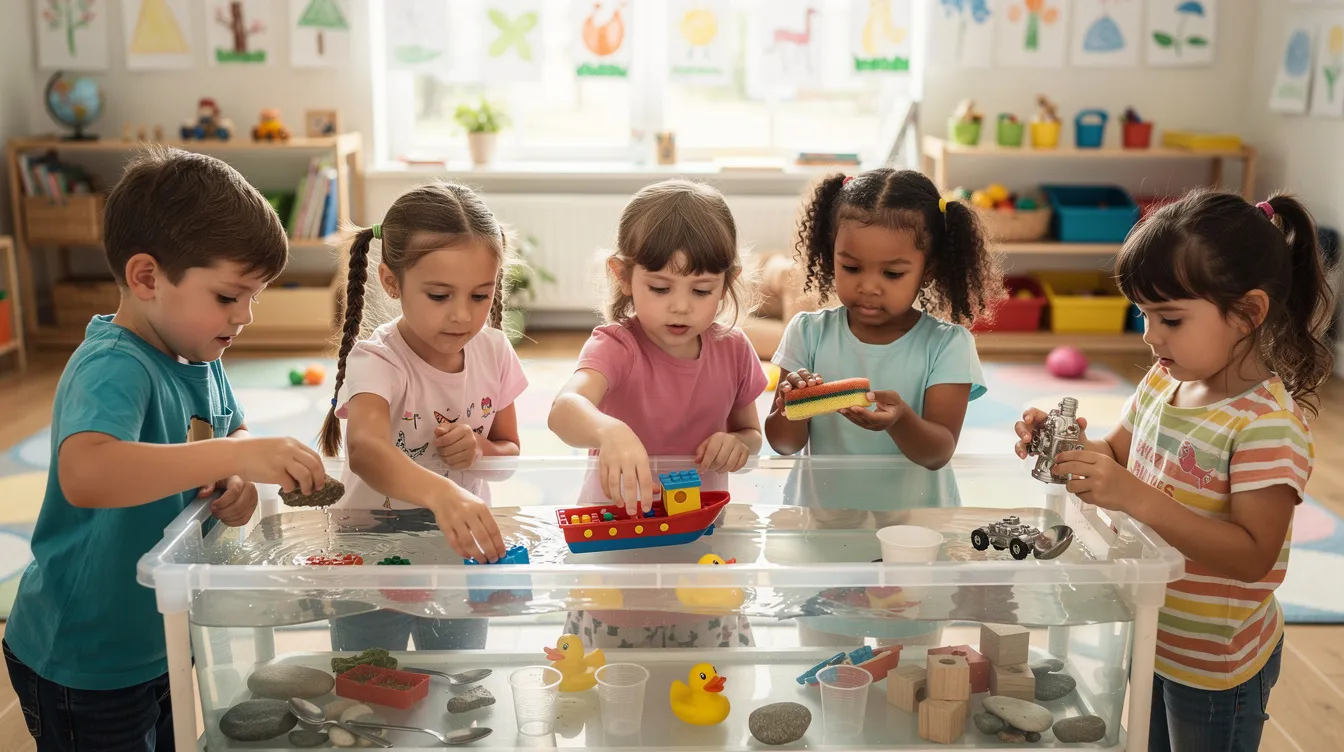
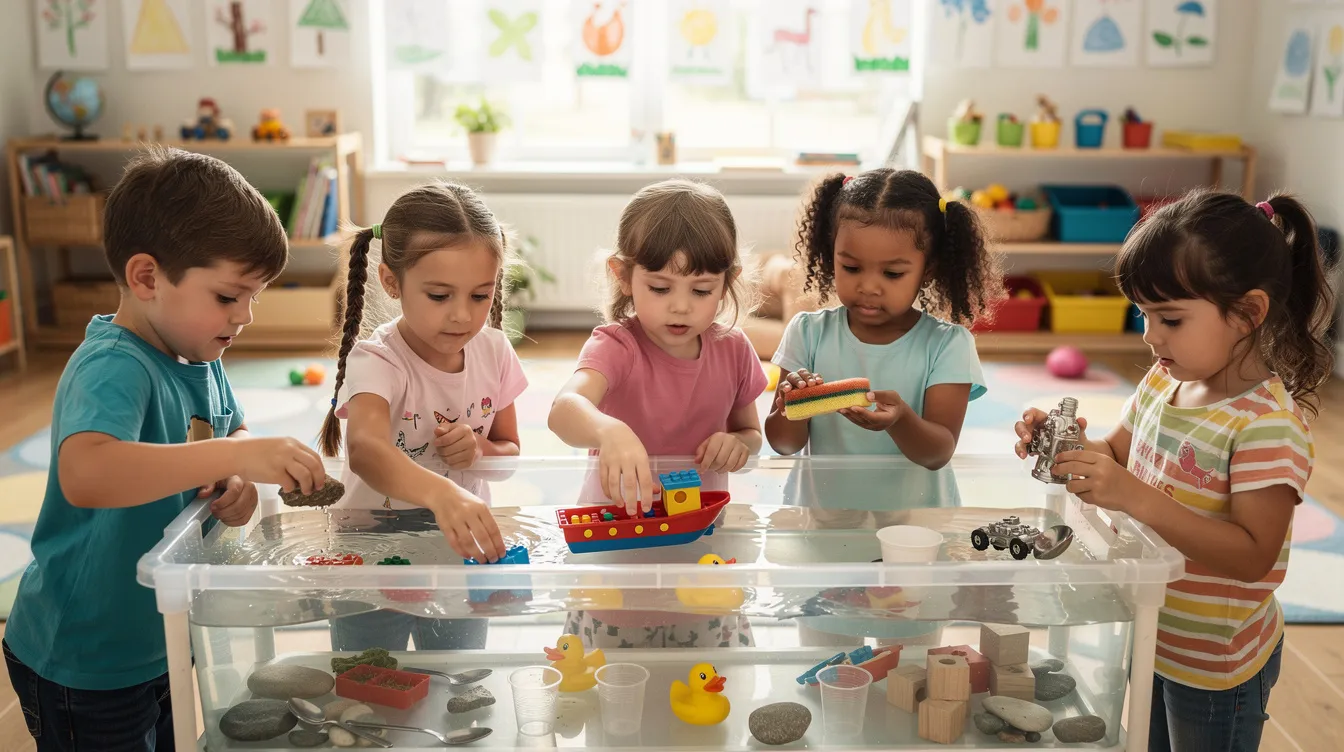
Picture two groups of 4-year-olds in a preschool classroom. One group gathers around a water table, dropping spoons, corks, coins, and toy cars into the water. They gasp, laugh, and argue about why the coin sinks while the cork floats. The other group sits on a carpet watching a video about buoyancy. Both groups are “learning,” but the children at the water table are building something the video watchers are not: a deeper understanding forged by their own hands.
This scenario captures why some children learn best through hands on activities. In early childhood-roughly ages 3 to 8-the brain develops fastest when children move, touch, build, and experiment. Hands on learning engages multiple areas of the brain simultaneously, linking sensory input to language, memory, and reasoning in ways that passive instruction simply cannot replicate.
This article is for parents and early childhood educators who want research-informed, practical guidance on experiential learning. You will find concrete reasons why active learning works, which children benefit most, and dozens of activities you can start using this week. The goal is not to replace every other teaching method, but to show you when and how hands on activities make the biggest difference in a child’s education.
What Does It Mean to “Learn Best” Through Hands-On Activities?
Hands on activities are tasks where children interact physically with materials-pouring, building, sorting, baking, gardening, painting, constructing. They stand in contrast to passive methods like long teacher talks, watching videos, or filling in worksheets where students engage with information only on paper.
When we say some children “learn best” this way, we mean they remember more, understand more deeply, stay focused longer, and can apply knowledge more confidently. Children remember experiences more vividly than words on a page. A child who counts plastic bears into groups of five will recall what “five” means far more readily than one who copies the number 5 onto a line. A child who acts out a story with puppets absorbs sequencing and vocabulary faster than one who only listens. Baking teaches children about ingredients and measurements in a way that a worksheet about fractions never could.
Some children are strongly kinesthetic and tactile-they absorb information best by moving and handling objects. Others lean more visual or auditory. Most benefit from a blend, but physical interaction with materials is especially powerful during early childhood development, when thinking is still primarily concrete. It is worth stressing that well-designed experiential learning still has structure and clear learning goals. It is not “letting children run wild.” Teachers set up provocations to encourage meaningful exploration, and every activity connects to a specific learning outcome.
How the Developing Brain Makes “Learning by Doing” So Effective
Children touch everything. They grab, squeeze, shake, and taste. This is not misbehaviour-it is how they build neural pathways. During early childhood, sensory and motor areas of the brain mature rapidly. Hands on activities stimulate multiple regions at once: vision, touch, movement, and language centres fire together, strengthening connections across the prefrontal cortex and parietal lobes.
Children who physically manipulate materials build stronger neural pathways than those who only watch or listen. Hands on learning improves memory retention by 75%, and children thrive through physical interaction with objects, enhancing focus and learning. When a child threads beads, stacks blocks, or kneads dough, her working memory holds the plan, her inhibitory control stops her from rushing, and her cognitive flexibility kicks in when something does not work as expected. These are the building blocks of executive functioning skills.
Research across the 2010s and 2020s consistently shows that active, multi-sensory learning improves memory and attention more than passive listening. A longitudinal study following 555 children over ten years found that children who spent more time in active, outdoor environments during daycare showed stronger attentional control in adolescence, with working memory in early childhood mediating later academic performance. Meanwhile, a study of 283 preschool children demonstrated that gains in motor competence across an academic year predicted significant improvements in both executive functioning and math problem solving skills.
The takeaway is straightforward: hands on activities do not just keep small hands busy. They shape the architecture of the developing brain.
From Concrete to Abstract: Why Young Children Need to Touch to Understand
Most preschool children understand the world concretely. They grasp “three apples on the plate” more easily than the abstract number 3. They understand “yesterday” as “the day we went to the park,” not as a position on a calendar. This is not a limitation-it is a normal stage of cognitive development.
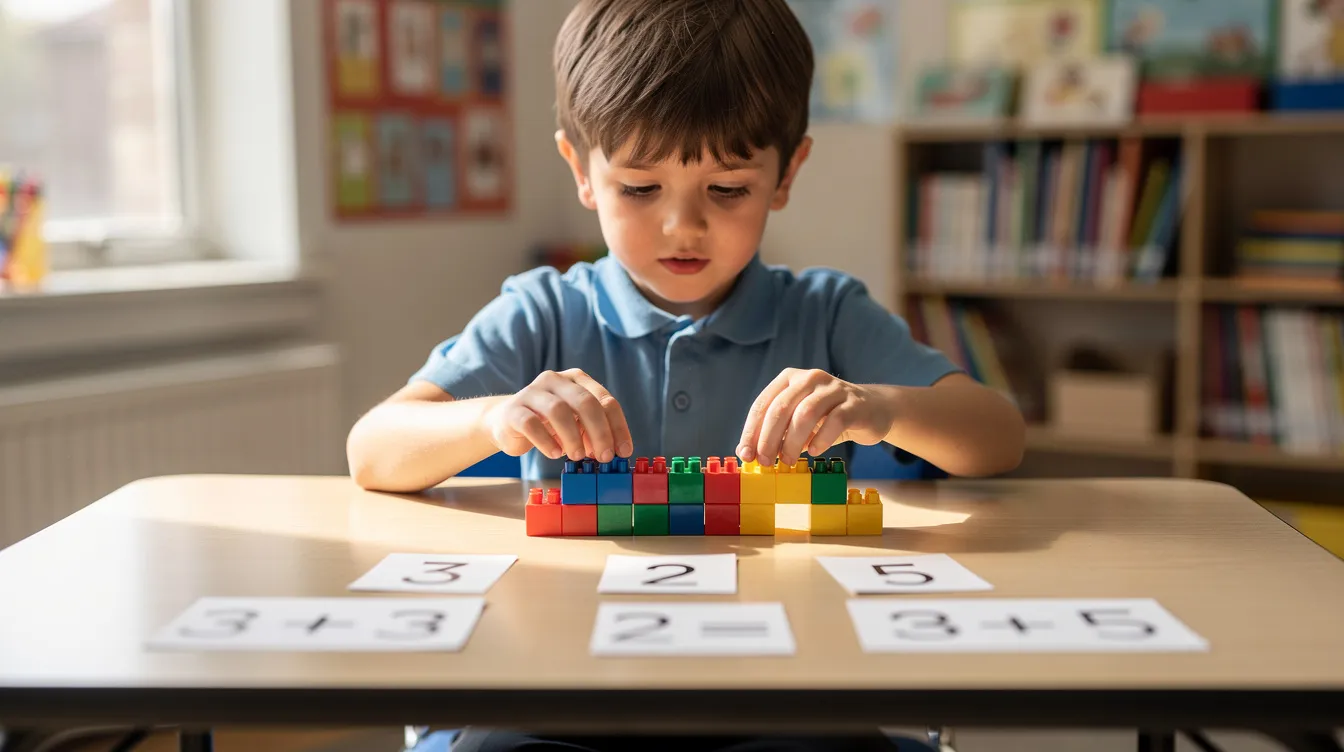
Hands on activities act as a bridge between concrete experience and abstract concepts in early childhood education. Concrete representations of concepts simplify learning and reduce ambiguity. When a child uses linking cubes to build the number sentence 4 + 3, she sees, touches, and physically joins seven cubes. The abstract idea “equals 7” becomes a tangible reality she created herself. Similarly, using a real clock with moveable hands teaches time more effectively than a printed diagram. Pouring water between different containers lets a child feel what “more” and “less” mean before she encounters greater-than and less-than symbols.
Here are a few more examples of this bridge in action:
- Dropping objects of different weights to feel gravity, then connecting the experience to words like “heavier” and “lighter.”
- Building a physical timeline with photos of the morning routine to explore concepts like “first,” “next,” and “last.”
- Using toy cars on ramps of different heights to explore speed and distance before introducing measurement.
Hands on activities help children grasp complex ideas like math and science because they can see and feel cause and effect before they are asked to think about it symbolically. For children who struggle with verbal explanations alone, concrete materials are not just helpful-they are essential to unlock a deeper grasp of abstract ideas. As children grow, teachers and parents can gradually fade concrete supports, guiding young learners from “hands on” to “minds on” abstraction at a pace that matches their readiness.
Key Benefits of Hands-On Learning for Early Childhood
This section outlines the key benefits of hands on learning, each tied to simple activities parents and educators can try with children aged roughly 3 to 8. The benefits of hands on approaches span several domains: cognitive development, fine motor skills, executive functioning, social-emotional growth, and critical thinking skills. Each subsection below explores a major benefit in turn.
Boosting Cognitive Development and Critical Thinking
Hands on learning improves memory retention by 75%-a striking figure when you consider that children often forget most of what they hear in a single lecture-style lesson. Active learning enhances problem solving abilities in children because they must observe, test, fail, adjust, and try again.
Consider two scenarios. A group of children mix baking soda and vinegar, watch the eruption, and discuss what happened. Another group reads about chemical reactions in a picture book. The children who ran the science experiment will recall the concept weeks later because they created the experience themselves. Experimentation and manipulation of objects enhance problem solving and critical thinking in ways that reading alone cannot match.
Open-ended tasks-building a bridge from cardboard, designing a marble run, constructing a den from blankets-naturally prompt deeper thinking. Children test ideas, predict outcomes, and revise when something fails. Teachers ask open-ended questions to promote critical thinking: “What do you think will happen if we add more weight?” “Why did that side collapse?” These prompts push children toward metacognition, even in early childhood, helping them explore concepts and reflect on their own learning process.
Hands on learning fosters creativity and innovation in children. Children who engage in hands on activities experience deeper critical thinking because they are making real decisions with real consequences, not selecting answers from a multiple-choice list. These cognitive skills connect directly to later academic performance in subjects like maths and science, where problem solving and reasoning are central.
Strengthening Executive Functioning Skills
Executive functioning skills are the mental toolkit children use to plan, remember instructions, control impulses, and shift strategies when something is not working. Think of them as the air traffic control system of the brain.
Specific hands on tasks demand these skills constantly. Building with blocks requires planning a stable base, adjusting when towers fall, and controlling the impulse to knock down a friend’s structure. Simple cooking tasks where children follow a short picture-based recipe exercise working memory (remembering what comes next), inhibitory control (waiting for the timer), and cognitive flexibility (substituting an ingredient when one is missing).
Activities that target executive functioning include:
- Treasure hunts that require holding clues in working memory and switching strategies when the first guess is wrong.
- Multi-step art projects-draw, cut, glue, decorate-that must be done in order.
- Group projects where children must negotiate roles and adjust plans together.
For many children with attention difficulties, moving and manipulating objects actually helps them maintain focus better than still, desk-based work. Repeated practice of these thinking skills in early childhood makes classroom routines and future learning-like reading longer texts or solving multi-step problems-much easier.
Developing Fine Motor Skills and Physical Coordination
Fine motor skills are the small muscle movements in hands and fingers that children need for writing, buttoning clothes, and using tools. Hands on activities give daily practice. Fine motor skills are developed through activities such as cutting and sorting, and manipulating tools and engaging in arts and crafts refines motor skills progressively.
Concrete examples across ages 3–8 include:
- Threading beads on a string or lacing cards.
- Using tweezers to move pom-poms between containers.
- Cutting along lines with child-safe scissors.
- Building with LEGO, magnetic tiles, or wooden blocks.
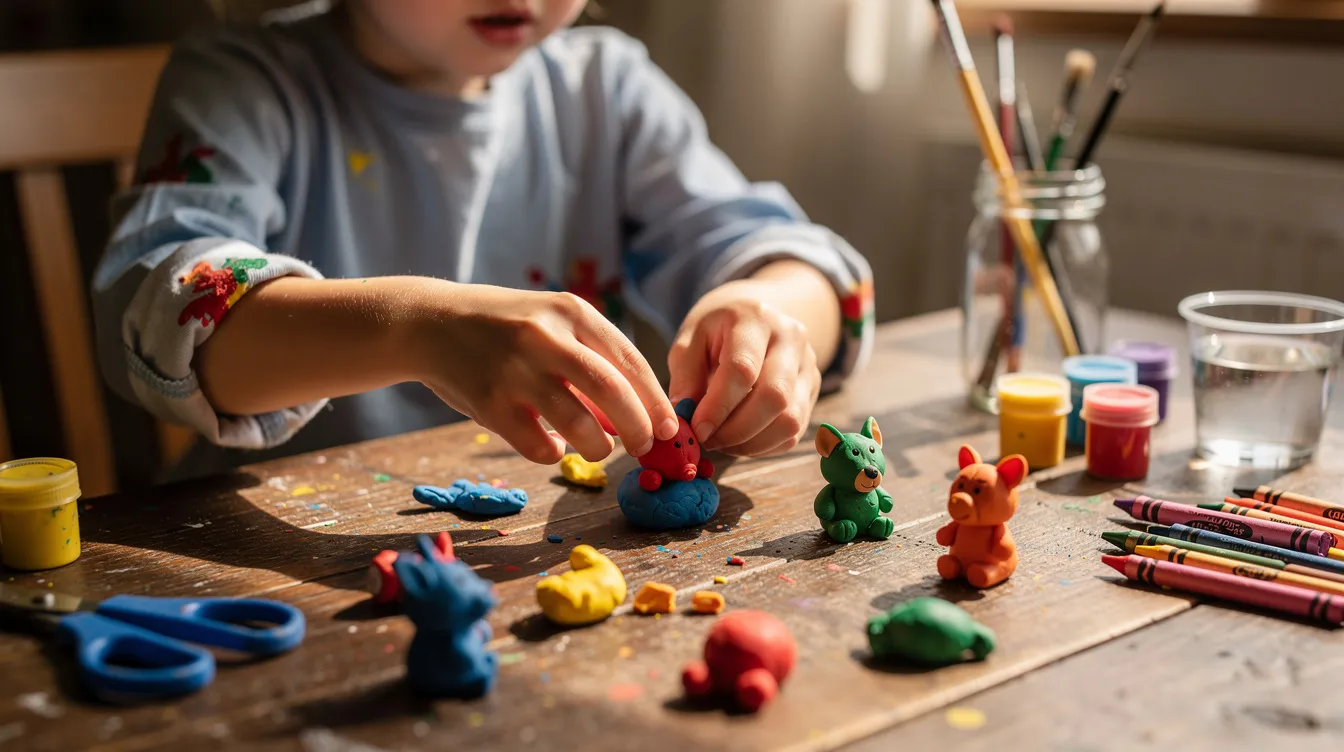
Active learning that includes pouring, scooping, squeezing, and shaping-with water, sand, playdough, or clay-builds both strength and control in the hands. Sensory play with these materials doubles as sensory exploration, engaging touch, sight, and sometimes smell simultaneously. For children who “can’t sit still,” channelling movement into purposeful, tactile hands on tasks can improve both coordination and focus.
Gross motor skills are improved through outdoor play and building activities, such as climbing, carrying large blocks, or digging in a garden bed. Improved motor skills-both fine and gross-support later writing fluency, drawing, and practical independence in daily life, making them essential skills for every child.
Growing Social Skills, Confidence, and Emotional Resilience
Many hands on learning activities in early childhood are naturally social. Building together, running simple experiments in pairs, or acting out stories in small groups all require children interact with peers in meaningful ways. Hands on activities strengthen teamwork and communication through group tasks, and group projects help children develop social skills through collaboration.
Imagine a group of 5-year-olds designing a cardboard “city.” They must decide who builds roads, who decorates houses, and how to solve problems like “my building won’t stand up.” This kind of social interaction practises turn-taking, negotiation, conflict resolution, and listening-all vital communication skills and essential life skills.
Active learning fosters collaboration and communication skills in ways that worksheets completed in silence never can. Children retain 90% of what they learn when they teach others, so pairing children to explain their discoveries to a friend deepens understanding for both.
Completing projects independently fosters confidence and resilience in children. When a tower stays up, a painting turns out well, or a planted seed sprouts, the child feels “I can figure things out”-a mindset that fuels lifelong learning. And when things go wrong-a structure falls, a plant wilts-overcoming obstacles through hands-on activities boosts self-esteem and resilience. Caring adults can frame setbacks as safe chances to learn persistence and flexibility rather than as failure.
Why Some Children Especially Depend on Hands-On Approaches
While all young learners benefit from active learning, some rely on it more heavily to access the curriculum and feel successful. Individual differences-temperament, sensory preferences, language development level, attention profile-affect how strongly a child needs tactile and movement-rich hands on experiences.
Hands on learning accommodates diverse learning styles, especially kinesthetic learners who absorb information best by moving and handling objects. A study of preschool children using traditional hopscotch games found statistically significant improvements in kinesthetic intelligence, demonstrating that movement-based learning produces measurable results.
Children who are still developing language skills need non-verbal ways to “think out loud” with materials. A 6-year-old who struggles with number facts on flashcards may succeed immediately when using counters and number lines, because the concrete object carries the meaning that words alone cannot yet deliver. This supports language development by giving children something real to talk about.
Active and multi-sensory strategies support neurodiverse learners, including children with attention challenges or sensory processing differences. For these children, traditional methods that require extended sitting and listening can be stressful. Movement and active exploration channel energy productively. Noticing that a child learns best through hands on activities is not a problem to fix-it is a cue to adjust teaching and home routines to play to that child’s strengths, nurturing their natural curiosity rather than suppressing it.
Practical Ways to Use Hands-On Activities at Home and in the Classroom
This section offers concrete ideas families and early childhood educators can start using this week with everyday materials rather than expensive equipment. Teachers facilitate hands-on learning by guiding exploration, and educators provide tools and materials for discovery-but those tools can be as simple as cardboard boxes, spoons, and leaves.
Think of learning goals first (counting to 20, understanding plant growth, building vocabulary) and then choose hands on activities that fit those goals. Educators create learning environments that spark curiosity by matching activities to clear objectives. Each subsection below focuses on a specific domain.
Early Maths Through Everyday Objects
Common household or classroom materials-coins, buttons, blocks, snack pieces-can teach counting, sorting, patterns, and simple addition and subtraction. Here are hands on learning activities that make early numeracy tangible:
- Sort a mixed bowl of pasta shapes by type or colour, then count each group.
- Make repeating patterns (red-blue-red-blue) with beads or blocks, and ask children to predict what comes next.
- Use measuring cups to compare “full,” “half full,” and “empty” at a water table or in the bath.
- Set up “shop play” where children use play money to buy items and count change, practising real world problem solving.
These tasks help bridge abstract number symbols to concrete quantities, especially for children who struggle with memorising facts from worksheets. Teachers can record observations or take photos to document progress in cognitive skills and early numeracy.
Science and Nature as Experiential Learning Labs
Early childhood science does not require formal labs. Backyards, balconies, and schoolyards offer endless opportunities for experiential learning. Here are specific hands on experiences:
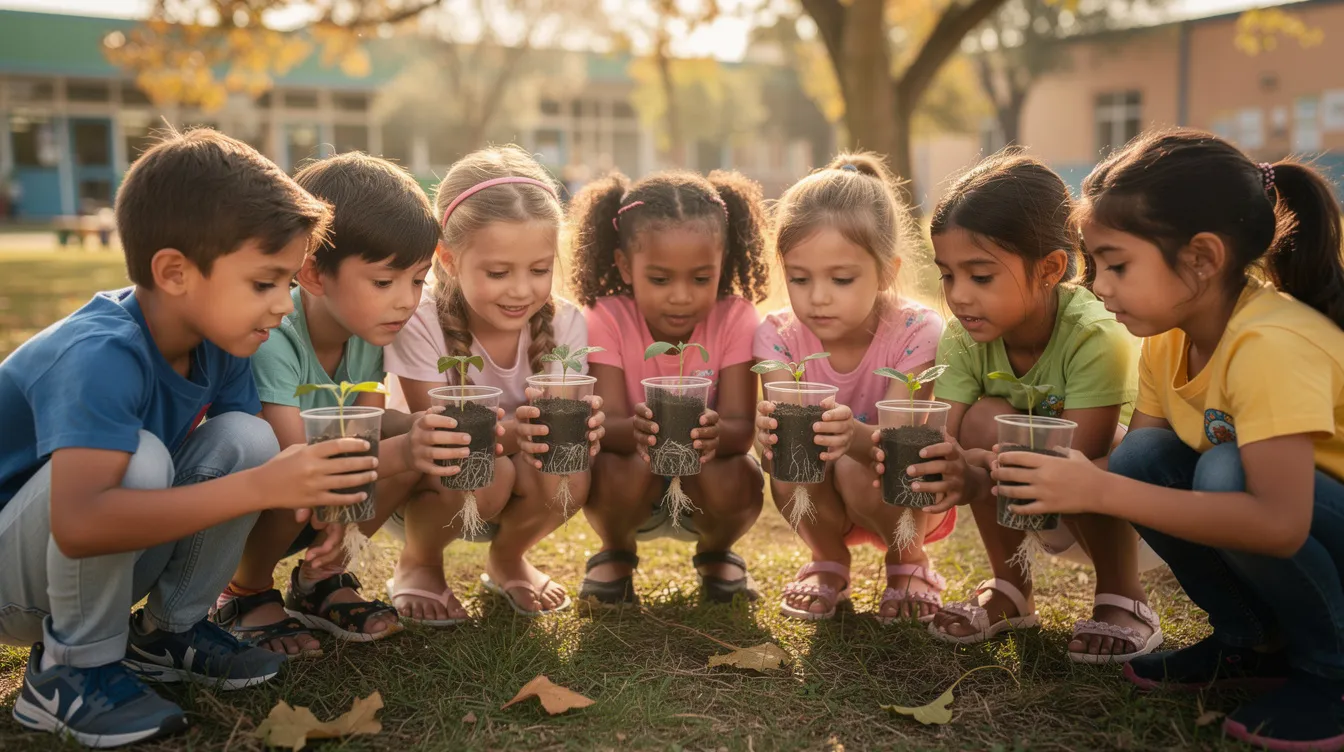
- Plant seeds in clear cups to watch roots and shoots grow over several weeks. Gardening engages all five senses in learning.
- Build homemade rain gauges and wind ribbons for simple weather observations.
- Run sink-and-float experiments with household objects in a basin-a classic simple science experiment that prompts prediction and discussion.
- Organise nature scavenger hunts to collect and sort leaves, rocks, or sticks by size, texture, or colour. Scavenger hunts enhance problem-solving and deductive reasoning.
Each activity connects to early scientific thinking: asking questions, making predictions, observing carefully, and drawing simple conclusions. Encourage adults to use rich language-“heavier,” “lighter,” “longer,” “shorter,” “melt,” “freeze”-to support both cognitive development and vocabulary, strengthening language skills alongside science knowledge.
Language, Storytelling, and Hands-On Play
Hands on activities can dramatically boost oral language and early literacy by giving children something concrete to talk and write about-a visible learning experience they helped create. Consider these practical examples:
- Retell favourite stories with puppets, dolls, or homemade props, encouraging students actively engage with narrative structure.
- Make story stones with pictures and invite children to create their own tales-a natural way to foster creativity.
- Bake simple recipes and then draw or write a picture-based “How we made bread” sequence, practising sequencing and early writing.
- Build story settings from blocks-a forest, a city, a spaceship-and act out adventures together in hands on projects.
These experiences encourage children to use new words, practise sequencing (“first, then, next, last”), and connect spoken language to print when adults label items or write down their stories. For children who are shy about talking in large groups, having materials in their hands can make communication feel more natural, supporting language development without pressure.
Building Independence with Everyday Life Skills
Hands on learning also includes practical life activities that build independence, confidence, and executive functioning. Hands on learning helps develop life skills such as creativity and adaptability through everyday routines:
- Letting children help lay the table, sort cutlery, or fold small towels.
- Giving them child-sized tools to water plants, sweep, or wipe up spills safely.
- Involving children in planning and preparing snacks-washing fruit, spreading, cutting soft items with a safe knife.
- Having them pack and unpack their own school bag using a picture checklist.
These tasks involve sequencing, decision-making, and problem solving abilities. Many children feel proud and capable when trusted with real responsibilities, and that sense of competence feeds intrinsic motivation to take on new challenges. These everyday hands on tasks directly strengthen executive functioning skills and long-term self-management, building practical skills that serve children well beyond the classroom.
Balancing Hands-On Learning with Other Teaching Approaches
While hands on activities are powerful, children also need practice with listening, reading, and writing. The goal is a balanced approach, not “hands on only.” Educational pioneers like Maria Montessori understood this balance intuitively-her preschool model, validated in a lottery-based study of 662 children, blends structured hands-on work with quiet concentration and early literacy activities.
A useful framework is moving from “concrete” to “representational” to “abstract”: start with objects, move to pictures and diagrams, then introduce symbols and mental reasoning. For example:
- After building a bridge from blocks, children draw it and label parts.
- After counting physical counters, they complete a short written activity.
- After acting out a story, they listen to or read the book quietly.
For classroom management, setting up simple, reusable stations and training children in routines for using and tidying materials keeps things practical. Mixing short whole-group moments with longer small-group, hands on exploration works well. For some children, short bursts of movement or tactile work between more sedentary tasks can maintain focus and behaviour more effectively than extended sitting. The best learning experience combines active participation with quieter reflection.
Common Misconceptions and Challenges
Some adults worry hands on activities are “just play” or that children will not learn academics without traditional drills. Educational research consistently challenges these assumptions. Let us address the most common misconceptions:
- “Hands-on learning is messy chaos.” In reality, it works best with clear goals and simple boundaries. An art project with three colours and one brush per child is hands on without being overwhelming.
- “Play-based or experiential learning isn’t rigorous.” A thoughtfully designed hands on environment can target high-level thinking. Engaging children in a science experiment about states of matter involves observation, hypothesis, and reasoning-skills that worksheets rarely demand.
- “If we let them move now, they’ll never learn to sit still.” Meeting movement needs early can actually increase later capacity for quiet focus. Children who get enough active exploration during the day are calmer during seated tasks.
Practical challenges include limited space, tight schedules, and limited budgets. Realistic solutions exist:
- Rotate a small set of low-cost materials: recycled boxes, bottle caps, natural items.
- Use short, 10–15 minute hands on tasks woven into existing lessons rather than overhauling the whole day.
- Involve involving children in setup and cleanup to reduce adult workload and build responsibility.
Even a few well-chosen hands on learning activities each week can make a noticeable difference for children who learn best through hands on experiences. You do not need a complete curriculum overhaul-just a willingness to let children get their hands on the learning.
The best teaching method is the one that meets your child where they are. For many children, that means putting something in their hands.
FAQ
Below are answers to common parent and teacher questions that go beyond the main article, with clear, concise responses.
At what age do hands-on activities matter most for learning?
Hands on learning is valuable at any age, but it is especially critical from birth to around 8 years old when brain development is fastest and thinking is primarily concrete. Preschool children aged 3 to 5 and those in the early primary years (around 5 to 8) are in key periods when play-based, sensory-rich, and movement-based experiences have an outsized impact on future learning and academic skills. Older children and even teenagers still benefit from science projects, experiments, and practical tasks, but the way these are structured will look different from early childhood activities. The principle remains the same: students engage more deeply when they can touch, build, and test.
How can I encourage hands-on learning if I don’t have much space or many materials?
Effective hands on learning does not require a large classroom or expensive toys. Everyday items like containers, cardboard, spoons, and natural objects can be powerful tools for active exploration. Use a single small tray for sensory play, rotate a few simple activities on a table or mat, and store materials in labelled boxes for quick setup and tidy-up. Going outdoors is one of the simplest solutions-even a nearby patch of grass or a balcony planter offers rich, free resources for exploration and discovery. A hands on environment is defined by intention, not square footage.
What if my child refuses messy or tactile activities?
Some children are sensitive to certain textures or smells and may need a slower, gentler introduction to messy play. Start with “cleaner” hands on options like building with blocks, using tongs or spoons instead of bare hands, or exploring dry materials such as rice or pasta before moving to wet or sticky ones. Respect the child’s boundaries while gradually offering low-pressure chances to try new sensations during sensory exploration. If sensory aversions are very strong or interfere with daily life, consulting an occupational therapist can provide tailored strategies that support the child without causing distress.
How much time should schools devote to hands-on learning versus desk work?
There is no rigid percentage, but in high-quality early childhood education programmes a significant portion of the day-often more than half-is devoted to play-based, active learning centres, outdoor play, and small-group hands on projects. As children move into later primary grades there is generally more whole-class instruction and written work, but incorporating regular, purposeful hands on tasks throughout the week remains beneficial for knowledge retention and engagement. Parents can ask schools how often children have opportunities to do experiments, work on science projects and art projects, and use real materials rather than only completing worksheets.
Can hands-on learning and technology work together?
Digital tools can complement but not replace real world sensory experiences, especially in early childhood. Healthy integration looks like using a tablet to photograph a building project and add labels, or watching a short video of volcanoes before making a baking soda “eruption” in person. A child might use an app to record observations from a nature walk, turning a hands on experience into a digital portfolio. For young learners, screens should support and extend hands on exploration rather than become the main way they encounter the world. The goal is to use technology as a bridge, not a substitute, for the active participation that drives early childhood development.
Comments are closed