Autism, Communication and Learning
Understanding how communication difficulties can affect learning, participation, and school coping — and how structured support can make a meaningful difference.
These patterns are commonly observed in children with autism-related learning and communication difficulties.
Communication Difficulties Are Not Always About Speaking
Communication difficulties do not always mean a child cannot speak. Some children are able to speak fluently but still struggle to use communication effectively during classroom learning and school participation. Some children may communicate well in familiar situations but struggle when communication becomes more complex, flexible, abstract, or socially demanding.
Language Processing
- Understands literal language but struggles with implied meaning
- Difficulty organising thoughts verbally
- Struggles to explain reasoning clearly
- Difficulty processing verbal information quickly
Social Communication
- Misunderstands conversational cues
- Finds group discussions overwhelming
- Difficulty understanding perspectives
- Struggles to adapt communication across situations
These patterns may be observed in children with autism-related learning difficulties, language-processing difficulties, social communication difficulties, attention and executive functioning challenges, and broader developmental learning profiles.
Signs a Child May Be Struggling With Communication for Learning
Parents and educators may notice a range of signs across different areas of school life. Some children may appear quiet, withdrawn, distracted, or resistant during learning when the underlying difficulty is actually communication-related overload.
Classroom Communication
- Misunderstanding verbal instructions
- Difficulty following multi-step directions
- Struggling to explain answers clearly
- Reduced classroom participation
- Difficulty asking for help appropriately
- Inconsistent responses during discussions
Language & Comprehension
- Difficulty understanding implied meaning
- Struggles with inferencing
- Literal interpretation of language
- Misunderstanding figurative language or jokes
- Difficulty organising thoughts verbally
- Slow verbal processing during learning
Social Communication
- Difficulty maintaining conversations
- Misunderstanding social cues
- Challenges with group learning discussions
- Difficulty understanding perspectives
- Becoming overwhelmed during social interactions
- Rigid or repetitive communication patterns
Emotional & School Coping
- Frustration during communication tasks
- Withdrawal during discussions
- Reduced confidence in classroom participation
- Anxiety around speaking or responding
- Emotional exhaustion after school
- Avoidance of communication-heavy tasks
How Communication Difficulties Can Affect School Learning
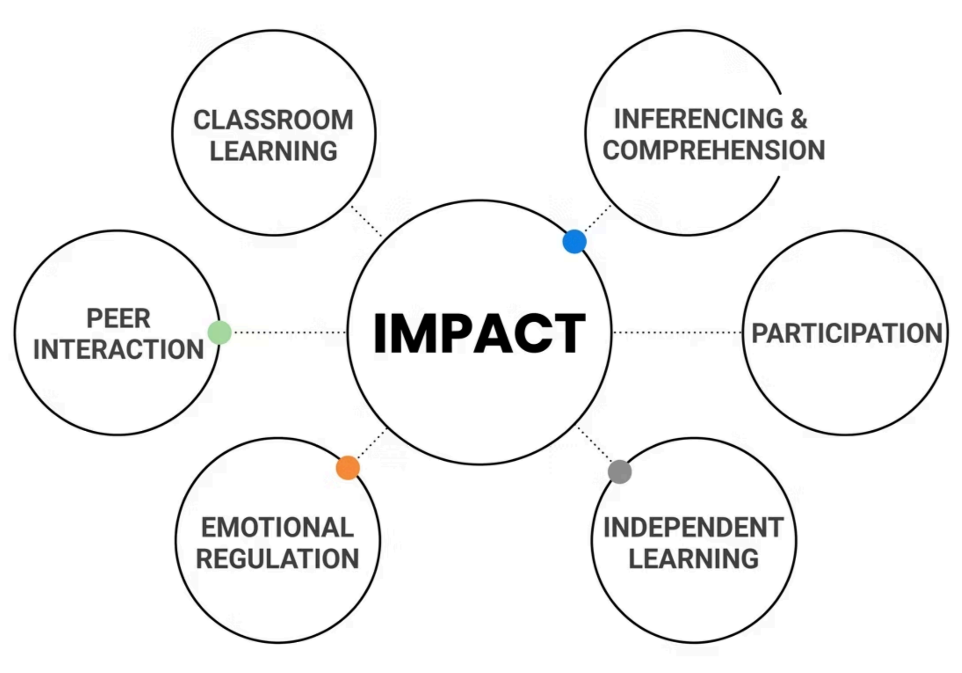
Mainstream school environments rely heavily on communication for learning. Children are constantly expected to listen and process verbal instructions, understand implied meaning, explain ideas clearly, participate in discussions, interpret social cues, ask questions independently, and participate collaboratively with peers.
Reading Comprehension
Understanding implied meaning, inferencing, and abstract language within texts.
Written Expression
Organising ideas, explaining reasoning, and expressing thoughts coherently.
Classroom Participation
Managing verbal discussions, responding flexibly, and participating confidently in group learning.
Social Learning
Understanding perspectives, conversational flow, classroom interaction, and collaborative activities.
Independent Learning
Clarifying misunderstandings, following verbal expectations, and adapting communication independently across situations.
Children experiencing these challenges may also benefit from broader support for mainstream school participation and school coping.
Why Tuition Alone May Not Fully Address Communication Difficulties
Some children continue struggling despite repeated tuition because the underlying challenge may not simply involve academic exposure or practice.
Traditional tuition often focuses on:
- Repetition and drilling
- Worksheets and exercises
- Examination preparation
- Memorising content
Children with communication-related learning difficulties may also require support in:
How Cognitive Supports Communication and Learning Development
At Cognitive Development Learning Centre, our structured cognitive and learning intervention approach focuses on helping children strengthen the processes involved in communication for learning, verbal reasoning and inferencing, comprehension and language processing, flexible communication, classroom participation, social understanding within learning environments, independent communication strategies, and emotional confidence during learning.
Psychology-Informed
Supported by structured, psychology-informed approaches to communication, learning, and mainstream school coping.
Personalised
Tailored according to each child’s learning profile, communication patterns, strengths, and school-related needs.
Mainstream School-Oriented
Designed to help children participate more effectively within mainstream educational environments.
Developmentally Focused
Helping children gradually build confidence, flexibility, resilience, communication independence, and classroom participation over time.

OUR PHILOSOPHY
Supporting Children Without Rushing to Labels
Some children experiencing communication-related learning difficulties may already have formal diagnoses, while others may simply experience ongoing school and communication struggles without clear explanations.
At Cognitive, we focus on understanding how each child learns, processes information, communicates during learning, and copes with classroom demands.
Our goal is not to label children unnecessarily, but to identify meaningful learning needs and provide structured support that helps children participate more confidently and independently in school over time.
When Parents Often Seek Support
Many families are searching for the middle ground between traditional tuition and highly clinical therapy environments. Our structured cognitive and learning intervention approach aims to support children in practical, school-related ways while preserving emotional confidence, communication development, and long-term learning independence.
Expression Difficulties
Their child struggles to express ideas clearly or misunderstandings arise during classroom learning.
Comprehension Challenges
Ongoing comprehension difficulties and frustration during communication tasks persist despite effort.
Social & Participation Struggles
Social difficulties affecting learning participation and reduced classroom confidence become apparent.
Emotional Exhaustion
Emotional exhaustion after school and increasing school-related anxiety despite tuition and academic support.
Verbal Classroom Demands
Difficulty coping with verbal classroom demands and struggles that persist despite existing academic support.
Book a Learning Profile Consultation
If your child struggles with communication during learning, comprehension, inferencing, classroom participation, or verbal school demands, a structured learning profile consultation may help clarify the underlying learning challenges involved.
Speak to our learning team to better understand how Cognitive Development Learning Centre supports children experiencing autism-related communication and learning difficulties.
What to Expect
A structured conversation with our learning team to explore your child’s communication and learning profile, school challenges, and how our intervention approach may help.
Who We Support
Children experiencing autism-related communication and learning difficulties, language-processing challenges, social communication difficulties, and broader developmental learning profiles.
Our Commitment
Practical, school-oriented support that preserves emotional confidence and builds long-term communication independence — without rushing to labels.