Why Some Children Get Comprehension Questions Wrong Even When They Understand (And How to Help)
A guide for parents on the gap between reading understanding and answering correctly — and what you can do about it.
Introduction
Many parents notice something puzzling:
Their child seems to understand the passage when reading, but still gets comprehension questions wrong.
This can be frustrating and confusing.
It may appear that the child is being careless, not paying attention, or making avoidable mistakes.
However, in many cases, the issue is not a lack of understanding.
Instead, it lies in a different challenge:
The gap between understanding what is read and expressing the correct answer. This is often linked to children who misunderstand what they read or struggle to organise their responses clearly.
What Does This Problem Look Like?
Children may understand the passage but struggle to translate that understanding into correct answers.
Children facing this difficulty may:
- Give answers that are partially correct
- Miss key details in their responses
- Provide answers that do not directly address the question
Parents may observe:
- “He knows the story but cannot answer properly”
- “She explains verbally but writes incorrectly”
This suggests that:
Understanding is present, but answering skills are weak. In some cases, children may also struggle to remember key details from the passage.
Why Children Get Answers Wrong Despite Understanding
The issue often lies in how children interpret questions and organise answers.
1
Difficulty Understanding the Question
Some children read the passage correctly but misunderstand what the question is asking. They may:
- Focus on the wrong part of the question
- Miss key instructions
- Misinterpret keywords
As a result, even with correct understanding of the passage, their answers do not match the question. This can happen even when the child has understood the passage correctly.
2
Weak Ability to Locate Relevant Information
Children need to identify which part of the passage contains the answer and distinguish between important and irrelevant details. Some children:
- Recall general ideas
- But cannot pinpoint specific information
This leads to vague or incomplete answers.
Further Reasons Answers Go Wrong
Difficulty Organising Answers
Even when children know the answer, they may struggle to:
- Structure their response clearly
- Include all required details
Their answers may be disorganised, incomplete, or lacking clarity.
Challenges in Expressing Ideas Clearly
There is often a link between comprehension and written expression. Some children:
- Understand internally
- But cannot express their ideas clearly in words
This results in answers that do not reflect their actual understanding. This is closely related to difficulties in organising and expressing ideas clearly in writing.
How This Affects School Performance
This gap leads to lost marks, frustration, and inconsistent results.
Loss of Marks Despite Understanding
Children may understand the passage but still lose marks due to incomplete or incorrect answers. This can be especially frustrating for children who understand the content but are unable to demonstrate it effectively.
Difficulty Performing in Exams
Examinations require accurate interpretation of questions and clear, structured answers. Children who struggle in this area may perform below their actual ability. This often becomes more noticeable in exams, where marks depend heavily on how well answers are presented.
Reduced Confidence
Repeated experiences of “I knew it but got it wrong” can lead to frustration, reduced confidence, and avoidance of comprehension tasks.
When This Becomes a Concern
Persistent mismatch between understanding and answers may indicate deeper learning challenges.
It is normal for children to make occasional mistakes.
However, concern arises when a child consistently:
- Understands verbally but answers incorrectly in writing
- Struggles to interpret questions accurately
- Gives incomplete or unclear responses
This may indicate difficulties in comprehension application, language organisation, or written expression.
How Parents Can Support Their Child
Support should focus on bridging the gap between understanding and answering. This helps children reduce guessing and improves how they respond to comprehension questions.
Teach Children to Break Down Questions
Help the child:
- Identify key words in the question
- Understand exactly what is being asked
This improves accuracy in answering.
Encourage Evidence-Based Answers
Guide the child to:
- Refer back to the passage
- Locate specific information
This reduces guessing and improves precision.
Focus on Answer Structure
Teach simple structures such as:
- Complete sentences
- Including key details
This helps children present their answers more clearly.
Support Both Understanding and Expression
If a child consistently understands but cannot answer, support should address:
- Both comprehension
- And expression skills
When Additional Support May Be Needed
When Additional Support May Be Needed
If a child continues to struggle despite support at home, it may indicate deeper underlying difficulties in how they process and organise information.
In such cases, targeted support can help children develop the specific skills needed for comprehension, memory, and academic performance.
Early support not only improves learning outcomes but also helps build confidence and reduce frustration in school.
In Short
When children get comprehension questions wrong despite understanding, the issue is often not carelessness.
Instead, it reflects a gap between:
- Understanding information
- And expressing it correctly
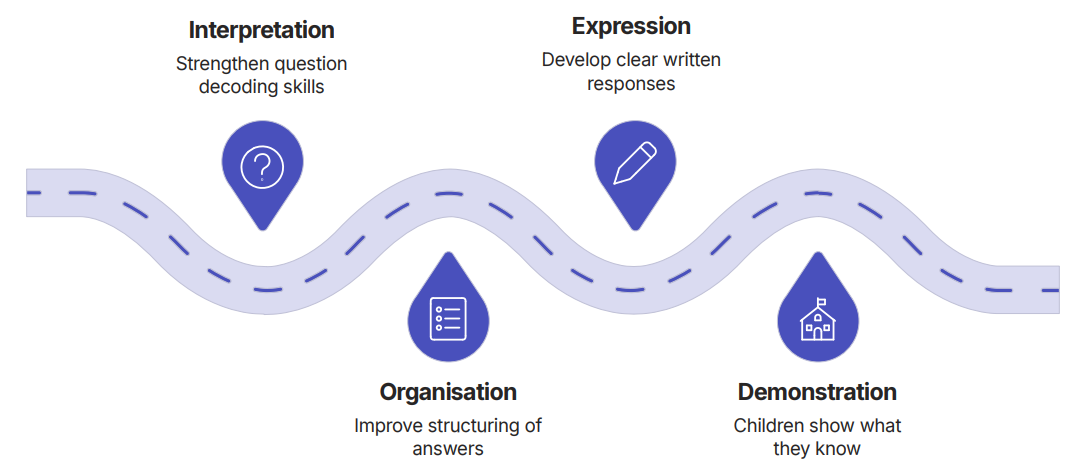
By strengthening question interpretation, answer organisation, and expression skills, children can better demonstrate what they know, perform more consistently in school, and gain confidence in their learning.
Parents May Wish to Find Out More
Explore these related topics to deepen your understanding of your child’s learning needs:
Understanding Reading Comprehension Difficulties in Children
A deeper look at why some children find comprehension consistently challenging.
Why Children Misunderstand What They Read
Exploring the reasons behind misinterpretation of texts and questions.
Why Children Forget What They Read
Understanding memory and retention challenges in reading comprehension.
How Language and Written Expression Difficulties Affect School Performance
How challenges in expressing ideas in writing can impact academic results across subjects.
Why Some Children Cannot Infer Meaning When Reading
Understanding why some children struggle to read between the lines and interpret deeper meaning in texts.