Key Takeaways
- Lower primary attention span is still developing between ages 6 and 9, but persistent attention problems across Primary 1 to Primary 3 often signal underlying cognitive bottlenecks rather than laziness or defiance.
- Common classroom distraction signs include unfinished worksheets, missed multi-step instructions, and consistent “zoning out” during whole-class teaching over several weeks or an entire school term.
- Difficulty with sustained attention frequently stems from working memory overload, sensory processing fatigue, or executive function delays – not bad behavior.
- Parents can start with structured routines, environment tweaks, and simple home games to gently build focus, while monitoring school concentration struggles over one full term (approximately 10 weeks).
- A tailored Cognitive Assessment at the Cognitive Development Learning Centre can map a child’s specific attention profile and guide targeted support before gaps widen.
Introduction: The Big Shift to Primary School Focus Demands
Your child spent Kindergarten moving between sand play, painting, storytelling circles, and outdoor exploration in 10- to 15-minute blocks. Now they sit at a desk for 20 to 40 minutes at a stretch, copy from a whiteboard, listen to multi-step instructions, and manage a timetable that shifts between subjects every hour. The contrast is enormous – and for many children, it is the steepest cognitive adjustment they have ever faced.
During the first school term, most kids show some restlessness and a shorter attention span as they adjust to homework, formal lessons, and the social intensity of a bigger class. That early wobble is expected. Research on attention development in 6- to 8-year-olds confirms that sustained attention and inhibitory control improve substantially across these years, but performance remains variable – six-year-olds make more frequent lapses and show wider swings in response time than eight-year-olds. Students’ attention declines after 10-15 minutes of instruction, and one study found that children’s attention span averages 29.61 seconds during individual task segments, with attention span declining by 27.41% as tasks continue.
The concern arises when child focus problems in primary school persist well beyond the adjustment window. If a child is still struggling to sustain attention by the end of Term 1 or Term 2 – and several teachers report similar observations – the issue is unlikely to resolve on its own. Attention issues in children stem from a mix of biological and environmental factors, not a lack of motivation. What parents are usually seeing is a mismatch between classroom demands and the child’s developing cognitive systems.
This article will walk you through the specific classroom distraction signs to watch for, explain the cognitive mechanisms underneath, and give you a practical parent playbook for home. We will also cover when school concentration struggles warrant a professional assessment and how to take that step with confidence.

Recognizing Classroom Attention Gaps vs. Typical Restlessness
Not every daydream is a red flag. The challenge for parents is separating age-appropriate fidgeting from patterns that point to genuine attention problems. The table below offers a quick comparison to help you examine the difference.
| Typical for Age 6–8 | Warrants Closer Attention |
| Briefly looks out the window, then returns to task | Frequently zones out for extended periods during lessons |
| Needs a reminder to settle after recess | Needs constant prompting to stay on task throughout the day |
| Occasionally forgets one part of a two-step instruction | Consistently misses multi-step instructions and asks “What are we supposed to do?” repeatedly |
| Fidgets in seat but completes most work | Regularly turns in incomplete worksheets with large sections untouched |
| Has one or two “off” days per week | Teachers across subjects report “not tuning in” over several weeks |
| Can follow along during engaging whole-class lessons | Loses place when copying from the board and falls behind even during interesting activities |
Teachers play a critical role here. Over a full term, comments such as “often not tuning in during whole-class teaching,” “misses key words in instructions,” or “needs one-to-one re-explanation after every lesson” are data points worth tracking. When several teachers across different subjects note the same behavior, the pattern becomes significant.
Parents should also look for consistency across settings – school, homework time, and enrichment classes. If your child struggles to focus only during a single boring activity, that may reflect boredom or task difficulty. But if the difficulty appears across contexts and persists for at least six to eight weeks, it suggests something deeper than an isolated bad day.
A few additional red flags to watch calmly: falling behind in reading groups, frequent daydreaming during group work, or consistent confusion during multi-step maths problems. Children with dyslexia may struggle to focus on reading tasks specifically, which can look like general inattention. Similarly, learning disorders can cause children to appear inattentive in school, and learning disorders can be mistaken for ADHD by teachers if the underlying cause is not explored.
It is also worth noting that persistent inattentiveness can be linked to ADHD or anxiety – two conditions whose symptoms often overlap. Inattention is one of three key symptoms of ADHD, but ADHD symptoms must be observed in multiple settings for diagnosis, and ADHD diagnosis requires information from multiple observers. A formal analysis should never rely solely on teacher reports. Anxiety symptoms can mimic ADHD, complicating diagnosis further. Age also matters: research shows boys born youngest in their class are 30% more likely to be diagnosed with ADHD, and younger girls are 70% more likely to be diagnosed with ADHD than older girls in the same grade – a reminder that individual differences in maturity can influence how attention is perceived.

Under the Hood: The Root Cognitive Deficits Behind Focus Issues
Attention is not a single switch a child flips on or off. It is a system of interlocking skills: alerting (being ready to respond), orienting (directing focus), sustaining (keeping focus on a task), and monitoring (checking ongoing performance). When parents or teachers say a child “can’t concentrate,” they are usually observing a breakdown in one or more of these components – not a character flaw.
Lower primary attention span is shaped by working memory capacity, processing speed, sensory processing thresholds, and executive function maturity, all of which develop at different rates across age groups. Biological conditions like ADHD impact executive functioning in children, but many children without any diagnosis also hit these bottlenecks simply because their cognitive control systems are still catching up to classroom demands. Meanwhile, children are exposed to constant environmental stimuli that create sensory overload – fluorescent lights, wall displays, corridor noise – which adds another layer of demand.
Some children appear to “ignore” their teacher when in reality their mental buffer is full, the room is too stimulating, or they lack the internal pacing strategies that adults take for granted. Understanding what is happening under the hood lets parents and teachers respond with the right support rather than the wrong label. At the Cognitive Development Learning Centre, cognitive assessments map these underlying systems using standardised tasks, attention span measures, and detailed classroom history so that every recommendation is grounded in data.
Working Memory Overload in Lower Primary Classrooms
Working memory is best understood as a mental notepad – it holds information just long enough for a child to use it in the moment. When a Primary 2 teacher says, “Take out your maths book, turn to page 36, and do questions 1 to 5,” the child needs to hold three pieces of information simultaneously. A child with limited working memory capacity might remember “get my book” but lose the page number and the question range before they even sit down.
A meta-analysis of over 11,000 children aged 6 to 12 found a moderate-to-strong correlation between working memory and arithmetic ability, with correlation coefficients around 0.40 to 0.50 depending on the working memory domain. The present findings from that research suggest that verbal working memory is especially tied to operations like addition and subtraction – precisely the tasks filling lower primary maths lessons.
Signs of working memory overload in the classroom include starting a task but skipping steps, forgetting instructions mid-way, frequently asking “What are we supposed to do again?”, and copying half a sentence before losing place on the board. Long tasks can overwhelm children and should be broken down into smaller chunks to keep the mental notepad from overflowing.
When working memory is overtaxed, sustained attention collapses. The child is not choosing to ignore the lesson – their buffer simply has no room left. Auditory processing issues can lead to missed information in class, compounding the problem. Some children with learning disorders may compensate by working harder initially, but undiagnosed learning disabilities may lead to hidden struggles in older grades as task complexity increases.
Standardised working memory measures and continuous performance tasks can objectively assess these difficulties. A Cognitive Assessment at the Cognitive Development Learning Centre interprets these scores in the context of a child’s age, school setting, and classroom demands, giving parents and teachers a clear picture rather than guesswork.
Sensory Processing Fatigue in Busy Classrooms
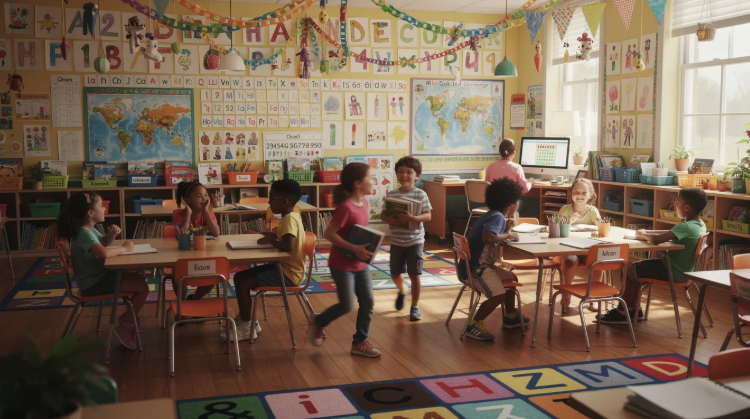
Picture a typical Primary 2 classroom at 10:30 a.m.: bright wall displays cover every surface, twenty-five children are chatting during a transition, chairs scrape across the floor, a projector hums, and the teacher is giving instructions over the noise. For many children, filtering all of this is effortless. For others, it is exhausting.
Primary school children frequently struggle with sensory overload, and research estimates that roughly 8 to 10 percent of primary-age children show measurable sensory processing differences. Sensory Processing Disorder affects children’s ability to process sensory information effectively. Children with SPD may find sensory environments overwhelming, and SPD can lead to challenges in focus and learning in school settings. Children with SPD may exhibit atypical reactions to sensory stimuli – covering ears at sudden sounds, startling easily, or complaining that the classroom is “too noisy” or “too bright.”
Studies on classroom acoustics confirm that noise levels above 70 dB significantly impair verbal working memory span and visual attention tasks in children aged 7 to 11, while also increasing perceived fatigue. By late morning, a sensory-sensitive child’s executive energy may already be depleted, leaving little capacity to sustain attention for tasks after recess.
The key distinction: a child who is occasionally bothered by noise is within the typical range. A child whose concentration consistently collapses in noisy settings but improves markedly in quieter one-to-one or small-group work is showing a pattern that deserves attention. Sensory experiences vary widely between children, and understanding a child’s sensory profile – alongside their cognitive profile – helps guide practical adjustments. Occupational therapy and sensory-informed classroom modifications can be highly beneficial, and a cognitive and sensory profile from the Cognitive Development Learning Centre can point families toward the right interventions.
Executive Function Pacing and Self-Monitoring Differences
Executive functions are the brain’s “project manager” skills: planning what to do first, starting the task, organising materials, pacing effort across time, checking quality, and finishing within a deadline. These abilities develop gradually throughout childhood, with research on 5- to 8-year-olds showing that sustained attention depends heavily on working memory, inhibitory control, and task switching – all executive function components.
Pacing issues look like this: a child takes 10 minutes to begin writing a simple sentence, spends an excessive amount of time decorating the title page, or races through maths without checking a single answer. Self-monitoring gaps are equally telling – the child does not notice skipped questions, ignores margins and layout, or hands in work with obvious errors even after being reminded to “check your work.”
These patterns can make a child look careless or oppositional, but the reality is that they have difficulty internally tracking time, task steps, and quality. Children often lose intrinsic motivation due to mundane or difficult tasks, which further compounds the issue. Perfectionism in anxious children can delay their work completion in a different way – they erase and rewrite repeatedly, paralysed by the fear of getting it wrong. Anxiety can lock up a child’s brain, hindering focus entirely. Children with separation anxiety struggle to concentrate on schoolwork because their mental energy is consumed by worries about being away from a parent. Even obsessive-compulsive disorder can distract children from classroom tasks through intrusive, repetitive thoughts.
Cognitive assessments can separate executive function pacing issues from pure attention problems or learning disorders. This distinction matters: it prevents premature labels and ensures that the support plan matches the actual bottleneck. A child treated for “poor behaviour” when the real issue is executive function delay will not improve – and may develop secondary stress or avoidance.
The Practical Parent Playbook: Home Strategies for Focus
Small, consistent changes at home can meaningfully reduce school concentration struggles. The goal is not to turn your living room into a therapy clinic. It is to protect cognitive energy, build attention skills gradually, and create an environment where your child’s developing brain can do its best work.
The strategies below focus on predictable routines, environment tweaks, and brief, playful attention-building activities that fit into weekday evenings and weekends. Test each strategy for at least two to three weeks – roughly half a school term – before judging its impact, and keep the class teacher informed about what you are trying. You are a partner in strengthening your child’s sustained attention, not solely responsible for “fixing” anything.
Protecting Cognitive Energy: Morning and Evening Routines
Establishing a structured routine can reduce anxiety for children and free up mental bandwidth for learning. Children thriving on predictability benefit from clear, structured routines – and the impact starts the night before school.
Evening routine (Primary 1–3): Aim for a consistent bedtime with lights out between 8:00 and 8:30 p.m. The last 30 to 45 minutes should be screen-free. A predictable sequence works well: shower, light snack, 10 to 15 minutes of reading together, then sleep. Inadequate sleep and poor nutrition lower a child’s alertness and cognitive processing the following day. Sleep deprivation impacts a student’s cognitive sharpness during school hours – even one fewer hour of sleep can noticeably reduce impulse control and frustration tolerance. Reducing excessive device use before bed can improve sleep quality, while overuse of digital devices can shorten attention spans in children over time.
Morning routine: Wake at roughly the same time daily. Have the school bag packed and clothes chosen the night before to reduce decision load. An unhurried breakfast at the table (rather than in front of a screen) sets a calmer tone. Before leaving home, try a two- to three-minute calm transition activity – three slow deep breaths, quiet background music, or a brief stretch. These small steps preserve the mental energy your child will need to sustain attention through those first classroom lessons.
Structuring Homework and Study Time for Better Focus
Children need dedicated work zones to reduce distractions when studying. Set up a quiet corner with minimal visual clutter on the desk – only the materials needed for the current task. Classroom walls should be kept uncluttered to limit visual distractions, and the same principle applies to the homework space at home.
Use short, timed focus blocks that match your child’s realistic lower primary attention span:
- Age 6–7:10 to 15 minutes of work, then a 3- to 5-minute movement break
- Age 8–9:15 to 20 minutes of work, then a 3- to 5-minute break
Short, focused lessons should incorporate movement breaks to help students recharge, and incorporating short physical activity breaks boosts cognitive attention. Let your child stretch, jump, or walk around briefly before sitting down again.
Visual supports make a noticeable difference. Try a simple checklist for homework steps: “Read question → underline key words → solve → check answer.” A visual timer (sand timer or phone timer facing the child) helps them see how long to stay on task without constant adult reminders. Give one instruction at a time for complex tasks and ask the child to repeat it back – this gently strengthens working memory and listening accuracy.
Practicing mindfulness activities helps children transition and calm their minds between homework subjects. Even a 30-second “close your eyes and take three breaths” reset can improve the quality of the next work block.
If focus during homework remains extremely short despite these supports, that pattern is important information. Note the specifics – how many minutes before attention drifts, which subjects are hardest, whether breaks help – and share these observations with professionals during a cognitive evaluation.
Playful Attention-Building Games at Home
Games that target attention skills do not need to feel like work. Five to ten minutes of play each evening can build real cognitive capacity over time.
Clap the Pattern (auditory sustained attention and working memory): Clap a simple two-beat rhythm and ask your child to repeat it. Gradually increase to three, then four beats. Add variation – clap-clap-pause-clap – to challenge working memory. This is a listening game that strengthens the same skills needed to follow multi-step instructions in class.
Pencil Tracking (visual attention and reading readiness): Move a pencil tip slowly across a page in various directions – left to right, then diagonals, then gentle curves. Ask your child to follow the tip with their eyes only, keeping their head still. This supports the visual tracking needed for reading and copying from the board.
Simon Says and Freeze Dance (inhibition and mental flexibility): These classic games require a child to listen carefully, hold a rule in mind, and inhibit an automatic response. “Opposites” is another option – you say “up,” the child says “down”; you say “fast,” they say “slow.” These play-based activities strengthen cognitive control and are exactly the kind of inhibition practice that transfers to classroom self-regulation.
Interactive activities significantly enhance student attention in classrooms, and the same principle applies at home. For older Primary 2 and 3 children interested in technology, tools like Scratch programming improve student engagement and attention in lessons. Students report lower boredom levels with Scratch-based instruction, and Scratch increases student motivation and engagement in learning. Interactive digital activities sustain student attention better than traditional methods, and Scratch supports problem-solving activities that enhance attention span. Even simple digital tools can reduce boredom and loss of interest in lessons when used in moderation.
As you play, observe which types of games your child finds easiest and which are hardest. Does auditory recall come easily but visual tracking falter? Does inhibition seem strong but sustained listening collapse after two minutes? These observations are valuable data points. Bring them to the Cognitive Development Learning Centre for a more precise understanding of your child’s attention strengths and weaknesses – the kind of detail that helps explore possibilities for targeted intervention.

Conclusion: Moving From “Wait-and-See” to Proactive Support
Some focus difficulties in early primary school are a normal part of development – a young brain adjusting to new demands. But when classroom distraction signs persist over a full school term or more, and when multiple teachers observe the same patterns, waiting is no longer the most helpful response.
Longitudinal research shows that children with persistent attention problems in Grade 1 who do not receive support demonstrate significantly lower achievement in both reading and writing by Grade 5. The findings suggest that the gap does not close by itself – it widens. Early, targeted support can interrupt the cycle of repeated corrections, eroding confidence, and growing academic gaps before they become entrenched. Anxiety and family stress can manifest as inattentiveness in children, and results suggest that emotional factors deserve the same careful attention as cognitive ones. Trauma can lead to hypervigilance, affecting attention in children who may otherwise have strong cognitive capacity. Children exposed to trauma may struggle with attention not because of a learning disorder but because their nervous system is locked in a protective mode. PTSD symptoms include difficulty concentrating in children, and children with trauma may exhibit exaggerated startle responses that look like sensory sensitivity but have a different root. Trauma can cause hypervigilance in children and can lead to a persistent sense of insecurity that makes settling into a classroom feel impossible.
Understanding a child’s unique attention profile – their working memory capacity, sensory processing thresholds, executive function maturity, and an individual’s ability to sustain attention – is far more effective than relying on generic labels or one-size-fits-all behaviour charts. The present study of your child’s cognitive landscape matters more than any assumption.
If you recognise the patterns described in this article, consider taking the next step. The Cognitive Development Learning Centre offers comprehensive Cognitive Assessments designed to pinpoint exactly how your child processes information – and to build a custom, evidence-based path to progress. A professional evaluation can help families and teachers design personalised strategies and classroom accommodations, turning school concentration struggles into a structured plan for confidence and achievement. Future research continues to refine our understanding of how young minds develop, but the data we have today is more than sufficient to act on. You do not need to wait for a crisis. You need clarity – and clarity is what a good assessment provides.

FAQ: Child Focus Problems in Primary School
How long should my Primary 1–3 child realistically be able to focus in class?
Many 6- to 9-year-olds can maintain good attention for about 10 to 20 minutes on a well-matched, engaging task, but their attention span is noticeably shorter for dull, difficult, or noisy activities. Brief mind-wandering – glancing out the window, fidgeting with a pencil – is entirely normal at this age and does not by itself indicate a problem. The frequency and consistency matter more than any single episode. If your child is frequently zoning out, missing key instructions, or being consistently lost during 20- to 30-minute lessons across several weeks, that pattern suggests a deeper attention challenge worth exploring. Ask your child’s teachers for specific examples: what time of day does focus break down, during which type of activity, and how does the child respond when redirected? These details help identify whether the issue is task-specific or more pervasive, and they give professionals concrete data to work with during a formal analysis.
Could my child’s focus problems just be boredom or lack of challenge?
It is a real possibility. Highly able children sometimes “switch off” if work is far too easy or repetitive, especially in subjects like maths or reading groups where they already grasp the material. In these cases, children often show excellent sustained attention when given more complex, novel, or project-based tasks – which helps distinguish boredom from core attention difficulties. If your child lights up and concentrates well during challenging, interesting activities but drifts during routine worksheets, discuss differentiated work or enrichment tasks with their teachers. However, if attention problems appear even during activities that match your child’s interests and ability level, the issue is less likely to be boredom alone. A cognitive assessment can clarify the relationship between ability, motivation, and attention systems, so the right support reaches the right point. Group differences between children who are bored and children who have genuine cognitive bottlenecks are often subtle – and getting the distinction right matters for how the child is treated at school and at home.
When should I move from “wait-and-see” to seeking a professional assessment?
A reasonable rule of thumb: if significant focus difficulties persist for at least one full school term – around 10 weeks – despite reasonable classroom supports and good home routines, a professional evaluation is wise. You should consider moving more quickly if you notice signs of growing anxiety about school, frequent complaints of headaches or stomach aches on school days, or a sudden drop in grades or reading levels. These secondary symptoms often reflect the stress of coping with unrecognised cognitive demands. Early cognitive assessment can identify whether issues relate to attention systems, learning differences, emotional factors such as anxiety or trauma, or a combination. It provides a map rather than a guess, enabling adults – parents, teachers, and specialists – to achieve a consistent, coordinated approach. Spearman correlations and other statistical tools used during assessment help quantify the relationship between different cognitive abilities, giving a precise rather than impressionistic picture of your child’s profile.
What happens during a Cognitive Assessment for attention problems?
A typical assessment at the Cognitive Development Learning Centre includes a detailed parent interview, a review of school reports and teacher observations, and individually administered tasks that measure attention span, working memory, processing speed, and executive function. Tasks are presented as child-friendly games or puzzles – not stressful exams. Sessions are normally spread over one or two visits, with regular movement breaks to keep children comfortable and to reflect their genuine capacity rather than fatigue. After the assessment, results are discussed with parents and legal guardians in a feedback session that includes clear, jargon-free explanations, a written report with recommendations for home and the educational setting, and space for questions. No further steps are taken without full discussion and agreement. The aim is to incorporate all relevant data – cognitive, sensory, behavioural, and emotional – into a single, coherent profile that guides personalised support. Informed consent is obtained before the assessment begins, covering what will be done, how data will be used, and your right to decline any part of the process.
How is my child’s privacy protected during assessment and feedback?
Reputable centres follow strict confidentiality policies. Reports are stored securely, and information is shared only with people parents explicitly authorise – for example, a class teacher, school counsellor, or external therapist. You control who receives the final report and recommendations at every stage. The goal is to partner with you, not to label your child. Creating a safe, transparent process is essential so that families feel empowered rather than overwhelmed. If at any point you have worries about how information is being used, you have the right to raise them and to withdraw consent. The enjoyment of trust between families and professionals is what makes assessment genuinely beneficial – and it starts with clarity about boundaries from the very first conversation.
Comments are closed