Key Takeaways
- Mild anxiety can temporarily sharpen attention and memory, but chronic or excessive anxiety disrupts encoding, consolidation, and recall of new information.
- The stress response floods the brain with adrenaline and cortisol, altering how the hippocampus and prefrontal cortex process and store memories.
- A child’s anxiety in the classroom often looks like inattention, disruptive behavior, or learning problems, and it can be mistaken for ADHD or other disorders in special education settings.
- Anxiety affects children’s ability to focus and remember lessons, particularly during high-stakes moments like tests and oral presentations.
- Early support through mental health interventions such as cognitive behavioral therapy, classroom accommodations, and family involvement can protect learning and long-term memory development for an anxious child.
Introduction: Anxiety in the Classroom and at Home
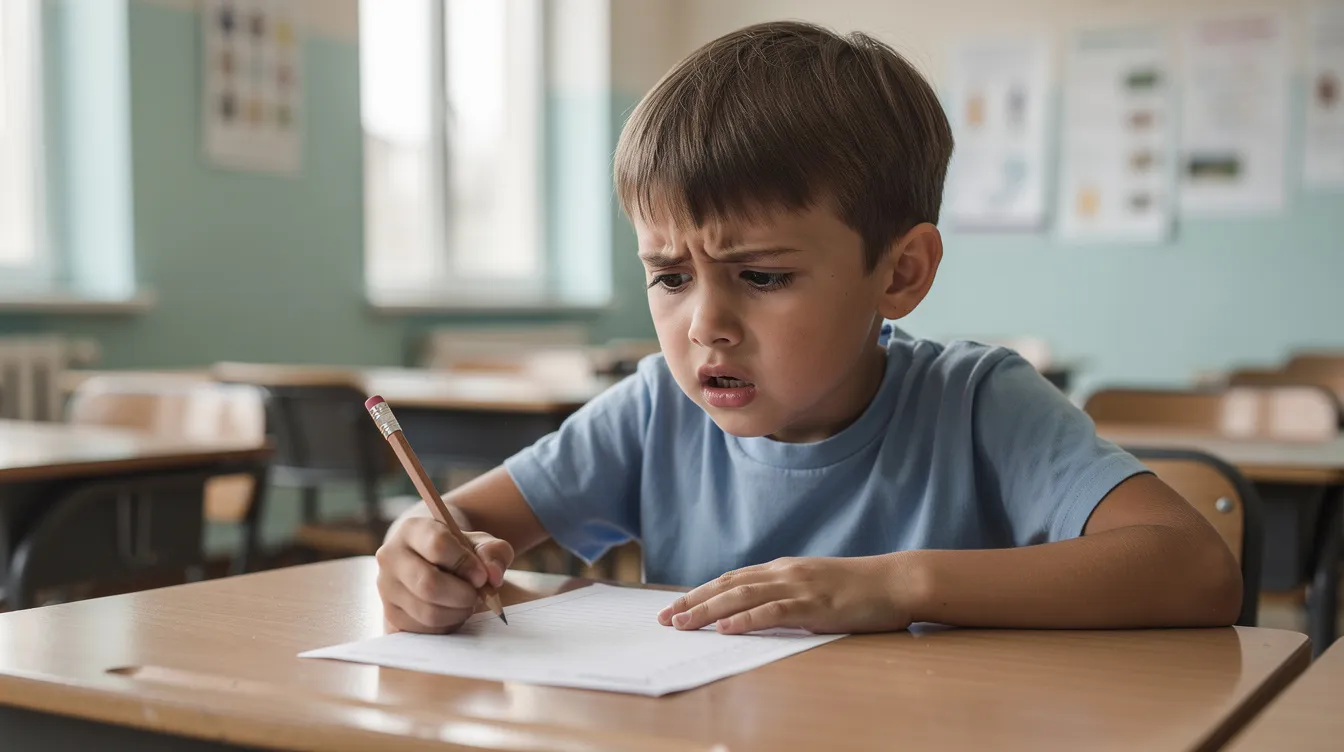
Picture a 10-year-old in 5th grade who studies spelling words at the kitchen table with confidence. She gets every one right. The next morning, she sits down for the spelling test at school and her mind goes blank. She stares at the paper, her racing heart drowning out the teacher’s voice. She knows these words. She just can’t reach them right now.
This scenario plays out in classrooms every day. Anxiety is a natural reaction to perceived threat, and most children feel anxious before a big game or a class presentation. That kind of nervousness is a normal part of growing up. But when worry becomes persistent, intense, and disproportionate to the situation, it crosses the line into an anxiety disorder that can seriously affect learning and memory.
The numbers back this up. In 2024, approximately 19% of U.S. adolescents reported moderate-to-severe anxiety symptoms, and the OECD’s 2026 report on youth mental health confirms a consistent increase across many countries since 2020. Many children are affected, and the consequences reach far beyond feelings of unease. They reach into how the brain learns, stores, and retrieves information.
This article explores how the stress response alters learning and memory at each stage, with special attention to mainstream and special education settings. Whether you are a parent, a child’s teacher, or a clinician, the goal is to help you understand what’s happening inside an anxious child’s brain and what you can do about it.
The Stress Response: What Happens in the Brain and Body
The “fight-or-flight” response is an ancient survival system. When early humans encountered a predator, the brain needed to make split-second decisions: run, fight, or freeze. That system still operates in modern children, but now the triggers are timed exams, social situations, oral presentations, and bullying rather than bears.
Here’s the chain of events. The amygdala, a small almond-shaped structure deep in the brain, detects potential danger. It signals the hypothalamus, which activates two systems:
- The autonomic nervous system (ANS): This releases adrenaline and noradrenaline within seconds, raising heart rate, quickening breathing, and sharpening alertness.
- The hypothalamic-pituitary-adrenal (HPA) axis: This releases cortisol over the next 20 to 30 minutes, sustaining the body’s readiness to respond.
In a stressful situation like a classroom quiz, the child’s body responds as if facing physical danger. Cortisol levels spike. Blood rushes to large muscles. The brain prioritizes threat detection over the careful, methodical work of learning new facts.
The critical insight is that timing and intensity determine whether anxiety helps or harms memory. A brief jolt of adrenaline right before an important lesson can actually improve focus. But when the stress response fires too hard, too often, or at the wrong moment, it disrupts the very brain systems that children rely on to learn.
How Anxiety Alters Learning and Memory Processes
Memory isn’t a single event. It unfolds in stages: encoding (taking information in), consolidation (stabilizing it into long-term storage), and retrieval (pulling it back out when needed). Anxiety can interfere at every stage.
When anxiety is mild and brief, it can sharpen attention and improve encoding of relevant information. A student who feels a moderate level of alertness before a history exam may actually remember key dates better because the brain tags that information as important. This is the “sweet spot” where a manageable level of stress aids performance.
But excessive anxiety disrupts memory processing in the brain. When cortisol levels stay elevated, the hippocampus, the brain’s primary memory-forming structure, begins to struggle. The prefrontal cortex, which handles concentration and decision-making, gets overwhelmed. The result is shallow encoding and weaker consolidation. The brain never properly registers incoming data during anxiety episodes, which is why anxious students often report that lessons “didn’t stick.”
High anxiety can lead to memory loss during recall as well. Elevated cortisol just before or during retrieval, such as a pop quiz or being called on in class, blocks access to stored memories. The student studied, the information is there, but anxiety slams the door shut.
Over time, prolonged stress causes a shift from cognitive-based learning to habit-based behavior. The brain stops relying on the hippocampus for flexible, relational thinking and defaults to more rigid, automatic patterns. This reduces problem solving and creativity, two skills that children need across every subject.
Effects on Different Types of Memory
Anxiety does not affect all memory systems equally. Different types of memory respond to stress in different ways.
Episodic memory (memory for events, like what happened during Wednesday’s science experiment) is especially sensitive to stress hormones. Elevated cortisol and noradrenaline during stressful events can impair encoding and consolidation of everyday classroom experiences while sometimes strengthening memory for highly emotional material.
Semantic memory (facts and concepts) follows a related but distinct pattern. Under moderate anxiety, children may retain emotionally charged or high-stakes academic facts more effectively. But neutral content, the kind that makes up the bulk of school work, gets processed more shallowly and retrieved less reliably when anxiety levels are high.
Working memory is the mental workbench for holding and manipulating information. It’s what children use when solving multi-step math problems or following a series of directions. Anxiety can impair memory retention and recall in working memory by hijacking its limited capacity with worry and threat monitoring. An anxious child trying to solve a word problem is simultaneously running a background program of “What if I get this wrong? What if everyone sees?” That mental noise eats into the resources available for actual learning.
This pattern can mimic learning disorders or ADHD in school assessments, especially when the child’s anxiety is unrecognized. Both conditions involve inattention and difficulty, but the root causes and treatments are very different.

Children’s Anxiety: Signs, Symptoms, and School Impact
Every child experiences fear at certain developmental stages. Preschoolers may show extreme fear of the dark. Elementary students might worry about bad things happening to parents. These are normal developmental patterns. Anxiety becomes a concern when it persists, intensifies, and starts interfering with a child’s life, including friendships, family routines, and school performance.
Anxiety can cause inattention and restlessness in children, and these symptoms often overlap with what adults expect from ADHD. Here are common signs that teachers and parents should watch for:
- Trouble paying attention or a hard time focusing during lessons
- Avoidance of academic tasks, especially those involving evaluation
- Perfectionism that leads to incomplete work or not turning in homework due to self-doubt
- Anxious children may freeze when called on in class or have trouble answering questions
- Restlessness, fidgeting, or needing to leave the room
Physical symptoms are equally telling. Anxiety can cause physical symptoms like headaches and stomachaches, which lead to frequent trips to the school nurse. These are not “fake” complaints. An upset stomach and a racing heart are real physiological products of the stress response. Trouble sleeping at night compounds the problem during the day, leaving the child exhausted and less able to learn.
School refusal rates increase after vacations or sick days because returning to the anxiety-provoking environment feels overwhelming. Some children become clingy at drop-off. Others show what looks like oppositional or disruptive behavior, tantrums, leaving the classroom, refusing to participate, when in fact the behaviors are driven by fear and a fight-or-flight response, not willful defiance.
Frequent trips to the nurse may indicate anxiety symptoms rather than a medical issue. If a child regularly reports headaches or stomach aches before tests or presentations, anxiety is worth exploring.
When Anxiety Becomes a Learning Problem
Anxiety is considered a learning problem when it reaches clinically significant levels: intense, long-lasting, and interfering with daily functioning and academic progress. This threshold separates typical worry from conditions like generalized anxiety disorder, social anxiety, separation anxiety, specific phobias, and panic disorder.
Here’s how anxiety erodes academic performance:
- Homework completion drops because the child avoids tasks that trigger worry
- Memory performance on tests falls even when the child studied thoroughly
- Participation in class discussions declines because the child fears humiliation
- Anxiety can lead to not turning in homework due to self-doubt about quality
Chronic stress also breeds negative thoughts. Children develop beliefs like “I’m stupid” or “I’ll never understand this,” which become self-fulfilling. These cognitive distortions weaken motivation and reduce the repeated practice that learning depends on. The child begins to feel sad about school, leading to further withdrawal.
In many cases, anxiety co-occurs with ADHD, dyslexia, or other learning disabilities, creating a cycle where anxiety worsens skill deficits and skill deficits worsen anxiety. Teachers and parents should watch for patterns across subjects and over several weeks rather than reacting to one or two bad days. If an anxious child consistently struggles, it’s time to look deeper.
Anxiety, Memory, and Special Education
Many students receiving special education services also experience elevated anxiety, which complicates both assessment and instruction. When a child’s anxiety spikes during an evaluation, test scores drop, making it hard to determine what the child truly knows and remembers.
Consider a child with reading difficulties who also carries intense fear of being humiliated. During a reading fluency assessment, anxiety can amplify the difficulty, resulting in scores that underrepresent true ability. The evaluation captures the child’s worst-case performance, not their actual potential. This applies to written expression and math word problems as well, any task where fear of failure competes with cognitive resources.
An anxious child in special education may avoid tasks, shut down, or rush through work to “escape” the discomfort. All of these behaviors undermine accurate learning and memory practice. Other children in the same setting who don’t carry the same anxiety burden may appear to learn faster, reinforcing the struggling child’s negative self-beliefs.
Individualized Education Programs (IEPs) and 504 plans can and should include supports that directly target anxiety’s impact on memory and school performance. Without addressing the emotional barrier, academic interventions alone may fall short.
Practical Classroom Adjustments
Accommodations that reduce anxiety-related memory problems don’t require a complete overhaul of instruction. They require thoughtful adjustments:
Testing modifications:
- Extra time on tests to reduce time pressure
- Smaller testing rooms or quieter environments
- Providing questions one at a time instead of a full test booklet
- Allowing alternative ways to show knowledge, such as oral responses or projects
Daily instruction supports:
- Previewing material before a lesson so the child knows what to expect
- Using visual supports, written checklists, and posted routines to reduce cognitive load on working memory
- Providing clear, step-by-step instructions rather than multi-part verbal directions
Regulation tools:
- Brief movement breaks between tasks
- Calming corners with stress balls, noise-reducing headphones, or fidget tools
- Teaching breathing techniques that children can use independently
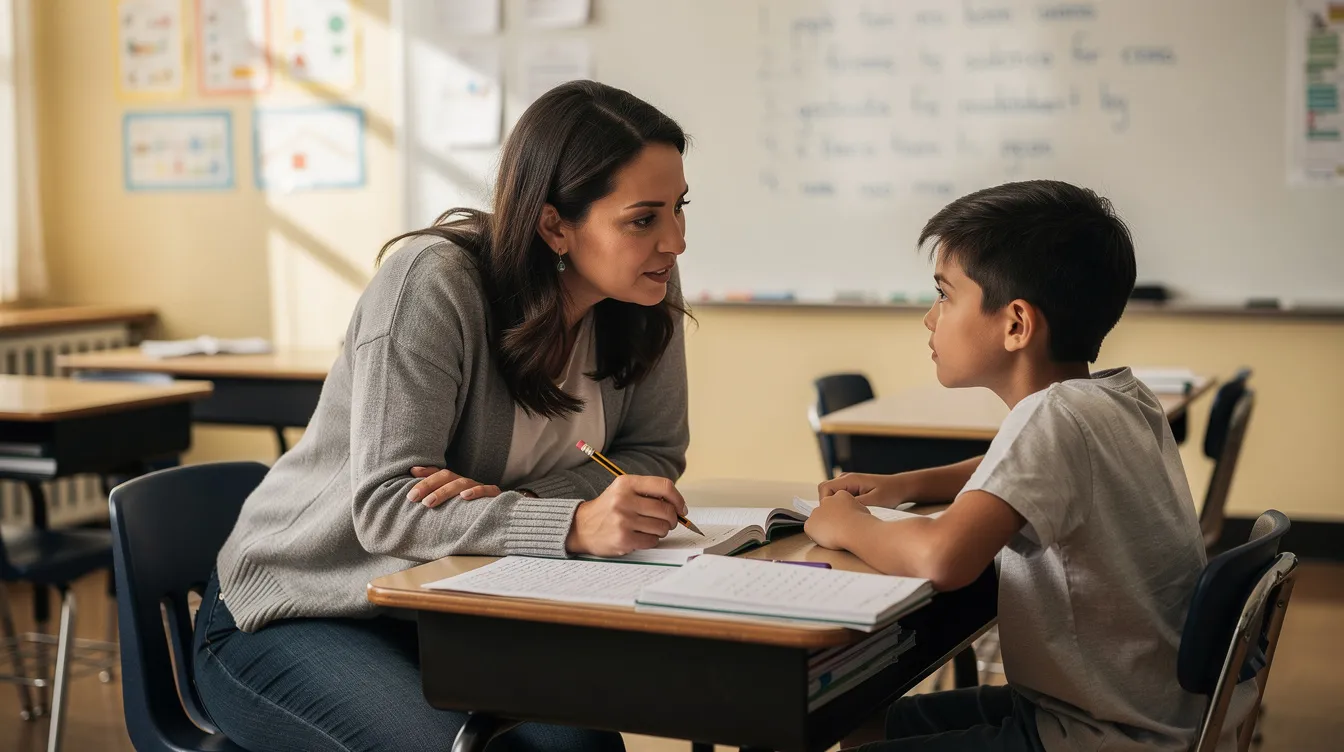
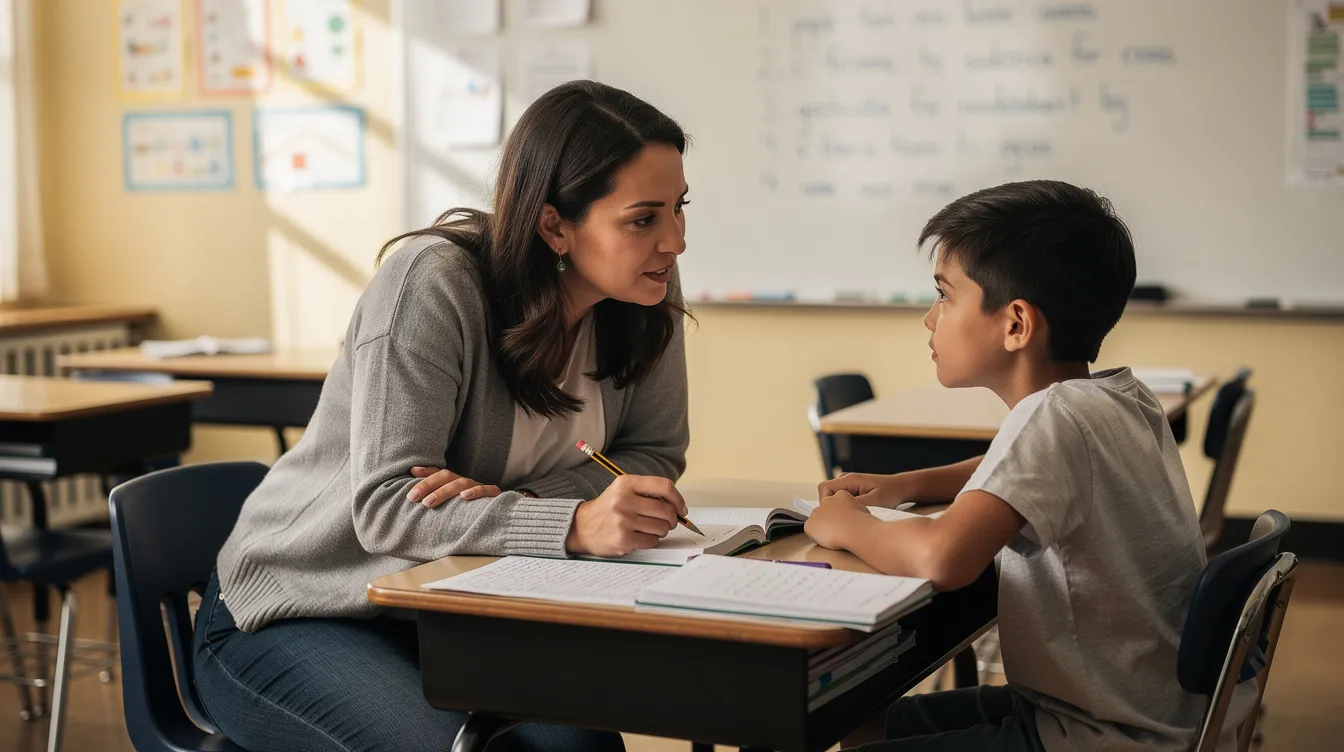
Teachers should coordinate with school psychologists or counselors to create consistent plans for managing the child’s anxiety across classes. When the child’s teacher understands the anxiety, responses shift from frustration to support, and outcomes improve.
Supporting an Anxious Child’s Learning and Mental Health
Addressing anxiety early can protect both memory development and long-term mental health. The longer anxiety goes untreated, the more deeply it embeds itself in a child’s learning habits, self-concept, and brain development.
Parents can start by talking openly with children about symptoms of anxiety, normalizing the experience without dismissing it. Saying “It makes sense that you feel anxious before a test, a lot of other kids do too” validates the feeling while opening the door to solutions. Practicing mindfulness techniques at home can help shift focus away from anxiety and toward the present moment.
Simple coping strategies that support learning include:
- Breathing techniques before tests (in for 4 seconds, out for 6 seconds)
- Positive self-talk to replace negative thoughts (“I’ve prepared for this, I can do my best”)
- Breaking big assignments into smaller steps to improve coping and reduce overwhelm
Collaboration between families, teachers, and health professionals is essential. A child’s anxiety doesn’t stay at school or stay at home. It follows them everywhere, and the support system needs to be equally consistent.
Evidence-based treatments are available. Cognitive behavioral therapy (CBT) teaches coping skills for anxiety and has strong research support. A 2024 NIMH study of 69 unmedicated children with anxiety disorders showed that after 12 weeks of CBT, overactivation in frontal and parietal brain regions normalized, suggesting that behavior therapy directly improves the brain’s ability to regulate attention and emotion. CBT can improve coping within a few therapy sessions, making it accessible for many families.
When anxiety is severe, SSRIs are commonly prescribed medications for childhood anxiety. Medication effects may take several weeks to become noticeable, but combining therapy and medication often yields better results than either approach alone. Decisions about medication should involve a qualified child psychiatrist or pediatrician who can weigh risks and benefits. Organizations like the Child Mind Institute provide helpful resources for parents navigating these decisions.
Building Resilient Learning Habits
Supporting an anxious child’s learning doesn’t end with therapy appointments. Daily habits at home and school build resilience over time.
Create a predictable study routine. A quiet space, regular schedule, and limited digital distractions reduce anxiety around homework. Breaking study into smaller chunks helps prevent cognitive overload during learning, keeping sessions short enough that the child finishes feeling capable rather than defeated.
Use retrieval practice in low-pressure ways. Flashcards, self-quizzing, and spaced repetition at home strengthen memory without the fear of failure that comes with formal testing. The goal is to make recall a habit, not a threat.
Prioritize sleep, nutrition, and movement. Deep sleep is necessary for stabilizing and consolidating learned information. Trouble sleeping, common in anxious children, directly undermines the brain’s overnight memory processing. Physical activity helps regulate cortisol levels and supports prefrontal cortex function.
Praise effort and strategy, not just correct answers. When parents and teachers celebrate persistence and problem-solving approaches rather than perfection, anxious children become more willing to take healthy academic risks. Saying “I noticed you tried a different strategy on that math problem” is more helpful than “You got an A.”
Use gradual exposure to feared tasks. A child who dreads oral presentations can start with short answers to the teacher in private, then small-group responses, then brief class presentations. This slow progression reduces anxiety and improves performance over time. Adults should avoid letting the child completely avoid feared academic situations, as avoidance reinforces anxiety.
Long-Term Effects and When to Seek Professional Help
When anxiety goes untreated for months or years, the consequences extend beyond report cards. Chronic anxiety can predict future cognitive decline, and the effects on brain development during childhood are particularly concerning.
Research shows that continuous stress floods the brain with cortisol, degrading synapses in the hippocampus. Studies of children aged 8-14 found that smaller hippocampal volumes correlated with higher anxiety severity (partial correlations of r ≈ –0.26 to –0.29 after controlling for age, sex, and trauma). Chronic anxiety can chemically and structurally alter learning pathways in the brain, reducing cognitive flexibility and making it harder for the child to adapt to new information or challenges. Changes in white matter microstructure have also been documented, suggesting less efficient neural communication overall.
Repeated academic failures driven by anxiety create their own downward spiral. Children who consistently perform below their ability may develop major depressive disorder alongside anxiety, begin refusing school entirely, or disengage from education at increased risk of dropping out. Adults who experienced untreated childhood anxiety often report lasting difficulty with learning, career development, and mental health.
Warning signs that warrant professional evaluation:
- Persistent school refusal lasting more than a few days
- Panic attacks, including trouble breathing, shaking, or intense fear of dying
- Talk of self-harm or expressions of hopelessness
- A dramatic decline in grades over a full term
- Physical symptoms that have no medical explanation after evaluation
- Failure of classroom and home strategies to improve functioning
Steps for families:
- Start with your pediatrician or GP to rule out medical causes and discuss mental health screening
- Request a school evaluation for special education or 504 plan eligibility
- Seek referral to a child psychologist, psychiatrist, or licensed therapist who specializes in treating anxiety disorders in children
- Consider whether generalized anxiety, social anxiety, separation anxiety, or another specific anxiety disorder best describes the child’s experience
A car accident, a move to a new school, bullying, or a loss in the family can all trigger anxiety that feels unmanageable. Stressful events don’t have to lead to long-term harm if adults respond with awareness and appropriate support.

Frequently Asked Questions
Can anxiety permanently damage a child’s memory?
Occasional anxiety does not permanently damage memory. The brain retains significant plasticity, especially during childhood and adolescence. However, long-term, severe anxiety that goes untreated can influence how memory systems develop and function, particularly the hippocampus and prefrontal cortex. With effective treatment and support, many children show significant improvement in attention, learning, and recall. Research since around 2016 has increasingly focused on these structural changes, but the takeaway is that recovery is possible, especially when intervention comes early. Older children and adults who experienced chronic childhood anxiety may need longer treatment but can still make meaningful gains.
How do I tell the difference between anxiety and ADHD in the classroom?
Both conditions can involve inattention, restlessness, and a hard time focusing, which is why misdiagnosis happens. The key differences lie in triggers and patterns. Anxiety usually spikes around specific situations: tests, reading aloud, social situations with other kids, or transitions. ADHD symptoms tend to be more constant across all environments. Anxiety is also more likely to involve worry, avoidance, and physical symptoms like stomach aches and headaches. A comprehensive assessment by a psychologist or pediatric specialist can evaluate for both anxiety disorders and ADHD, and many children have both. If you notice that a child can focus well in calm, low-stakes settings but falls apart under pressure, anxiety is a strong possibility.
Does test anxiety affect only older students, like high schoolers?
Not at all. Test anxiety can emerge as early as the first years of primary school, especially when children experience frequent timed tests or heavy emphasis on grades. Younger students, ages 7 to 9, may complain of stomach aches or say they “forget everything” only during quizzes. They may not have the vocabulary to say “I feel anxious,” but the symptoms are unmistakable. Addressing test anxiety early helps prevent a pattern of avoidance and poor memory retrieval that compounds in later grades. Even small changes, like removing strict time limits for young children, can make a measurable difference.
Are there quick strategies teachers can use right before a test to help memory under anxiety?
Yes. Brief breathing exercises, such as in for 4 seconds and out for 6 seconds for about one minute, can calm the stress response before a test begins. Teachers can also give students a minute to write down key formulas, vocabulary, or ideas at the start of the test, which off-loads working memory while anxiety is highest. Reassuring instructions matter too. Reminding students that one test does not define their ability, and that the purpose is to learn what they know rather than catch them failing, can modestly reduce performance anxiety and improve recall.
Is medication always necessary for children with anxiety that affects learning?
Many children benefit from non-medication approaches first. Cognitive behavioral therapy, school accommodations, and family-based interventions are effective starting points and help treat anxiety in a structured way. SSRIs are typically considered when anxiety is severe, long-lasting, or not improving with therapy alone. Parents should discuss risks and benefits with a qualified child psychiatrist or pediatrician. When medication is used, combining it with ongoing psychological support tends to produce the strongest and most lasting results. Medication is a tool, not a standalone solution, and it works best as part of a broader plan that includes the child’s teacher, family, and therapist working together.
Comments are closed