Key Takeaways
- School holidays can quietly erode attention span when days become fully unstructured and dominated by screens. Even Singapore’s shorter four-to-six-week breaks cause measurable dips in focus readiness.
- Focus is like a muscle: it weakens without practice but can be strengthened through short, enjoyable daily habits rather than drill worksheets or boot-camp-style revision.
- Simple routines, offline games, physical movement, and interest-led projects can maintain attention stamina while still letting children rest and recharge.
- Holidays are an ideal time to work on executive functioning skills and strengthen family bonds without the pressure of exams and homework deadlines.
- Some children may need professional support. Cognitive Development Learning Centre in Singapore offers low-stress, science-based cognitive training designed to build sustained focus without academic overload.
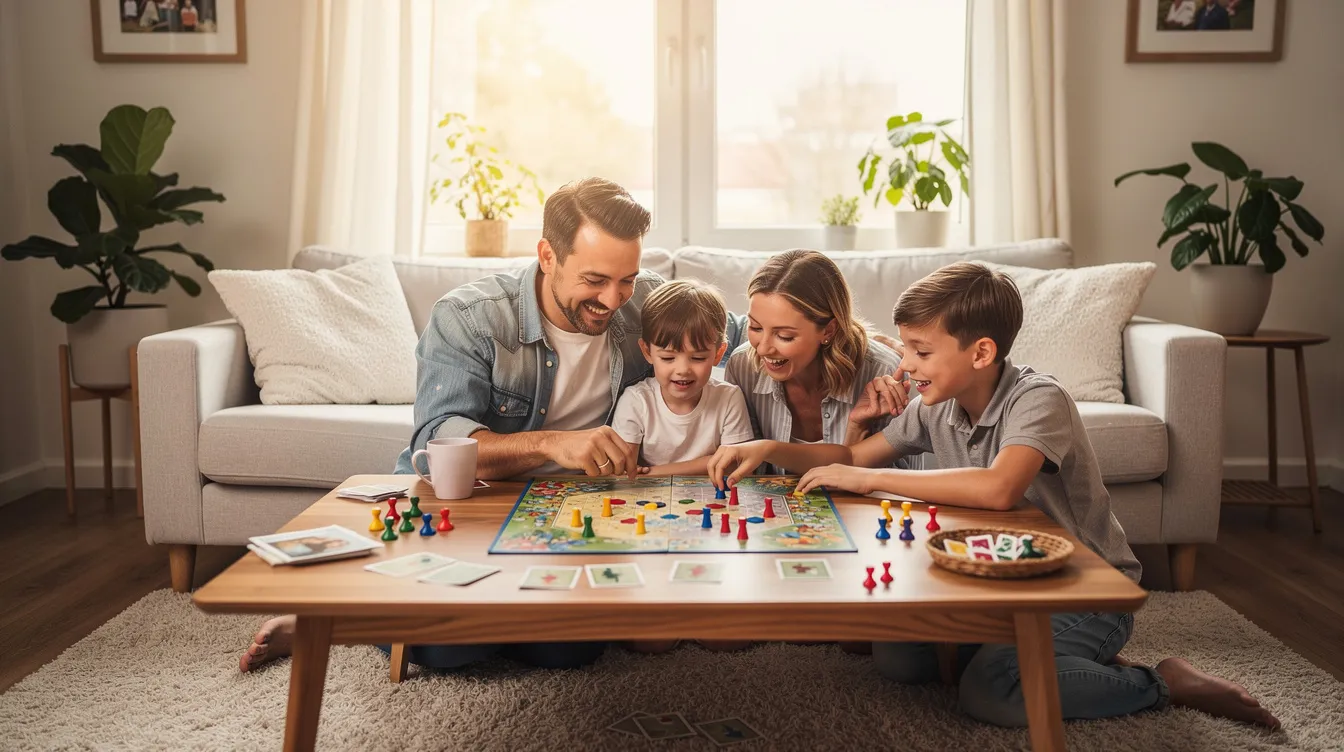
It’s day four of the June break. Your child went to bed at midnight, woke at 11 a.m., and has been cycling between TikTok, Roblox, and YouTube Shorts since breakfast. You suggest a card game, a walk, even just a meal without a screen, and the response ranges from a grunt to a meltdown.
Many parents in Singapore recognise this scene. The question isn’t whether children deserve a break-they absolutely do. The question is how to give them genuine rest without letting their attention stamina collapse before the new school term begins. Improving focus during school holidays isn’t about enforcing strict study hours. It’s about embedding fun, structured, brain-stimulating micro-habits into daily holiday life so your child returns to school refreshed and ready.
Why Focus Slips So Quickly During School Holidays
During term time, a child’s brain receives constant cues: alarm clocks, morning routines, commuting, lessons, recess bells. These social and circadian synchronisers keep the attention system “warmed up.” Remove them for a few weeks and the brain’s focus circuits begin to de-train.
Research on children aged 6–11 returning from breaks found that attention mobilisation dropped after holidays and didn’t fully recover for about two weeks back in school, with younger children recovering even slower. In Singapore, where holiday periods are shorter than many Western countries, the effect is less dramatic but still real-especially when late bedtimes and unlimited screen access dominate the break.
For children with ADHD or existing attention difficulties, the impact can be even more pronounced when school resumes. The gap between their holiday pace and classroom expectations widens, producing anxiety and resistance on day one.
Quick parent recap:
- Losing daily routines removes the brain’s “time-to-focus” signals.
- Even a four-week break can shorten attention span for non-screen tasks.
- You don’t need to recreate school at home-just keep gentle structure alive.
The Screen Trap: How Hyper-Stimulating Media Affects Attention Stamina
The “screen trap” happens when hyper-stimulating content-10-second clips, rapid-fire mobile games, constant notifications-raises the brain’s dopamine baseline. Every swipe delivers a micro-reward. Over days and weeks, the brain recalibrates: slower activities like reading, conversation, or homework feel unbearably dull by comparison.
This is different from the hyperfocus you see when your child plays Minecraft for three hours straight. Hyperfocus on high-dopamine activities is not the same as the sustained focus needed to work through a Math problem set or follow a Science explanation in class. Constant switching between apps, chats, and videos trains the brain to expect novelty every few seconds, shortening the attention span for anything that doesn’t deliver instant stimulation.
A February 2025 survey of nearly 2,000 Singapore parents found that 58% of children aged 2–6 exceed the recommended one hour of daily screen time on weekdays, rising to 81% on weekends. For ages 10–12, 47% exceed two hours on weekdays and 71% on weekends.
Practical screen guidelines to try during school holidays:
- Set predictable daily screen windows (e.g., after lunch and late afternoon) rather than letting usage drift across the whole day.
- Keep mealtimes device-free-constant sensory input during meals trains the brain to need stimulation even during rest.
- Remove screens at least 30 minutes before bedtime to protect sleep quality.
- Total bans rarely work. Predictability and consistency matter more.
Reframing Holidays: Rest First, Then Gentle Focus “Training”
Maintaining academic focus during a school break requires balancing genuine rest with study routines. The first three to five days of any holiday period should prioritise sleep recovery, relaxation, and unstructured play, especially after an exam-heavy term. Protecting downtime is important to prevent stress and burnout during breaks.
After this reset window, parents can begin layering in light, brain-friendly habits. Think of it as a gentle ramp rather than a switch. Consistency in study habits over weeks is more important than daily perfection-missing a day won’t undo progress.
A simple 3-part daily rhythm for holidays:
- Morning – Movement: 20–40 minutes of outdoor play, cycling, swimming, or active games.
- Midday – One focused non-screen activity: A micro-burst project, reading, a board game, or a light academic task (10–25 minutes).
- Evening – Calm wind-down: Quiet reading, drawing, journaling, or a family conversation.
For Secondary students, shift timings later to match their natural sleep cycle, but keep the three blocks in the same order. Micro doses of effort-10 to 25 minutes-are usually more effective than two-to-three-hour study blocks, particularly for children with low attention stamina.
Micro-Bursts of Focused Interest Projects
A micro-burst is a 15-to-25-minute, timer-based session where a child focuses on a single, interest-led task with minimal interruptions. This approach mirrors the Pomodoro Technique, which involves 25 minutes of focused work followed by a short break. Short, focused study periods are more effective than long, unstructured ones.
Concrete project ideas for Singapore families:
- Build a Lego MRT station – planning, sequencing, spatial reasoning.
- Bake pineapple tarts or kueh lapis – reading a recipe, measuring, following multi-step instructions.
- Code a simple Scratch game – logic, planning, debugging.
- Design a poster about a favourite K-pop group or football team – research, layout, creativity. Arts and crafts develop motor skills and creativity.
- Assemble a scale model of Marina Bay Sands – patience, fine motor control, task completion.
- Write and illustrate a short comic – narrative sequencing, drawing, writing.
How to run a micro-burst:
- Let the child choose the project (interest drives engagement).
- Set a visible timer. Remove phones and turn off the TV.
- Stay nearby but don’t over-correct. Let them problem-solve.
- When the timer ends, celebrate completion with specific praise.
These projects strengthen planning, sequencing, and task completion-core executive functioning skills and daily routines-without feeling like tuition.
Executive Routine Anchors to Keep Days Grounded
Routine anchors are two to three fixed points in the day that don’t change even during school holidays. Establishing a daily routine helps keep the body’s internal clock steady during breaks. Structured routines help children feel secure and improve focus.
Recommended anchors:
- Consistent wake time within a 60-minute window of the school term wake time (e.g., if school wake-up is 6:30 a.m., holiday wake-up stays before 7:30 a.m.).
- One outdoor movement block before lunch.
- A 15–20 minute quiet focus block after dinner-reading, puzzles, or journaling. Set aside 20–30 minutes daily for focused reading to keep this anchor meaningful.
What anchors look like at different ages:
| Age group | Wake window | Movement block | Quiet focus block |
|---|---|---|---|
| Primary 1–3 | 7:00–7:30 a.m. | Playground or scooter, 20 min | Picture book or colouring, 15 min |
| Primary 4–6 | 7:00–8:00 a.m. | Cycling or swimming, 30 min | Chapter book or puzzle, 20 min |
| Secondary 1–4 | 8:00–9:00 a.m. | Sport or gym, 30–40 min | Reading or journaling, 20–25 min |
Maintaining a routine helps children feel safe and secure, reducing the daily battles over what comes next. Gamifying chores can enhance children’s attention and responsibility-incorporate simple household chores like setting the table or folding laundry to develop a sense of responsibility and routine. Creating a dedicated workspace, even a small cleared table, helps signal to the brain that it’s time to focus.
Offline Games That Train Attention, Working Memory, and Self-Control
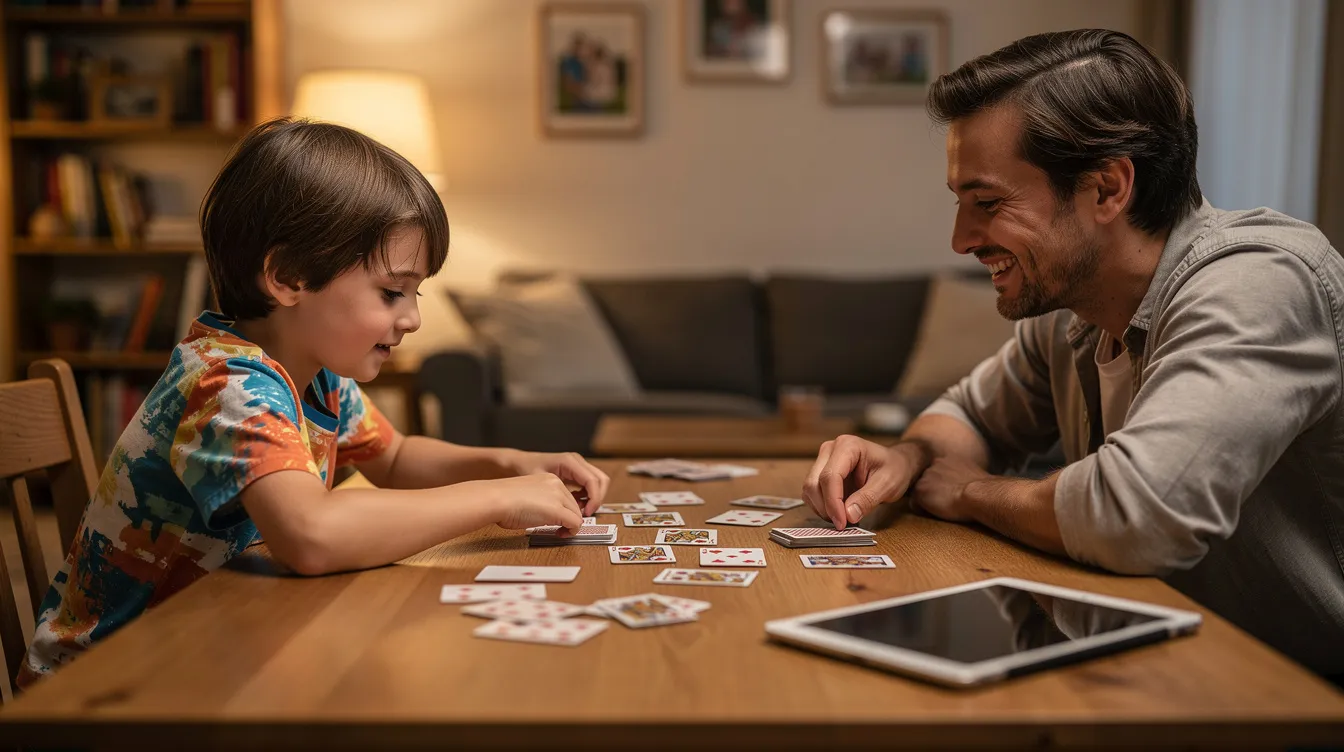
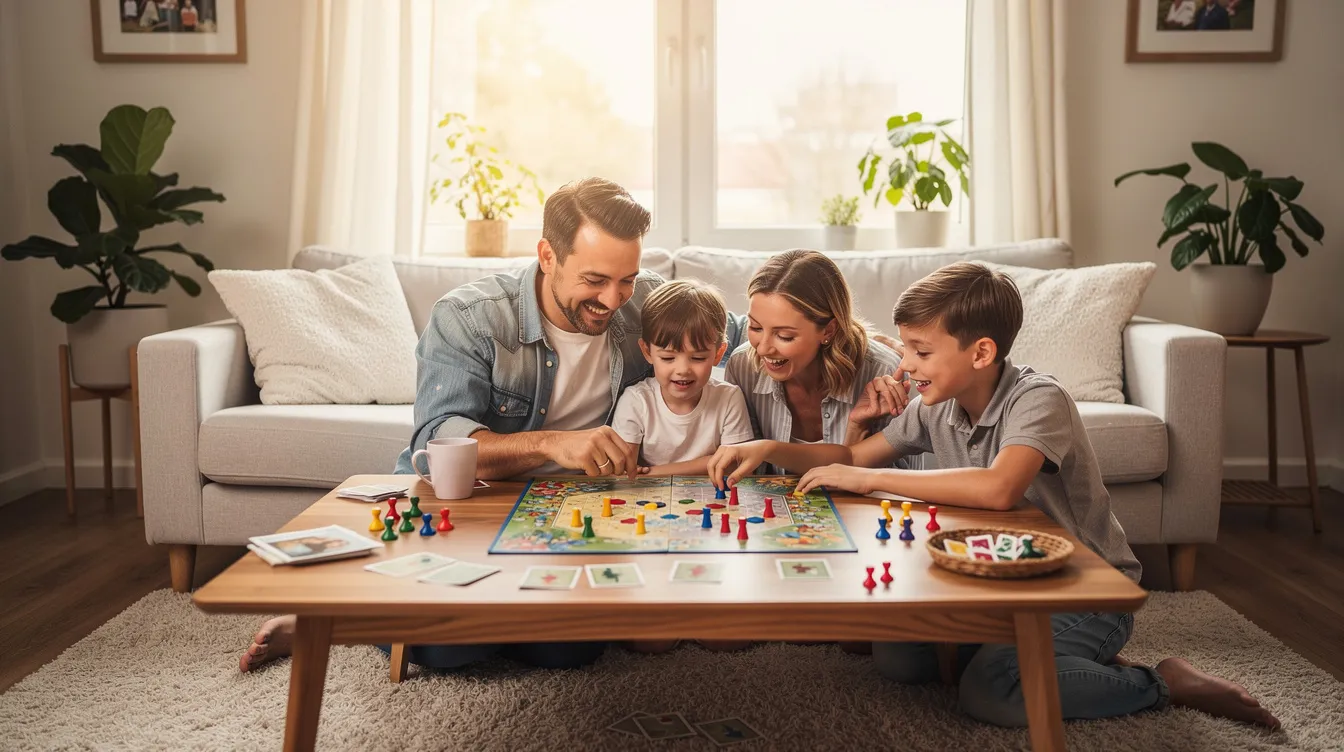
Many board and card games naturally build attention span, impulse control, and flexible thinking without feeling like work. Educational games help develop crucial skills and knowledge while keeping children engaged.
Games for Singapore homes and the skills they build:
- Chess – planning ahead, critical thinking, patience.
- Monopoly Deal – rapid calculation, strategy under pressure.
- Uno – impulse control (waiting for the right card), rule-following.
- Blokus – spatial reasoning, flexible thinking.
- Spot It! – visual attention, processing speed.
- Memory card games – working memory, attention to detail (ideal for younger kids).
- Jenga – impulse control, motor skills, patience under pressure.
Schedule a 15-to-30-minute daily family game time during school holidays to strengthen family bonds and reduce default screen time. Parents modelling turn-taking and sportsmanship teaches self-regulation more effectively than any lecture. Spending time together over a board game can also strengthen family relationships and create meaningful holiday memories.
Movement, Nature, and the Focus Reset
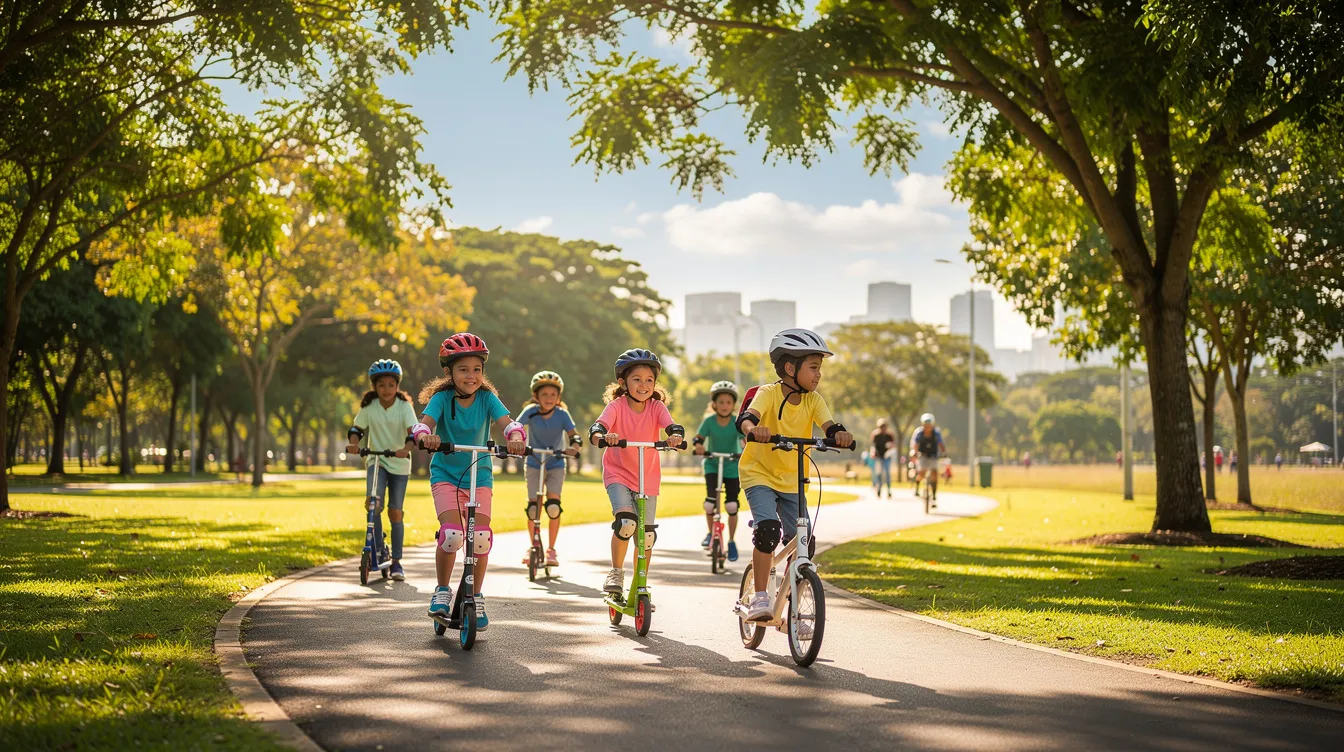
Physical movement can increase blood flow to the brain and improve concentration. Regular exercise is important for mental clarity and focus. Exercise boosts cognitive function and helps children focus better-this isn’t just a slogan; it’s well-supported by developmental research.
Data from Singapore’s GUSTO cohort shows moderate-to-vigorous physical activity dropped roughly 44% between ages 5.5 and 12, while screen viewing increased about 155% over the same span. Holidays are the perfect window to reverse that trend.
Singapore-specific movement ideas:
- Morning scooter rides at the void deck or nearby park connector.
- Cycling at East Coast Park or Punggol Waterway.
- Swimming at the condo pool or a public ActiveSG pool.
- Nature walks at Bishan–Ang Mo Kio Park, MacRitchie, or Dairy Farm.
For indoor or rainy days:
- Mini obstacle course using cushions and chairs.
- Simple yoga poses or stretching routines (YouTube has plenty of kid-friendly options).
- “Freeze dance” games that combine fun with self-regulation practice.
- Mindfulness exercises can improve attention in children with ADHD-even three to five minutes of guided breathing before a focus task helps.
Schedule movement before asking a child to sit for reading, revision, or a micro-burst project. The brain performs better on low-stimulation tasks after physical activity has regulated arousal.
Structured Screen Management Without Daily Battles
Most children in Singapore use devices for entertainment and social connection. Realistic, predictable rules work better than sudden bans. Minimizing digital distractions is crucial for maintaining focus during study sessions, but the approach matters.
Holiday screen guidelines by age:
- Primary 1–3: 1–1.5 hours recreational screen time, in one or two windows.
- Primary 4–6: 1.5–2 hours, ideally after movement and a focus block.
- Secondary 1–4: 2–2.5 hours, with mornings kept device-free.
The Singapore MOH guidance recommends no more than one hour for under-6s and two hours for ages 7–12 (recreational use), which gives families a clear benchmark.
Transition rituals to shift away from screens:
- Five deep breaths, then a two-minute stretch.
- A glass of water and a change of room.
- A brief physical task (put shoes on, tidy desk) before starting the next activity.
For older kids, use visual schedules or a simple written agreement posted on the fridge. Consistent follow-through matters more than strict perfection-if a child goes ten minutes over one day, stay calm and reset the next.
Weaving Light Academics Into Holiday Life (Without Drill Culture)
The aim is not to turn school holidays into full tuition blocks. It’s to keep key concepts warm for core subjects in low-pressure, effective ways. Reviewing previous material is more effective than learning new content from scratch during breaks. Students who engage in enriching activities retain learning better, and holiday enrichment classes can strengthen core subjects like English and Math when kept light.
A menu of ideas parents can mix into the week:
- Reading: Set aside 20–30 minutes daily for focused reading. Reading for 20–30 minutes daily enhances focus and critical thinking. Reading a variety of materials enhances critical thinking skills, and reading different genres improves language fluency.
- Maths through daily life: Use grocery shopping to practise estimation, percentages, and budgeting. Talk through calculations together.
- Science documentaries: Watch one episode, then draw a simple mind map of key ideas.
- Holiday journal: A short daily entry (3–5 sentences) practises writing without the weight of composition homework.
- Encourage reviewing past lessons during school holidays – even 10 minutes flipping through the previous term’s notes keeps pathways active.
- Cooking together: Measuring ingredients, following recipe steps, and timing dishes practise maths and sequencing naturally.
Set realistic learning goals to keep motivation high. Setting small academic goals each day-“read one chapter” or “solve five word problems”-makes study sessions more manageable. For children with shorter attention spans, break tasks into 10–20 minute chunks.
Families who want more structured support can explore specialised learning intervention programmes that focus on building attention and executive functioning rather than generic subject tuition.
Why School Holidays Are the Best Time to Build Focus Skills
During the school term, children’s mental energy is absorbed by homework, CCA, tests, and the pace of whole class lessons. There’s little capacity left for deeper work on attention regulation. Structured tuition holiday programmes help students stay academically active, but the real opportunity lies in focus training itself.
The holidays offer a rare window: the brain is less stressed, more receptive, and able to develop sustained focus pathways through targeted activities. One-to-one or smaller class sizes in cognitive training settings allow children to build attention stamina and learning readiness at their own pace, without academic pressure competing for bandwidth.
Parents often notice the benefit: smoother transitions back to school, less resistance to homework, and more confidence in class when focus has been gently trained during the break. The right strategies during holidays make a big difference to the following term’s start.
Spotting When Holiday Focus Struggles Signal Something More
Some holiday restlessness is completely typical. Every child gets a bit looser with routines. But certain patterns may point to underlying focus and attention difficulties that go beyond normal relaxation.
Warning signs to watch for:
- Inability to attend to any non-screen task for more than a few minutes, even with support.
- Frequent, intense emotional meltdowns when asked to stop screens or shift activities.
- Extreme disorganisation that doesn’t improve with gentle structure.
- A noticeable gap compared to peers in the ability to follow multi-step instructions or regain focus after a distraction.
A comprehensive cognitive assessment during the holiday period can provide clarity on attention, working memory, processing speed, and executive functioning. This gives parents and teachers a clear blueprint for school accommodations and home strategies before the new school term begins-without the time pressure of a busy term.
How Cognitive Development Learning Centre Supports Families During School Holidays
Cognitive Development Learning Centre in Singapore focuses on strengthening attention stamina, executive functioning, and learning readiness through engaging, low-stress cognitive activities-not heavy worksheet drilling or high-pressure lessons.
A typical holiday support pathway:
- Initial consultation – understanding your child’s challenges and goals.
- Comprehensive cognitive assessment (if needed) – mapping attention, memory, and processing speed.
- Personalised programme – short cognitive “workouts,” gamified attention training, and strategies tailored to your child’s profile.
- Parent coaching – practical tips to adjust home routines, manage screen use, and keep the mind active beyond sessions.
The environment is designed to feel safe, encouraging, and fun. Children build essential skills like planning, self-monitoring, and task switching through activities that feel more like play than practice. Growth happens because the brain is relaxed and receptive-exactly the state holidays provide.
If you’re a parent in Singapore concerned about your child’s focus during the upcoming school holidays, reach out to Cognitive Development Learning Centre for a conversation. A short consultation can help you understand whether your child would benefit from targeted support or simply needs a few adjustments at home. Either way, you’ll walk away with ideas you can use immediately.
Frequently Asked Questions
Below are answers to common, practical worries parents have about maintaining focus during school holidays that may not be fully covered above.
How much screen time is reasonable during a four-week school holiday?
For most Primary students, aim for one to two hours of recreational screen time per day. For Secondary students, two to three hours is a realistic ceiling. Structure matters more than the exact number of minutes-concentrate screens into one or two predictable windows and keep mornings mostly device-free to protect attention span. Count creative or school-related screen use (coding, video editing, research) separately from passive scrolling, and model healthy device habits yourself.
What if my child only wants to play games and refuses all other activities?
Start small. Negotiate a swap: 15 minutes of a chosen offline activity earns 30 minutes of gaming. Build bridges from games to offline skills-drawing game characters, planning strategies on paper, or building game worlds with Lego. Stay calm, frame changes as “new holiday rules for the whole family” rather than punishments, and prepare for some pushback. Patience pays off; most kids adjust within a few days when the expectations stay consistent.
How can I help siblings with very different attention spans share the same routine?
Create shared anchor points-mealtimes, movement blocks, family game time-but give each child slightly different expectations for focus activities. For example, an older sibling reads for 25 minutes while a younger sibling does 10 minutes of picture-book time followed by drawing, all within the same quiet block. Adjust per child, as long as the rules feel fair and are clearly explained.
Is it too late to work on focus if school starts in two weeks?
Not at all. Even 10 to 14 days of consistent, small habits-routine anchors, daily movement, brief reading sessions, and micro-burst projects-can help your child prepare for the transition back. Gradually shift wake times and bedtimes toward term-time schedules over one to two weeks. This shorter window is also a practical time for a focused consultation or cognitive assessment to guide support for the coming term.
Can improving focus during holidays also strengthen family bonds?
Absolutely. Many focus-building activities-board games, shared walks, cooking together, joint creative projects-naturally strengthen family bonds when done regularly. Choose at least one daily activity that combines attention practice with connection, such as a 20-minute family game after dinner or a weekend nature walk without devices. Children often cooperate better with routines when they experience them as shared, enjoyable family moments rather than individual “fixes.”
Comments are closed