
Every school holiday in Singapore brings the same tug-of-war for parents. Do you let your child rest completely and risk them forgetting everything? Or do you sign them up for intensive tuition and watch the meltdowns multiply? For children who already struggle with learning, neither extreme works. Here is a practical, research-backed plan to keep skills alive without killing the joy of the break.
Key Takeaways
- Long school holidays can trigger a “holiday slide,” and students can lose up to one month’s progress during summer break. Children with learning difficulties lose even more, but short, low-stress daily routines can prevent this.
- Struggling learners need both rest and gentle practice. Short daily practice prevents learning loss without causing burnout during the break-15 to 20 minutes of targeted, fun activities beats hours of assessment books.
- A simple 3-tier framework (Cognitive Maintenance, Targeted Skill Remediation, Emotional and Physical Recharge) helps parents plan each week of the holiday season with clarity.
- Practical activities like board games, cooking, and real-world budgeting build executive functioning skills, reading fluency, and math foundations far more naturally than drill-only worksheets.
- If struggles persist despite effort, the holidays are the ideal window for a comprehensive cognitive assessment and specialised intervention that supports both skills and well-being.
Understanding the Holiday Dilemma for Struggling Learners in Singapore
During the June and November–December school holidays, Singapore parents face a familiar fork in the road. One path leads to total relaxation-screens, sleep-ins, zero academic contact. The other leads to a packed calendar of holiday tuition programmes, enrichment classes, and stacks of practice papers.
For children with dyslexia, ADHD, working memory weaknesses, or slower processing speed, long breaks without any learning engagement can undo months of hard-won progress. Research shows that students in grades 3 to 5 lost 10 to 25 words per minute in reading speed after an extended vacation, and those who already struggled lost the most.
But holidays are also when the brain consolidates learning and recovers from cognitive fatigue. The goal is not more worksheets. It is smarter, lighter routines that protect your child’s confidence and skills. This article gives you a realistic plan you can start this upcoming holiday-without burning out yourself or your child.
The “Holiday Slide” vs. Burnout: Finding a Healthy Middle
The “holiday slide” shows up in concrete ways when school resumes: weaker reading fluency, slower math recall, and reduced attention stamina. Students can lose up to one month’s progress during breaks, and for struggling learners, that gap compounds each school year.
Singapore teachers regularly observe this. A P4 child forgets model-drawing steps over June. A Sec 1 student loses Chinese character recognition after December. A P6 student needs weeks to rebuild attention stamina and learning readiness before exams. These are not signs of laziness-they reflect how fragile newly acquired skills are without reinforcement.
Yet high-pressure crash courses backfire just as badly. Data on tuition in Singapore shows diminishing academic returns beyond a certain intensity, with added stress, anxiety, and avoidance behaviour, especially in students who already struggle.
The healthy balance lies in short, intentional practice combined with plenty of rest, play, and connection with family members. Think “maintain and strengthen,” not “race ahead of the syllabus.”
The 3-Tier Holiday Learning Framework (Easy to Use for Any School Holiday)
This framework gives parents a simple planning tool for any school holidays:
- Tier 1 – Cognitive Maintenance: Keep the learning engine warm with 15–20 minutes of fun, brain-engaging activities daily.
- Tier 2 – Targeted Skill Remediation: Strengthen specific weak foundations in core subjects, 3–5 times per week.
- Tier 3 – Emotional and Physical Recharge: Prioritise sleep, outdoor play, quiet time, and relaxation.
Sketch a weekly holiday timetable that touches all three tiers without exceeding about 60–90 minutes of structured learning per day. This framework is especially helpful for children who struggle with executive functioning skills and routine building and who benefit from predictable daily routines and clear boundaries.
Use it flexibly: June holidays suit consolidation after mid-year exams, while December works best for resetting before a new level or new year of school.
Tier 1: Cognitive Maintenance in 15–20 Minutes a Day
Tier 1 keeps the mind active by exercising working memory, attention control, and processing speed-not syllabus content. Set aside a consistent 15–20 minute window after breakfast or before dinner for one or two simple tasks.
Board games and strategy games:
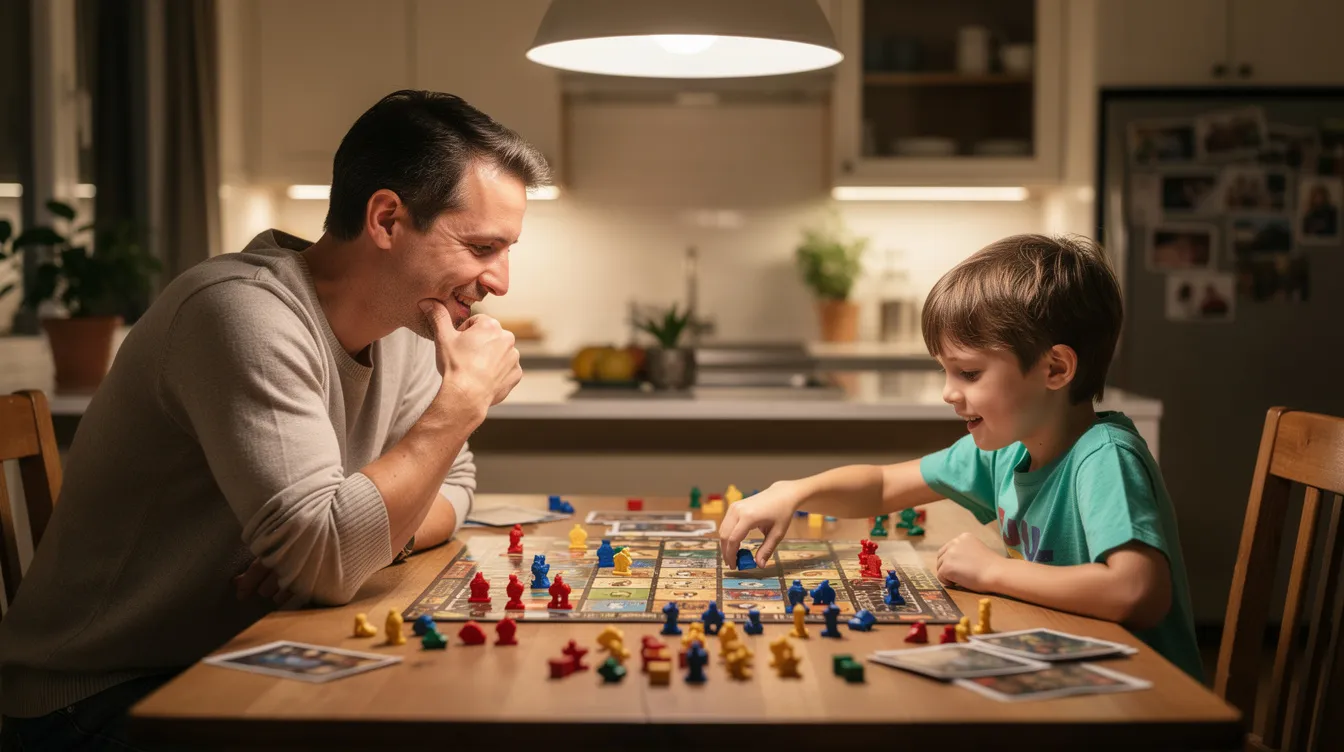
- Playing board games enhances memory and critical thinking skills. Chess and Blokus train planning and flexible thinking. Rush Hour develops problem solving skills. Sushi Go! builds quick decision-making and turn-taking with basic math skills.
Everyday cognitive play:
- Reading MRT maps and planning bus routes on the SBS Transit app (spatial reasoning and planning)
- Keeping score during a badminton or card game (mental math)
- Following a simple recipe together-cooking involves practicing math and reading by following recipe measurements
Daily reading routines should last 20 to 30 minutes for effectiveness. Let students choose high-interest books or materials for reading. Reading different genres improves language fluency and critical thinking. Visiting a library encourages exploration of new topics and new ideas. Discuss and reflect on reading material-it enhances understanding and builds empathy. Reading for fun builds critical thinking and empathy far more effectively than comprehension drills.

Tier 2: Targeted Skill Remediation (Not Rushing Ahead of the Syllabus)
Tier 2 focuses on strengthening weak foundations in core subjects like English, Chinese, Math, and Science-not teaching next year’s topics prematurely. Engagement in learning matters for student interest, so choose areas where your child needs a little help and can see progress.
How to focus:
- Pick 1–2 areas per holiday (e.g., P3 phonics and spelling, P5 fractions, Sec 1 algebra basics) instead of trying to fix everything at once.
- Use short, focused practice blocks of 20–30 minutes, 3–5 times a week. Let your child work at their own pace.
- Practicing with past exam papers improves time management skills, but limit this to once or twice a week-not daily stacks.
Blend skills with real life:
- Use restaurant menus to practise decimals and budgeting
- Follow science experiment kits to explore key concepts in a hands-on way
- Try short WhatsApp-style messages as functional writing tasks
Reading different materials enhances critical thinking skills across subjects, so mix up text types. For some students, this remediation work is most effective through specialised holiday learning intervention rather than generic worksheets.
Tier 3: Emotional Decompression, Movement, and Quiet Time
Children with learning challenges are often emotionally exhausted by October or May. The holidays must include genuine decompression. Protect the holiday by prioritising sleep, exercise, and family time. Engaging in hobbies during holidays supports emotional well-being and helps the brain recover from the demands of the school term.
Concrete rest activities:
- Regular outdoor play at neighbourhood playgrounds, cycling at Bishan–Ang Mo Kio Park, or swimming
- Simple stretching or yoga for kids who carry physical tension from stress
- Creating positive memories with loved ones through low-key outings or cooking together
Emphasise quiet time each day where screens are off. Let children read, draw, build with LEGO, or simply sit and rest. This helps regulate nervous systems and reduce sensory overload. If your child shows signs of sustained anxiety, school refusal, or emotional shutdown, consider exploring emotional regulation and burnout recovery with a professional.

Using Fun Holiday Activities to Build Executive Functioning and Critical Thinking Skills
Holidays are a powerful moment to grow executive functioning skills without formal “study time.” Task initiation, planning, organization, and time management all improve when children practise them in enjoyable, real-world contexts.
Activity ideas grouped by skill:
| Skill | Activity | How It Helps |
|---|---|---|
| Planning | Planning a family outing or day trip | Sequencing steps, anticipating needs |
| Organization | Packing a day bag with a checklist | Sorting, prioritising items |
| Time management | Creating a daily schedule or to do lists | Managing blocks of time, building independence |
| Flexible thinking | Engaging in drama activities, improv games | Improves cognitive function and perspective-taking |
| Problem solving | Budgeting pocket money for a holiday outing | Real-world math and decision-making |
These activities suit both primary and secondary students. Older kids can manage their own CCA training schedule or plan revision days. Younger children can help design a weekly summer break schedule with fun ideas for each day.
Holiday Learning Ideas by Cognitive Need
This section helps parents personalise holiday learning strategies for struggling students to their child’s specific challenges.
Working memory and attention:
- Multi-step cooking with recipe checklists
- Memory card games (different types of matching games work well)
- Short “remember and repeat” instructions during house chores
- Planning a 1-day itinerary with family members
Reading and language fluency:
- Daily reading for fun with graphic novels or high-interest chapter books
- Paired reading for 10–15 minutes-take turns reading aloud together
- Audiobooks during car rides or MRT trips to build vocabulary without added stress
- Talk about what you read-even a short discussion builds critical thinking skills
Spatial reasoning and math foundations:
- Tangrams and building challenges with LEGO or blocks
- Designing a simple obstacle course at a nearby park
- Shopping can involve budgeting and mental math-let kids manage the supermarket budget for one meal
- Use cooking, shopping, and games to practice mathematics meaningfully

Creating a Low-Stress Holiday Routine That Actually Sticks
Creating a daily schedule helps children manage time effectively. Convert the 3-tier framework into realistic time blocks for a four-week school holiday:
| Time | Activity | Tier |
|---|---|---|
| 10:00–10:20 | Cognitive game or puzzle | Tier 1 |
| 10:20–10:30 | Short break with movement | Tier 3 |
| 11:00–11:30 | Targeted skill practice | Tier 2 |
| 4:00–4:30 | Reading time | Tier 1 |
| Afternoon | Outdoor play / free time | Tier 3 |
Build routines collaboratively with your child so they feel ownership. Use a visual schedule on the fridge for younger kids or a simple digital calendar for older students. Keep sessions short and consistent to prevent overwhelm.
Tips to avoid power struggles: offer limited choices (pick between two activities), use timers, and keep sessions short and predictable. Schedule “non-negotiables” like sleep, meals, and outdoor time first, then fit in brief learning blocks. Track progress with small, achievable goals to celebrate improvement-even finishing one chapter or mastering five new spelling words counts as a win.
Communicate with teachers to align practice at home and school so effort carries forward when the new term begins.
When and Why to Consider a Comprehensive Cognitive Assessment
If your child consistently struggles despite tuition and effort, the holidays are the ideal time to explore deeper causes. Without the daily pressure of spelling tests, homework deadlines, and exams, a comprehensive cognitive assessment can happen in a low-stress environment.
Such an assessment typically covers attention stamina, working memory, processing speed, visual and auditory processing, and learning readiness. In Singapore, tools like the Singapore Ability Scales and Woodcock-Johnson III Achievement tests help identify specific gaps that generic tuition cannot address.
Doing this during school holidays can turn the break into a turning point-giving parents and teachers a clear map of what to focus on, rather than repeating another cycle of tuition with uncertain results.
How Specialised Holiday Learning Intervention Differs from Tuition
Traditional holiday tuition covers syllabus content, practice papers, and exam drilling. Structured tuition programs help students build confidence and stay academically active, and holiday tuition programs offer guided revision and enrichment for students. These have their place.
But for children whose struggle runs deeper, a different approach is needed. Struggling students often benefit more from tutoring that targets cognitive foundations than from worksheets alone. Specialised intervention focuses on the “engine” of learning-attention, memory, processing, and executive functioning-rather than layering more content on top of weak foundations. Well-designed holiday programs can help students particularly in math and reading when they address root causes.
Enrichment classes are ideal for catching up on weaker subjects, and students who engage in enrichment activities retain learning better. Structured holiday programs help students stay academically active while smaller class sizes allow for personalised attention. For parents exploring structured options, the centre’s approach explains how multi-sensory, 1-to-1 sessions build the processing pathways that make classroom lessons stick.
Supporting Attention Stamina and Emotional Regulation Over the Break
Attention stamina often dips over long breaks, making the return to full school days feel like hitting a wall. Light, consistent practice can make re-entry much smoother.
Strategies for focus:
- Short focused tasks with built-in movement breaks-short breaks during study sessions improve focus and retention
- Visual timers so children can see how much time remains
- A quiet, clutter-free study corner at home, free from distractions
Emotional regulation ideas:
- Mindfulness breathing for one minute before study time
- A short walk after a challenging moment or meltdown
- Validating your child’s feelings about school stress and exams-sometimes kids just need you to listen, not lecture
Short, targeted, encouraging practice is the goal over a holiday break. If your child’s emotional responses to learning feel disproportionate or persistent, professional support can help you understand what is happening beneath the surface.
Preparing for the New Term: Turning Holiday Gains into Everyday Routines When School Resumes
Spend the last week of the holiday bridging back to school expectations. Gradually wake up earlier. Reintroduce school-night routines. Refresh basic skills like packing bags and reviewing the timetable.
Review what worked well during the holiday learning plan. Decide which 1–2 routines-daily reading, weekly planning, quiet time-to keep after school resumes. Not everything needs to continue, but one or two habits carried forward can make a lasting difference.
Have an end-of-holiday reflection conversation with your child. Ask what felt easier, what they enjoyed, and whether they have any worries about the new school term. This builds confidence and self-awareness, and it gives you valuable information about where to focus support going forward.
With the right balance of rest, practice, and support, struggling learners can return to school refreshed and ready-not more exhausted. The holidays do not have to be a source of joy or stress. They can be both restful and transformative.

FAQ: Holiday Learning Strategies for Struggling Students
How much “study time” should my child have each day during school holidays?
For most primary and lower secondary students, 45 to 90 minutes of structured learning per weekday is realistic-broken into short blocks of 15 to 30 minutes. On top of this, many holiday learning benefits come from informal activities like board games, cooking, and reading for fun, so parents do not need to schedule every minute. Keep weekends or selected days mostly free to protect rest, family time, and the chance to spend time doing things that bring joy.
What if my child refuses to do any learning during the holidays?
Start very small-even 5 to 10 minutes-with activities the child finds enjoyable. Involve them in choosing from a short list of options. Use consistent routines (same time each day), visual schedules, and positive reinforcement instead of threats. If resistance is intense or emotional, it may signal underlying anxiety, a learning difficulty, or genuine burnout that could benefit from professional support rather than more pressure.
How can I help my child with weak executive functioning skills follow a holiday routine?
Use clear visual schedules, checklists, and alarms. Model how to break tasks into small, concrete steps. Practise one or two key routines at a time-such as a morning routine or a short study block-rather than overhauling everything at once. Building these skills is a gradual process, and it is okay to reflect and adjust the plan week by week.
Is it too late to start holiday learning if the break is already halfway over?
Not at all. Even two weeks of consistent, low-stress practice can make a noticeable difference in confidence and readiness. Focus on one or two priority areas-daily reading plus one core subject, for example-instead of trying to catch up on everything. Use this time to observe where your child struggles most, which will help you manage decisions about support in the next school term.
How do I know if my child needs a cognitive assessment or just more practice?
Look for red flags: year-on-year struggles despite tuition, very slow progress in reading or math compared to friends, extreme fatigue after short study periods, or a big gap between effort and results. A comprehensive cognitive assessment can clarify whether the challenges stem from skill gaps, underlying processing issues, or emotional factors like anxiety. If you recognise these signs, the upcoming school holiday offers a calm window to seek professional guidance from a centre like Cognitive Development Learning Centre rather than waiting for the next crisis.
Comments are closed