Signs a Child Is Not Coping in School (Singapore Primary School Guide)
Key Takeaways
- Sudden homework battles and avoidance are often the first signs a child is not coping in school – not laziness, but a stress response to learning overload.
- School anxiety symptoms such as morning stomach aches, Sunday night tearfulness, and mood swings after school can signal hidden academic or social struggle.
- A persistent drop in grades across English, math, or science – especially when effort hasn’t changed – may point to deeper learning difficulties or special educational needs rather than a lack of motivation.
- Early academic assessment and targeted intervention in Singapore can prevent small foundational gaps from snowballing into upper primary or PSLE-level crises.
- Cognitive Development Learning Centre focuses on practical academic strategies, not clinical treatment – parents can seek support without blame or labels.
Introduction: When “I Hate School” Means Something More
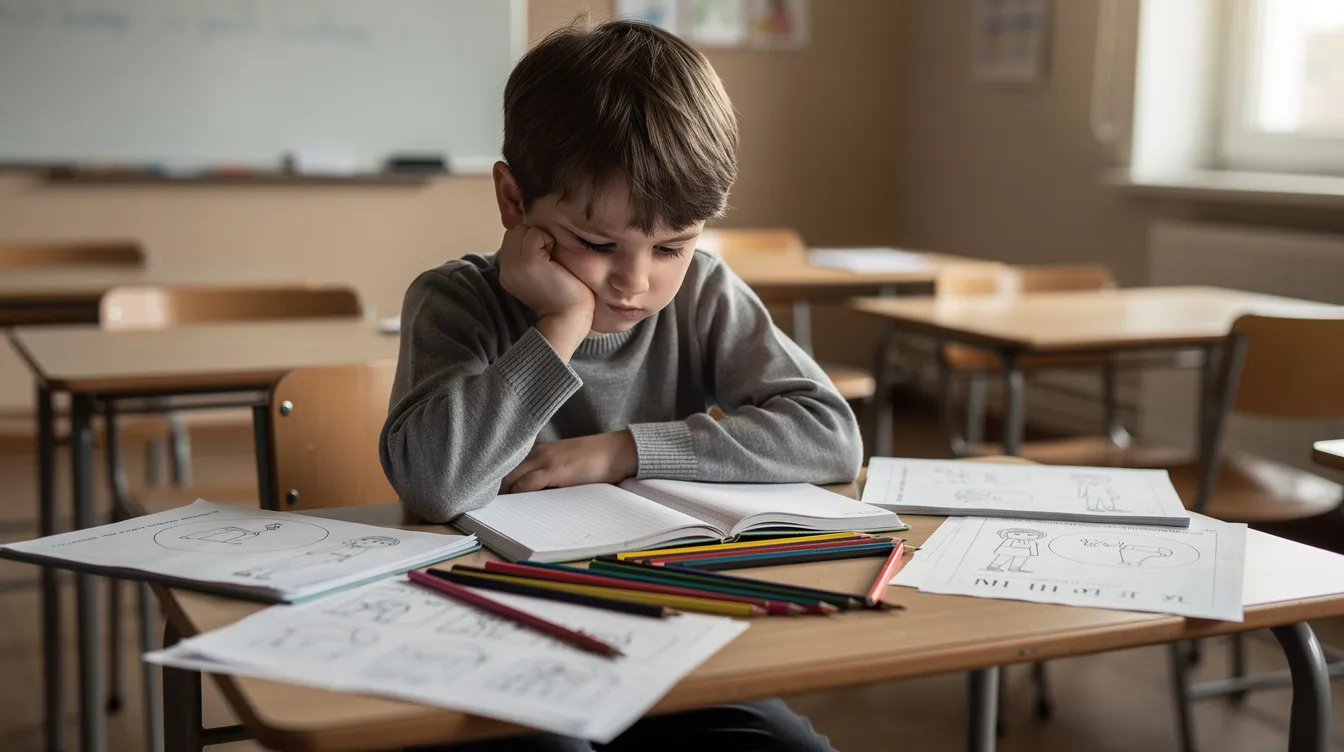
A Primary 3 child who used to pack their bag the night before now leaves it untouched on the floor. A Primary 4 student in Singapore whose English and math grades have dropped sharply across two school terms suddenly insists that school is “boring” and “useless.” These shifts rarely arrive with a clear explanation. Children may struggle to explain their feelings about school. Instead of saying “I am overwhelmed by the reading load” or “my working memory cannot keep up,” they act it out – through tantrums, silence, avoidance, or perfectionism.
Many parents wonder if this is just a phase or laziness. But when patterns persist across weeks and terms, they become early signs a child is not coping in school. Signs of a child struggling in school can be academic, behavioral, or physical – and they often appear in clusters before anyone notices a single dramatic event. This article breaks down three dimensions of red flags, explains the cumulative cost of waiting, and outlines practical academic support options. The focus here is on assessment, intervention, and learning strategies – not clinical diagnosis.
The Top Signs a Child Is Not Coping in School
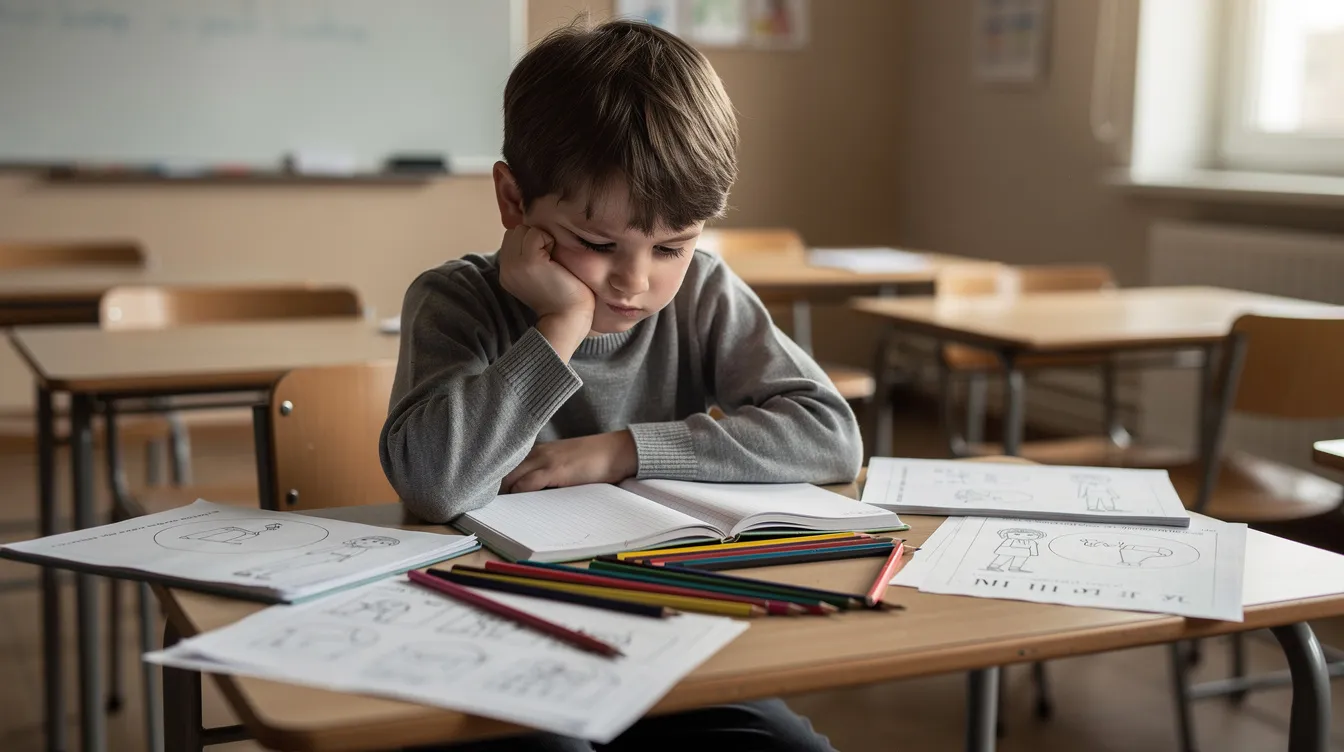
These signs rarely show up as one isolated incident. They tend to cluster across schoolwork, behaviour, and body signals – sometimes all at once, sometimes appearing gradually over a term. They can surface at any primary level from P1 to P6, including in kids who previously coped well or who are already attending tuition.
Some children with learning disabilities, special educational needs, or other conditions such as adhd, autism, speech and language delays, or even physical impairments like hearing loss may mask difficulties until the curriculum demands increase. A young child who compensated through rote memory in P2 may suddenly fall apart in P3 when comprehension and composition expectations rise.
1. Academic Output Red Flags
This section focuses on visible schoolwork: worksheets, spelling lists, compositions, test scripts, and classwork brought home in school files. These are things you can watch for tonight.
- Sudden drop in school grades. A child falls from consistent Band 1 or Band 2 to Band 3 or Band 4 across English, math, or science without a clear external reason. A decline in grades may indicate a child is struggling academically – not simply having a bad week.
- Incomplete or blank sections. Multi-step problem sums, open-ended science questions, or composition planning pages left entirely empty. The child may write a few simple words and stop.
- Copying instead of thinking. Relying on friends’ answers, reproducing model compositions word-for-word, or copying from the board without understanding. Lack of motivation can lead to poor grades and attendance, but copying is often about survival, not apathy.
- Shutting down on complex tasks. A child who handles short, single-step questions but freezes on longer word problems, comprehension passages, or multi-part instructions is signalling that the processing demand has exceeded their child’s ability.
- Slow, effortful homework. Taking two to three hours every evening to finish what classmates complete in 30–45 minutes, even with tuition support. If these nightly standoffs are becoming a regular occurrence, find out why children struggle to concentrate during homework to understand the root cognitive triggers.
Persistent learning difficulties can indicate an underlying challenge. Learning disabilities affect 5 to 15% of school-age children, and dyslexia alone accounts for 80% of all learning disorders. Students with dysgraphia struggle with written expression, while dyscalculia affects a child’s mathematical abilities. Specific Learning Disorders are diagnosed using DSM-5 criteria, but note that early recognition of academic struggles can lead to timely intervention – well before any formal label is needed. Dyslexia affects approximately 5 to 15% of school-age children globally, and in Singapore, approximately 3.5% of Primary 3 students have been identified with dyslexia, with more discovered at secondary level.
2. Behavioral and Avoidance Shifts
Coping difficulties in school often look like “attitude problems” at home. But what appears to be defiance is frequently avoidance driven by stress or learning overload. Learning disorders can affect focus and learning styles in children, making tasks feel impossible rather than merely unpleasant.
- Homework battles. Arguing, delaying, repeatedly going to the toilet, complaining of hunger, or insisting on “needing a break” exactly when it is time to start homework.
- Losing or “forgetting” materials. Frequent loss of worksheets, spelling lists, consent forms, or textbooks – making it impossible to complete assignments. For example, a child who “forgets” their spelling list three weeks running may be avoiding the task, not careless.
- Extreme perfectionism or refusal. Tearing pages, erasing repeatedly, or refusing to start unless sure they will get it “100% correct.”
- Sudden change in attitude to school. A previously cheerful child now saying “I hate school,” “School is boring,” or “Everyone is smarter than me” almost daily. Children may express a loss of interest in previously enjoyed activities when struggling.
- Increased conflict around reading and writing. Pushing away books, saying “I’m bad at Chinese” or “English is too hard,” or insisting that reading aloud is “too tiring.”
- Negative talk about peers. Negative comments about peers may signify social issues. Children who are bullied may avoid school or classroom participation entirely. School bullying can lead to avoidance of the classroom and refusal to talk about the school day. Avoidance of school can be a sign of anxiety or social issues that compound academic struggle.
These behaviours can overlap with signs of learning difficulties in primary school – for instance, dyslexia, slow processing, or attention challenges – without necessarily meaning a child needs a clinical label.
3. Emotional and Physical Symptoms
A child’s body often shows school anxiety symptoms before they can communicate what is wrong. Physical health issues can impact a child’s school performance just as powerfully as academic gaps.
- Morning complaints. Somatic complaints like headaches and stomachaches are common in struggling children. Frequent complaints of illness in the mornings may suggest reluctance to attend school, especially when symptoms vanish by mid-afternoon.
- Sunday night anxiety. Difficulty sleeping, tearfulness, or clinginess every Sunday evening in anticipation of Monday’s school demands. Changes in eating or sleeping patterns can indicate distress in children.
- Changes in mood after school. Coming home unusually quiet, irritable, or explosive, especially on days with spelling tests, composition writing, or math quizzes. Increased irritability can signify emotional distress in children.
- Regression in independence. A child who previously walked into class confidently now insists that a parent waits at the gate, or cries during separation at the school entrance.
- Self-critical talk. Phrases like “I’m stupid,” “I can’t do anything right,” or “Teacher thinks I’m lazy” – indicating internalised academic stress and falling self esteem.
- Social withdrawal and escapism. Social withdrawal and increased escapism may indicate emotional distress. A child retreating into screens or fantasy and refusing to talk about school with any adult in the family is worth taking seriously.
One in five children experience mental health issues during their school years, and mental health issues can affect a child’s focus and learning. Anxiety can prevent children from attending school regularly. A study of 1,655 Singaporean children aged 8–12 found that 9.3% had clinically elevated anxiety symptoms and 16.9% had elevated depressive symptoms. While these may overlap with anxiety or other conditions, the sections below focus on what can be addressed through academic support and adjustments to learning expectations.

The Cumulative Effect of Waiting Too Long
Singapore’s primary school curriculum is structured so that skills build year-on-year: P1 phonics leads to P3 comprehension, which feeds P5 composition and PSLE application questions. Gaps do not stay small.
- Small reading gaps become major barriers. Slow decoding and weak spelling in lower primary turn into an inability to access upper primary science, math word problems, and comprehension passages where every subject assumes fluent reading. Learn more about how to spot and address these reading comprehension difficulties in upper primary before they impact exam performance.
- Math concept gaps snowball. Difficulty with place value, fractions, or abstract concepts in P3–P4 leads to chronic difficulty with PSLE-style non-routine questions. Kids who cannot read the question cannot solve the question.
- Self-confidence erodes. Repeated failure or constant scolding can make a capable child conclude “I’m just not smart,” reducing willingness to try. This is not about grades alone – it reshapes how a child sees themselves in the world of education.
- Survival mode replaces learning. For children with learning disabilities or special educational needs, delaying additional support means more time spent in daily survival mode instead of building strategies for independent learning. Students in a mainstream school may cope on the surface but burn out internally.
- Family stress compounds. When parents are unsure what is happening, homework time becomes a nightly battleground. Early, school-focused academic intervention can reduce stress for the entire family by clarifying what exactly is hard and how to scaffold it step by step.
How to Support a Child Struggling in Primary School at Home
You do not need to become a full-time tutor. Small, consistent routines at home can significantly reduce stress and reveal where extra support is most needed.
- Low-stakes, low-volume check-ins. Spend 15–20 minutes weekly reviewing school files and classwork. Focus on patterns – always blank on word problems, the same spelling errors repeating – rather than nagging about marks. Creating a morning routine can also reduce school-related stress before the day begins.
- The “No-Fault” problem-solving dialogue. Replace “Why didn’t you finish this?” with “Show me the exact word or step where it started to feel confusing.” Encourage the child to point or circle that part. This shifts responsibility for learning from blame to curiosity.
- Break homework into segments. Use timers – 10 to 15 minute focus blocks – and allow short movement breaks between segments. Many parents find this alone reduces meltdowns significantly. Give extra time where it is genuinely needed.
- Visual supports and structure. Simple checklists for daily homework, colour-coded subject files, and a consistent study corner create a safe space that reduces time lost to searching and transition. Using a worry box can help contain children’s anxieties before study time begins.
- Reading and language support. Read instructions or questions together. Pre-teach key vocabulary for science or math. Audiobooks and read-aloud tools help when the text load is high. Encouraging relaxation activities like drawing or outdoor play can help children recharge.
- Recognise small wins. Recognizing small achievements boosts children’s confidence. If a child finished three out of five questions independently tonight versus zero last week, note it and say it. Teachers can also help develop improvement plans for struggling students – bring your documented observations to any meeting with the class teacher.
- Document what you see. Keep a brief log of dates, typical errors, teacher feedback, and any physical complaints. This becomes invaluable at any academic assessment or meeting at your child’s school.
Counseling can help children manage anxiety related to schoolwork, and if emotional distress is severe, explore a referral to a school counsellor. But for the academic dimension, targeted intervention is what translates observations into action.

How Cognitive Development Learning Centre Builds the Academic Bridge
Cognitive Development Learning Centre is a Singapore-based academic intervention provider established in 2009. Our focus is strictly on learning performance and school functioning.
- We are not clinical psychologists or therapists. We do not diagnose a learning disorder or other conditions. Instead, we work alongside any existing psychological or educational reports, including those from the dyslexia association or private psychologists.
- Baseline academic assessment. We conduct a structured review of reading, writing, spelling, numeracy, and classroom coping strategies to map where a child’s current operating level sits against school expectations.
- We use parent feedback and school information. Report books, teacher comments, existing diagnosed profiles (e.g. dyslexia, adhd, autism), and parent observations all inform our planning before we begin sessions.
- Beyond tuition. Our Academic Learning Intervention model does not simply re-teach content. We target processing skills – attention, working memory, comprehension, and problem breakdown – and build practical coping strategies to manage school tasks. We explore how a child learns, not just what they have not memorised.
- Who we support. We work with children who are struggling in primary school Singapore, including those with diagnosed or suspected special educational needs, as well as students with no formal label but clear coping issues affecting their access to the curriculum.
- Staged pathway. From early intervention for younger learners to primary school interventions for P1–P6 and upper-primary PSLE-readiness programmes, our services strengthen application, written expression, and exam coping at every age and stage.
Conclusion: Shifting from Blame to Targeted Action
Noticing signs a child is not coping in school is not a failure. It is a crucial first step towards protecting your child’s long-term confidence and academic path.
- What looks like laziness, resistance, or defiance in the middle of a school term often reflects hidden overload, slow processing, or gaps in foundational skills that no amount of scolding will fix.
- Move from repeated homework battles to clear information: a baseline academic assessment can pinpoint which skills and tasks are actually hard, giving the family and the child’s school a shared map to work from.
- If you are a parent in Singapore and what you have read here sounds familiar, contact Cognitive Development Learning Centre to discuss your concerns and, if suitable, schedule an initial consultation and academic assessment. Our advice is practical, our approach is structured, and our goal is your child’s independence.
With the right academic support and targeted strategies, many children learn to cope more independently and re-engage with school on healthier terms. You do not have to keep guessing – and your child does not have to keep struggling in silence.
Frequently Asked Questions
This FAQ addresses common practical concerns parents raise that are not fully answered in the main sections, focusing on age, duration, school coordination, and how we differ from tuition.
At what age should I be concerned that my child is not coping in school?
Concerns can reasonably start as early as Primary 1 or Primary 2 if a child consistently avoids reading, writing, or basic math despite patient practice at home for at least one school term – roughly 10 weeks. For older students in P4 to P6, even one semester of sharp decline across multiple subjects warrants a closer look. Early questions do not “label” a child; they simply guide which academic supports and classroom strategies might be helpful at the right age and stage.
How long should I observe my child before seeking an academic assessment?
Track patterns over six to eight weeks: note repeated homework meltdowns, incomplete work, teacher comments, and any physical complaints around school. If the same concerns persist across a full term despite reasonable support at home and communication with teachers, an academic assessment can be timely. If signs are intense – daily school refusal, very large grade drops – parents do not need to wait a full term before seeking help.
What is the difference between Cognitive Development Learning Centre and tuition?
Typical tuition mainly re-teaches school content and gives extra practice questions. Cognitive focuses on how the child learns: breaking down reading, writing, comprehension, and problem-solving processes, and building strategies for attention, organisation, and exam coping. We often work with children who already attend tuition but are still falling behind in school or showing strong school anxiety symptoms because the underlying difficulty was never addressed.
Can you still help if my child already has a psychological or special educational needs report?
Yes. Our work often starts from existing reports – for instance, a dyslexia association assessment or a psychologist’s evaluation referencing adhd or other conditions – combined with parent observations. We read these reports to understand the learning profile, then validate how challenges show up in day-to-day schoolwork during our academic sessions. Our responsibility is to translate those insights into concrete academic strategies and classroom-survival tools, not to provide clinical treatment.
How do you work with my child’s school and teachers?
Parents remain the main communication bridge with their child’s school. We equip parents with language and examples they can share with the class teacher or involved school staff. With parental consent, we can align our academic strategies with school demands – upcoming weighted assessments, PSLE focus areas, or subject expectations within the curriculum. Our focus is on helping the child cope more independently with schoolwork, which naturally supports smoother collaboration between home and school.
Comments are closed