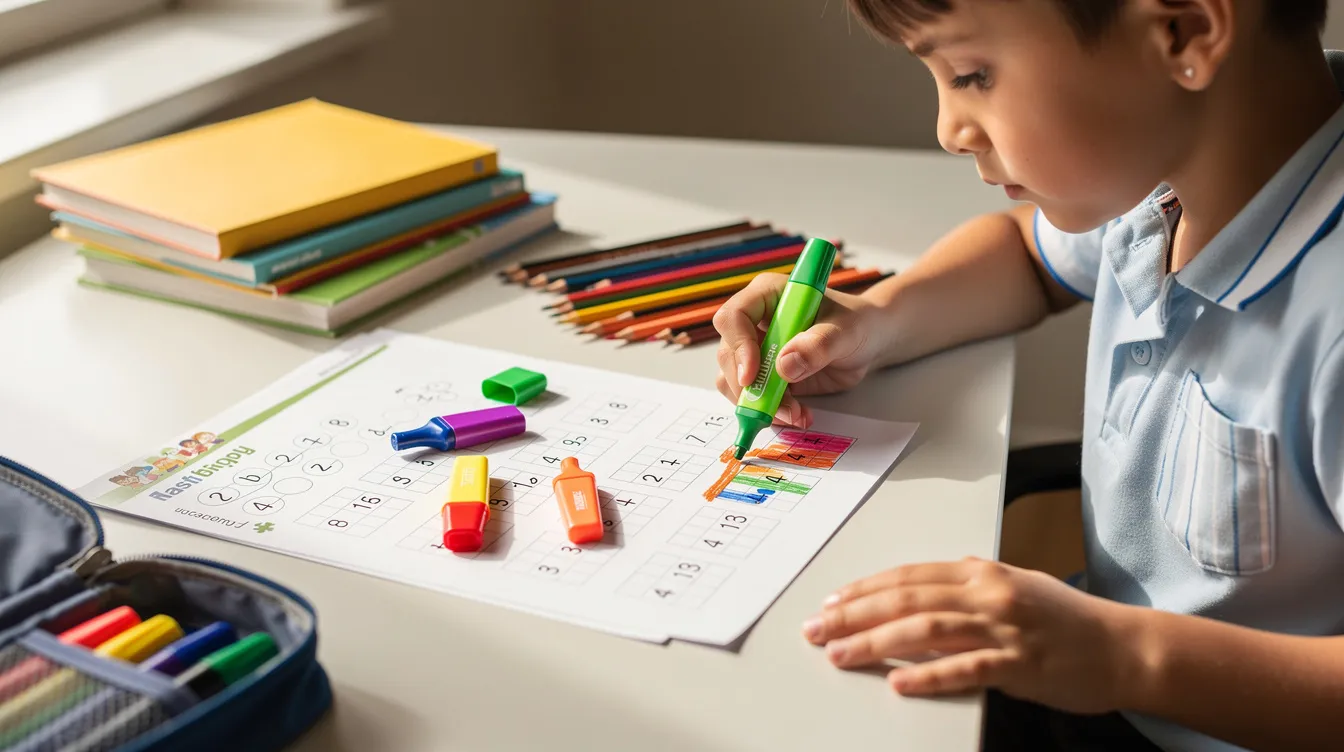
Every parent in Singapore has lived this moment: your child brings home a math paper, and the marks lost have nothing to do with not knowing the content. A decimal point shifted. A negative sign vanished. The last sub-part of a question was left blank. The teacher’s red ink simply reads: careless. Your instinct is to say, “Just be more careful next time.” But what if the problem was never about care in the first place?
Key Takeaways
- Children in Singapore commonly lose 10–15% of exam marks not to concept gaps but to careless mistakes like sign errors, missing units, and misread words-even when they understand the material perfectly at home.
- Most careless errors are symptoms of invisible cognitive limits in working memory, processing speed, attention regulation, and executive function that surface under time pressure and exam stress.
- More tuition worksheets alone rarely reduce careless errors. In many Primary 4–Secondary 2 students, they actually increase cognitive overload, test anxiety, and slip ups.
- Cognitive Development Learning Centre (Singapore) is a specialised centre that targets root causes such as working memory, processing speed, and self-monitoring rather than drilling content.
- Parents can help children reduce careless mistakes using concrete strategies-structured checking, cognitive offloading, pacing, and targeted intervention-while protecting the child’s self esteem and motivation.
When “Careless Mistakes” Cost 10–15% of Every Paper
Picture this: a Primary 5 student in Singapore brings home a 2026 SA1 math paper scoring 78 out of 100. The teacher has circled multiple errors-writing 7 × 8 = 54, forgetting units for an area question, misreading “at least” as “at most.” None of these reflect a gap in understanding.
Most parents respond the way any reasonable person would. “Check your work properly.” “Read the question again.” “Be more careful.” Yet the same mistakes appear in every paper from Primary 3 onward.
Here is the pattern that matters: these children can usually explain the concepts correctly at home or during homework. The errors happen when they have to juggle speed, accuracy, and stress during a timed test. Children often make more mistakes under exam pressure-not because they stop caring, but because their brain is managing too many demands at once.
What we call “careless” is often the visible tip of deeper cognitive and emotional issues. The rest of this article unpacks what is actually happening in the brain, why standard responses fail, and what targeted strategies can finally help.

The Anatomy of a “Careless” Mistake: What the Brain Is Juggling
Consider a single multi-step PSLE word problem. To answer it correctly, a student must simultaneously:
- Read and comprehend the question (including tricky words like “except” or “remaining”)
- Select the correct operations
- Hold intermediate numbers in mind
- Track signs and decimal places
- Monitor whether each step makes sense
- Format the final answer with proper units
That is at least six parallel demands on a developing brain. Cognitive overload increases careless mistakes during complex problems because the brain simply cannot maintain perfect attention across all channels at once.
Here is a useful distinction for parents:
| Concept Gap Error | Cognitive Processing Error |
|---|---|
| Does not understand long division | Knows long division but misplaces a digit |
| Cannot explain negative numbers | Understands negatives but drops the sign under time pressure |
| Has not learned unit conversion | Knows the formula but writes “cm” instead of “m” |
When too many demands hit at once, the brain drops small details first-units, signs, the final sub-question. These look careless, but they reflect capacity, not attitude.
Telling an overloaded brain to “be careful” is like telling a runner at the last 200 metres of a 2.4 km NAPFA test to “just don’t feel tired.” It does this answer nothing about their actual capacity.
Four Core Cognitive Causes Behind “Careless” Errors
From our work at Cognitive Development Learning Centre, patterns across hundreds of Singapore primary and lower-secondary students reveal four recurring root causes behind persistent careless mistakes:
- Working memory overload
- Processing speed mismatch
- Visual tracking and perceptual weaknesses
- Executive function and self-monitoring difficulties
A child can be very bright and still struggle with one or more of these domains, especially during actual exams with dense text and multi-step problems. Careless mistakes are often due to interactions between attention, memory, and emotion-not a single simple flaw.
These root causes are often invisible in everyday conversation at home, which is why the child “looks fine” outside test settings. The sections below explain each cause and show how to identify and address the most likely profile for your child through structured learning intervention.
Working Memory Overload: When the Brain Drops the Details
Think of working memory as the brain’s “whiteboard”-a small surface that temporarily holds information like three key numbers and two calculation steps. For children in Primary 3 through Secondary 2, this whiteboard is still developing. Research shows that once more than two or three separate pieces of information must be held and manipulated simultaneously, accuracy drops noticeably.
Concrete examples of working-memory-related careless mistakes include:
- Forgetting to bring down a digit in long division
- Losing track of a minus sign mid-calculation
- Skipping a condition like “for n > 3” in a Secondary 1 algebra question
- Memory retrieval errors involving recalling incorrect facts or formulas under pressure
Dense word problems, multi-step science questions, and long comprehension passages-especially in the last 15 minutes of an exam-magnify these errors. Cognitive overload increases careless mistakes in complex problems because the whiteboard simply runs out of space.
Test anxiety further shrinks effective working memory capacity. A meta-analysis of over 53,000 primary-age children found test anxiety correlates negatively with math achievement (r ≈ −0.21), largely by consuming the mental resources a child needs for accuracy. Parents looking for deeper understanding can explore more about working memory and processing bottlenecks.
Processing Speed Mismatches: Too Fast, Too Slow, and Out of Sync
Processing speed is how quickly the brain can take in information, make sense of it, and produce a response-whether verbal or written. It is entirely separate from intelligence.
Two common mismatch patterns appear in school:
- Fast thinkers, slow writers: The child knows the answer but their thoughts race ahead of their pencil. Words get skipped, digits get transposed, steps vanish between brain and paper.
- Slow processors who run out of time: They understand the material but use most of the allotted time on earlier questions. The last section becomes a rushed scramble where a student rushes through questions, and rushing through questions often results in misreading and errors.
In practice, this looks like skipping words in a Primary 6 English composition, omitting steps in a Secondary 2 algebra proof, or copying 0.05 as 0.5 near the end of a paper. The developmental cascade model shows that processing speed development drives improvements in working memory-so when speed is out of sync, everything downstream suffers.
Schools’ strict time limits (1.5 hours for a full math paper, for example) can turn a mild processing-speed difference into a chronic pattern of last-minute errors. The reassuring news: processing speed can be supported through strategy training and targeted cognitive exercises, not just by asking a child to “slow down” or “think faster.” Insufficient automaticity in skills leads to careless mistakes, but automaticity can be built.
Visual Tracking and Perceptual Issues: When the Eyes and Brain Misalign
Visual tracking is more than eyesight. It is the ability to move the eyes smoothly along lines of text or numbers and to keep place on a crowded exam page.
Specific careless mistakes linked to visual and perceptual weaknesses include:
- Misreading “÷” as “×” or confusing a misread number like “6” for “9”
- Mixing up 64 and 46
- Skipping every third line in a comprehension passage
- Answering part (b) with the answer meant for part (a)
Cluttered exam layouts, small fonts, and multi-column answer spaces in Singapore exam papers can worsen these issues even for children with normal eyesight. Environmental distractions can fracture a child’s attention span, causing mistakes even in otherwise familiar material.
Some children with undiagnosed mild dyslexia or visual processing differences are especially prone to this pattern of errors. Practical cues parents can observe at home: the child frequently losing place when reading aloud, using a finger or ruler to track lines, or complaining of “words moving” when tired.

Executive Function and Self-Monitoring: Why “Check Your Work” Doesn’t Work
Executive function is the brain’s “manager”-the system that plans, organises, monitors, and adjusts actions, including the ability to notice and correct mistakes in real time. Attention and executive functioning develop gradually through childhood and adolescence, which means many students simply do not yet have a mature internal checking mechanism.
Common signs of weak self-monitoring in Primary 4–Secondary 1 students include:
- Finishing a paper with 20 minutes left but refusing to check
- Re reading answers passively without spotting obvious sign errors
- Leaving blanks they meant to return to
Executive function challenges make it hard for children to monitor their own errors. When self-monitoring is weak, the child may genuinely believe they have checked thoroughly even when their checking was superficial-scanning for skipped questions but never verifying operations or units. Attention drift errors occur when students lose focus mid-problem, and without strong executive function, these drifts go unnoticed.
ADHD increases the likelihood of making careless mistakes because difficulties with inhibition, planning, and task switching make consistent checking routines extremely hard. Inattention in ADHD can lead to missing important details, and children with ADHD often experience cognitive overload during tasks that neurotypical peers manage with less effort. An adhd brain struggles not with understanding but with sustaining the monitoring process. Even when adhd makes a child aware of past errors, the executive system may not support the follow-through needed to triple check high-stakes questions. Parents seeking structured support can explore resources on executive functioning and self-monitoring skills.
The Emotional Toll: Self Esteem, Test Anxiety, and the “Careless” Label
“No matter how hard I try, teacher will say I’m careless.”
We hear versions of this from students regularly. Being repeatedly told “you’re careless” or “you didn’t put in effort” can shift a child’s identity from “I made a mistake” to “I am the kind of person who always messes up.” Emotional distress can lead to a cycle of self-blame that undermines motivation and willingness to even try.
Here is how test anxiety develops: past experiences of losing marks to small slip ups lead to overthinking, blanking out, and bodily symptoms-sweaty palms, racing heartbeat-during major exams. High stress or performance anxiety can trigger a fight-or-flight response in children, diverting cognitive resources away from the task. Stress hormones interfere with working memory and attention, and high-stress levels make it harder to recall formulas, even well-practised ones. Anxiety impairs cognitive function during exams and stress and anxiety impair cognitive function, increasing mistakes across the board.
ADHD symptoms can cause emotional distress after making mistakes, and careless mistakes can negatively impact self-esteem in children with ADHD especially. Adhd traits like emotional reactivity amplify the sting of every red-circled error.
Protecting emotional wellbeing is not coddling. Creating a supportive environment reduces performance anxiety in children, and a calm brain simply processes information more accurately.
Why More Tuition and Extra Worksheets Often Backfire
When a child in Primary 5 starts losing marks to careless errors, a common Singapore response is to increase weekly tuition hours and stack daily practice papers from past exams, hoping volume will fix the problem.
But sheer volume without addressing root causes can worsen fatigue, cognitive overload, and negative beliefs. Task design issues like poorly formatted worksheets can increase cognitive load rather than reduce it. Mistakes in children’s work can reflect reductions in engagement or motivation when the practice feels pointless. Disengagement occurs in children if the material is too easy or repetitive-and for a child who already understands the concepts, doing more of the same is exactly that.
Here is the critical distinction:
| When Extra Practice Helps | When Extra Practice Hurts |
|---|---|
| True concept gaps | Errors mainly at the final answer stage |
| Limited earlier exposure to a topic | Frequent sign errors and misreading |
| Child cannot solve the problem even calmly at home | Child solves it easily without time pressure |
“Concept drilling” (repeating similar sums) is different from “cognitive capacity building” (strengthening working memory, attention, and processing speed). Standard tuition almost always focuses on the former. Cognitive Development Learning Centre is not a standard tuition centre-we use structured learning intervention designed to change how the brain handles information processing, not just to add more of the same practice.
Spotting Your Child’s Error Pattern: A Simple At-Home Framework
Before seeking help, parents can do their own informal analysis using recent test papers (this year’s CA1 or SA2 scripts). Classify each careless mistake into one of these categories:
- Misreading errors occur when students misinterpret question details (e.g., reading “except” as “including”)
- Transcription errors happen when students copy information incorrectly (e.g., writing 3.24 as 3.42)
- Procedural slip ups occur during familiar mathematical operations (e.g., wrong order of steps)
- Final answer errors happen when students mispresent their solutions (e.g., missing units, wrong magnitude)
Create a simple error log with columns for date, subject, question type, error type, and suspected cause (rushing, confusion, fatigue). Over three to four weeks, clear patterns emerge.
To distinguish “didn’t know how” from “knew but didn’t do,” ask your child to rework missed questions at home without time pressure. If they solve them easily and get a different answer than on the exam, the issue is likely cognitive processing or anxiety, not understanding.
Change your language during review. Replace “You’re so careless” with specific observations: “You misread the word ‘except’ here” or “You did all the steps correctly but forgot the units in the final answer.” Feedback that focuses on specific strategies helps reduce recurring errors far more than vague labels. Viewing mistakes as learning opportunities fosters better self-monitoring in children over time.
This informal analysis often prepares families well for a more formal comprehensive cognitive assessment if needed.
Strategies That Actually Reduce Careless Mistakes (Without Crushing Confidence)
This section is a toolbox for parents and students. The methods below respect the child’s cognitive limits instead of demanding more effort.
Strategies address three levels:
- On-paper techniques to offload working memory
- Structured checking methods that go beyond “read again”
- Pacing and environment adjustments to manage cognitive overload
Not every strategy fits every child. Choose one or two based on the error patterns you identified, then practise consistently over several weeks. Mindful problem-solving routines can help prevent careless mistakes when they become habit rather than one-off instructions. Healthy coping strategies can help children manage stress and anxiety alongside these practical techniques.
Offloading Working Memory: Make the Invisible Steps Visible
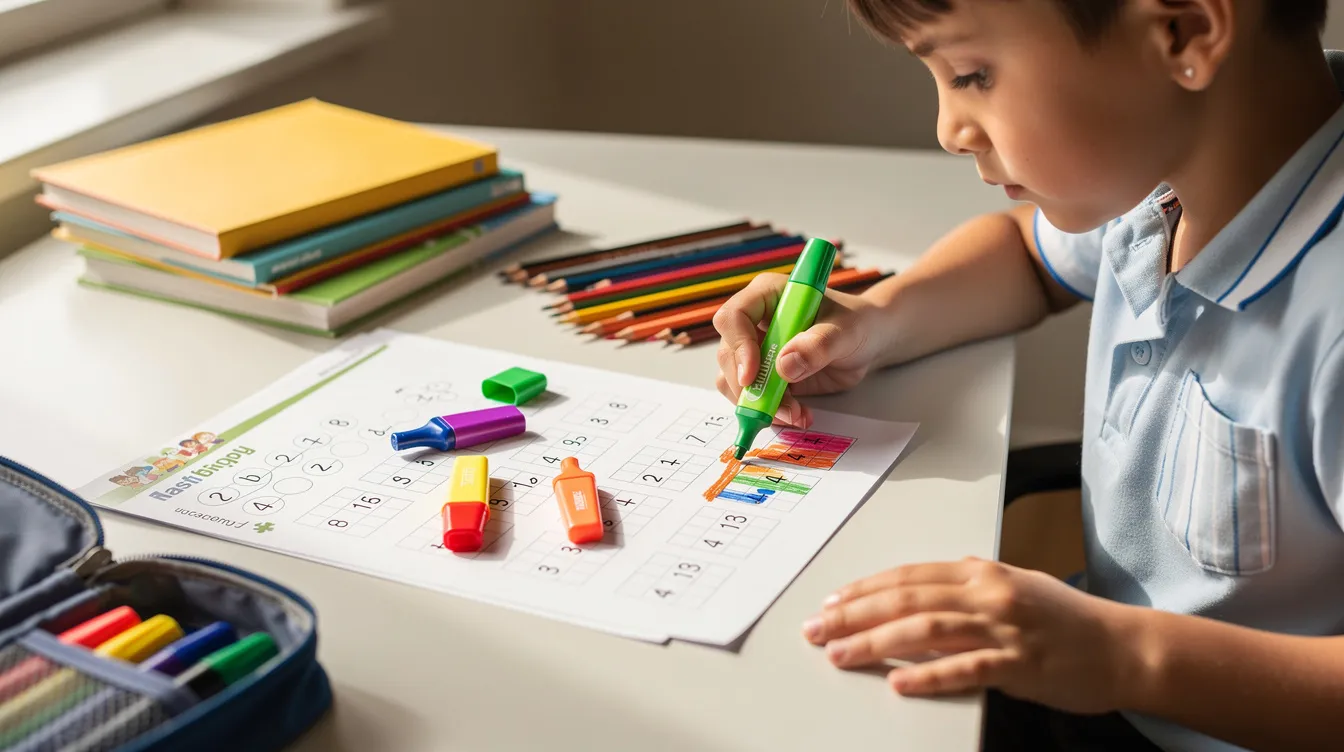
Teach children to circle key words, underline conditions (“at least”, “not”, “maximum”), and box units directly on the question paper. This simple act of writing reduces the load the brain must carry internally, catching the wrong piece of information before it derails a solution.
Recommend micro-checklists written at the top of math or science papers:
- Read twice
- Plan steps
- Compute
- Check sign and units
- Sense-check final answer
Clear, step-by-step instructions improve task comprehension and reduce mistakes. Having children tick each item as they complete it makes the process concrete rather than abstract.
For Primary 4–6 arithmetic and Secondary 1 algebra, use margin notes and working columns to line up digits. This reduces transcription and decimal point errors dramatically.
Encourage verbal self-explanations during practice: “I am subtracting because the question said ‘difference’.” This strengthens metacognition and catches wrong operations before they spread through the whole solution. If the child notices something feels off-“does this answer make sense?”-they are developing exactly the skill that prevents careless errors.
Checking That Works: From Passive Re-Reading to Active Error Hunting
There is a massive gap between passive checking (“scan quickly from top to bottom”) and active checking frameworks that actually cut careless mistakes. Weak metacognitive skills lead to unmonitored errors in students who believe they have “checked” simply because they glanced at their paper.
Three techniques that work:
- Cover-and-redo: For high-mark questions, cover your original working and solve the problem fresh. If you get a different answer, investigate which version is correct.
- Reverse verification: Substitute your answer back into the original equation or scenario. If a word problem says “Ali has 3 times as many” and your answer does not satisfy that, something went wrong.
- Question–answer matching: Re-read each part of the question and physically point to where each part is answered in your working. This catches skipped sub-parts and missing units.
Students should check their work with the Fresh Eyes Method-pausing briefly before reviewing so the brain approaches the work as if seeing it for the first time, moving in the opposite direction from how they originally solved it.
Training in self-monitoring habits can improve children’s awareness of errors over time. Students should practice checking techniques daily to reduce errors, even during low-stakes homework. When deciding whether to double check or triple check, prioritise: a 5-mark question in a mid-year exam deserves more verification time than a 1-mark MCQ.
Mark questions with a small dot after completing an active check. This prevents fake-checking entire sections in 30 seconds, which is time consuming but ultimately saves marks.
Pacing, Breaks, and Managing Cognitive Overload
Even a well-prepared child’s accuracy drops sharply once they cross an internal fatigue threshold-usually around the last 15–20 minutes of a full-length paper. This is where most students benefit from deliberate pacing.
Practise at home with a “speed budget”:
- ~1 minute per 1-mark question
- 2–3 minutes per 2–3 mark questions
- Reserve the last 10–15 minutes for systematic checking
Students should limit time spent on each question to avoid rushing through the final section when cognitive resources are lowest.
Incorporate micro-breaks during practice papers: 10 seconds to close eyes and breathe between sections. This resets attention without wasting significant exam time. Over weeks of practice, children learn to notice when they feel their focus slipping and to intervene before errors pile up.
Simple pre-test routines also help manage test anxiety: deep breathing sequences, positive self-talk scripts (“If I slow down and follow all the steps, I will catch most slip ups”), and scanning the whole paper before starting so there are no surprises. These are not soft skills-they are performance strategies that directly eliminate mistakes caused by an anxious, overloaded brain.
When to Consider a Comprehensive Cognitive Assessment
Warning signs that point beyond normal developmental slip ups:
- Persistent careless mistakes across multiple subjects for more than 12–18 months
- Large gaps between oral or verbal ability and written exam scores
- Significant differences between homework and exam performance
- Teachers repeatedly noting “careless” or “rushing” despite effort and tuition
A comprehensive cognitive assessment typically involves standardised tests of working memory, processing speed, attention, language, and executive function, combined with detailed history from parents and school reports.
Such an assessment can reveal whether patterns are linked to ADHD, specific learning difficulties like dyslexia or dyscalculia, or general processing bottlenecks. The outcome is a practical profile with tailored recommendations-not a simple label. It clarifies whether a child’s difficulty is about fine motor skills slowing their writing, attention regulation gaps, or a combination that standard tuition cannot address.
Seeking assessment is not about blaming the child. It is about finally understanding the root causes so that school, home, and any intervention can work in the same direction, moving in the opposite direction from blame and toward brain-based support.
How Cognitive Development Learning Centre Supports Children Who Make Careless Mistakes
Cognitive Development Learning Centre is a Singapore-based intervention centre focusing on cognitive development-working memory, attention regulation, processing speed, and executive skills-rather than syllabus-heavy tuition. We work with the assumption that no child is simply “careless” by nature.
Our structured learning intervention model follows a clear process: initial cognitive assessment, customised intervention plan, and ongoing tracking of not just marks but specific error patterns. We measure progress by counting whether misreading errors, sign errors, and final answer errors are decreasing over time-not just whether the overall score went up.
Programme elements include:
- Targeted working memory exercises to expand the brain’s “whiteboard”
- Processing speed drills with accuracy emphasis (not just going slow or fast, but finding the right sync)
- Visual tracking activities for students who lose place on crowded pages
- Coached checking routines integrated into actual schoolwork
We also support the emotional side: helping students reframe their identity from “careless” to “capable but overloaded,” teaching them to notice and manage test anxiety, and building realistic confidence. Students develop the sense that progress is possible, and they hear from us that they are not broken-their brain just needs the right kind of support.
If your child is consistently losing marks to careless errors despite knowing the material, we invite you to reach out for an evaluation of focus and attention difficulties.
Conclusion: Moving Beyond Blame to Brain-Based Support
“Careless mistakes” are usually a sign of the brain working at its limits under pressure-not a lack of care, effort, or intelligence. By understanding working memory, processing speed, visual tracking, and executive function, parents can finally see why their child’s errors keep repeating despite practice.
Small, consistent changes-structured checking, cognitive offloading, pacing, and emotional support-can significantly reduce careless errors over one to two school terms. No one strategy will eliminate mistakes overnight, but the correct ones compound.
Shift your language from blame to curiosity. Ask “What was hard about this question for your brain?” instead of “Why weren’t you more careful?” Seek specialised help if patterns persist across class after class.
Many of our students, from Primary 3 to Secondary 4, have gone from losing 10–15% of marks to careless mistakes to consistently capturing those marks back once the root causes were addressed. The matter is never about whether your child can learn-it is about giving their brain the right conditions to show what they already know.

FAQs about Children’s “Careless Mistakes” in School
Below are common, practical questions Singapore parents ask us that are not fully covered in the main sections.
At what age should I start worrying if my child is still making a lot of careless mistakes?
Occasional slip ups are completely normal in lower primary. At that stage, children are still building basic automaticity in reading and arithmetic, and errors are part of the process.
However, persistent patterns across multiple subjects from around Primary 4 onwards-especially if teachers repeatedly note “careless” in remarks-may warrant closer attention. If the gap between what the child can do calmly at home and what appears on timed school tests remains large for more than a year, it is reasonable to seek professional input rather than assume the child will simply “grow out of it.”
For Secondary students, repeated careless mistakes affecting key exams like Sec 2 streaming or O-Levels are a strong signal to investigate root cognitive causes. At that point, the stakes are too high and the patterns too established for last-minute tuition alone to make a meaningful difference.
How long does it usually take to see fewer careless mistakes once we start using these strategies?
Set realistic expectations. Simple on-paper strategies-like circling key words or adding units to every final answer-can reduce certain error types within a few weeks. Deeper changes in working memory or executive habits often take one to three school terms of consistent practice.
Progress is rarely a straight line. Stress peaks before mid-year or final exams may temporarily increase careless mistakes even as overall patterns improve. A child who was making eight transcription errors per paper may drop to three, then spike to five during an anxious exam week, then settle at two. That is real progress even if it does not look perfect.
Track improvement not just by marks but by counting specific error types per paper. Over time, you should see that misreading or final answer errors are gradually decreasing even when the difficulty of papers increases.
What can I ask my child’s teacher to better understand these mistakes?
During parent-teacher meetings, try these specific questions:
- “Are the mistakes more about concepts or small slips in execution?”
- “Which types of questions show the most errors-word problems, computation, or multi-part questions?”
- “Do you notice my child seeming anxious, distracted, or unusually slow during tests compared to class activities?”
Request sample marked scripts if they are not already provided. Frame the conversation as partnership: “We’re trying to understand what’s happening so we can support her at home.” Teachers are far more likely to collaborate when they feel the parent is not assigning blame but genuinely looking for the child’s specific patterns.
Isn’t this just “being a bit careless”? Do all children need a formal assessment?
There is a real difference between typical, occasional careless mistakes that every person makes under pressure and the kind of persistent patterns that significantly and repeatedly lower grades despite effort.
Not all children who make careless errors need a comprehensive cognitive assessment. Many respond well to better strategies and environmental adjustments once parents and teachers understand the issue. A child who loses two marks on one paper does not need clinical evaluation.
An assessment is most appropriate when there are multiple red flags-long-standing issues across subjects, a strong mismatch between oral ability and written output, or suspected ADHD or learning difficulties. If you notice your child’s errors feel random and unresponsive to every strategy you have tried, that is the clearest sign that something deeper is worth investigating.
Can improving focus and attention alone really reduce careless mistakes?
Attention regulation is a key piece of the puzzle but rarely the only factor. Focus, working memory, processing speed, and self-monitoring usually interact to produce or prevent careless mistakes. A child with strong focus but weak working memory will still drop details under load.
That said, targeted support for focus and attention difficulties-through structured routines, environment design, and specialised programmes-can meaningfully reduce slip ups when combined with checking strategies. Many students improve when their brains are given the right kind of support rather than more pressure to “pay attention.” The goal is not to develop perfect concentration but to build systems that catch errors even when attention naturally fluctuates during a long paper in life.
Comments are closed