Key Takeaways
- Nightly homework fights are usually signs of cognitive overload, executive function fatigue, and a stressed nervous system after a full school day, not simple defiance or a bad attitude.
- Working memory bottlenecks and task anxiety cause children to avoid, stall, or melt down over assignments that look easy on paper but feel impossible to a tired brain.
- Common responses like nagging, scolding, removing all screen time, or adding more tuition hours tend to worsen dysregulation rather than fix it.
- Parents can break the cycle with decompression buffers, micro-step task breakdowns, visual timers, and co-regulation strategies tailored to Singapore’s school demands.
- When battles persist despite consistent home strategies for two to three months, process-based professional help can address the underlying cognitive bottlenecks.
Introduction: The Nightly Homework Standoff in Singapore Homes
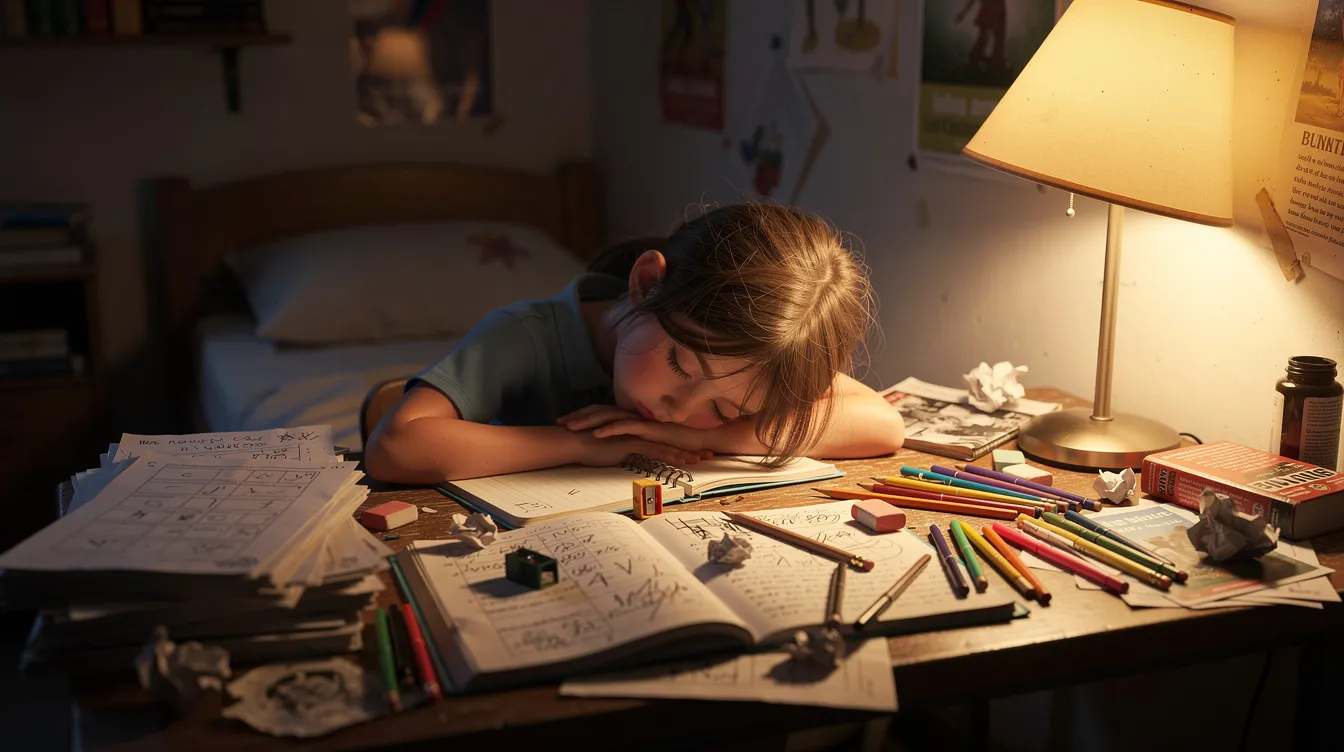
It is 7.30 pm in a Tampines four-room HDB flat. A parent drops a bag by the door, still in work clothes, and finds the P5 child hunched over a Mathematics heuristic worksheet. Three questions are done; six remain. A Science open-ended booklet sits unopened beside a half-eaten biscuit. Down the corridor, the Sec 2 sibling is staring at A-Math corrections, pencil-chewing, earbuds in, making zero progress.
Within minutes the scene escalates: repeated toilet trips, tears over a 20-minute worksheet that stretches past 10 pm, “I hate homework!” shouted at the ceiling. The parent feels the night slipping away. Fear about PSLE scores or O-Level grades mixes with guilt for not being home earlier.
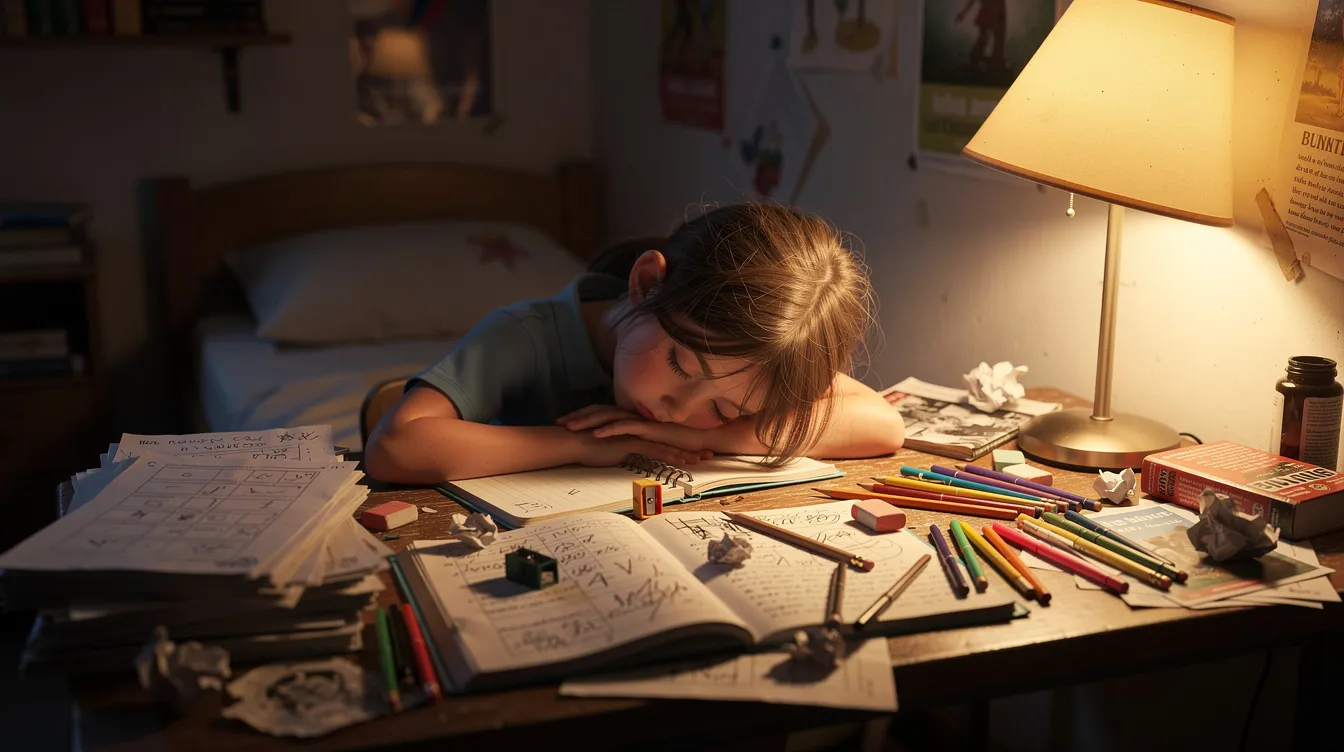
Many parents interpret this as stubbornness. But the resistance is usually the child’s nervous system signalling “this is too much,” not a power struggle or an attempt to control the household. This article unpacks the brain mechanics behind the pattern and offers practical, non-blaming strategies grounded in Singapore’s school reality.
Is This a Phase or a Daily Battle? Spotting the Patterns
Before changing anything, it helps to determine whether what you see is occasional grumbling or a chronic homework war. The distinction matters because the strategies differ.
Signs of a daily battle:
- Arguments over homework at least four to five nights a week
- Homework stretching beyond two hours for P3 to P6 despite an average-sized assignment load
- Frequent crying, shouting, or complete shutdown where the child refuses to write a single word
- A P3 child melting down over weekly ting xie practice; a P6 student stuck on problem sums every night; a Sec 2 teen refusing to begin long tuition worksheets
More typical resistance:
- Occasional whining on heavy CCA days
- Mild foot-dragging near exam periods, but the child can still start and finish within agreed homework time
- Brief complaints that fade once the first question is answered
If the battle patterns persist for more than two to three months, the cause is unlikely to be laziness or a passing phase. Exploring the cognitive and emotional factors underneath is a more productive first step than increasing punishments.
Unpacking the Brain Mechanics: Why Homework Triggers Dysregulation
Children bring a “used” brain home. After six to eight hours of lessons, recess social conflicts, CCA, and a noisy commute on the MRT or school bus, their cognitive resources are depleted.
Executive function is the brain’s control tower: planning, prioritising, organising tasks, inhibiting impulses, and monitoring performance. These skills run all day for listening, note-taking, queuing, and behaviour control. Task initiation is itself a core executive function skill. By evening, many children’s control tower is running on fumes. Research on cognitive fatigue shows that prolonged executive demands reduce subsequent performance, increase error rates, slow response times, and provoke avoidance behaviour. Poor executive function skills hinder homework completion precisely because the brain has already spent its budget for the day.
Working memory is the mental notepad that holds steps and information briefly. During homework, a child must hold the question’s premise, recall the method, execute the steps, and track what has already been written. Multi-step word problems, Science structured questions, and composition planning all load this notepad heavily. When capacity is exceeded, the child loses their place, makes careless errors, or shuts down emotionally. Working memory overload leads to homework avoidance because the task stops feeling difficult and starts feeling threatening.
That threat sensation activates task anxiety and, over time, learned helplessness. Repeated failure or scolding trains the brain to expect “I will fail,” so it uses avoidance (“later lah,” “I don’t care”) as self-protection. Anxiety and perfectionism can create mental blocks that inhibit productivity even in capable students. A dysregulated nervous system, with a racing heart, tight chest, and shallow breathing, cannot think clearly. Willpower-based approaches (“just try harder”) fail in this state because the prefrontal cortex responsible for planning and reasoning goes offline while the amygdala takes over. Sensory overload from noise, clutter, or even the flickering of a screen nearby can further inhibit homework completion.
How Working Memory Overload Shows Up at the Homework Table
This section translates “working memory” into what parents actually see during homework. Recognising these signs is the first step toward the right support.
Common signs:
- Child forgets instructions right after hearing them; you repeat the same direction three times
- Copies only part of a question from the textbook, missing key words
- Loses place in long math problem sums, redoing the same step twice or skipping one entirely
- Needs you to repeat Science experiment steps before answering each sub-question
- Leaves blanks in multi-part exam-style questions because holding all parts in mind at once is too much
- Writes the date, the title, sharpens the pencil again, then asks “What am I supposed to do?”
Local tasks with heavy working memory load:
- P5 to P6 Mathematics involving multiple operations and heuristic strategies
- Science explanation questions requiring recall of concepts plus structured reasoning
- Higher Chinese comprehension passages with dense vocabulary and implicit referents
- Secondary summary-writing where students must read, select, rephrase, and track word count simultaneously
- Algebra corrections requiring the student to identify their error, recall the correct method, and redo the working
The behavioural fallout: The child insists “Teacher never teach,” accuses the worksheet of being “stupid,” flips pages randomly, or keeps rewriting the date instead of starting. Mistakes signal threat. Amygdala activation rises, and the prefrontal areas that manage planning and inhibition go offline. Lack of clarity in assignments can trigger frustration and helplessness, compounding an already overloaded system.
From “Won’t” to “Can’t Yet”: Rethinking Laziness and Attitude
“Lazy.” “Spoilt.” “Unmotivated.” These labels circulate in results-driven environments and extended families that compare cousins and neighbours. They rarely describe what is actually happening.
A child can focus for hours on Minecraft or drawing but melt down over a short worksheet. This is not proof of laziness. Gaming and creative play rely on immediate feedback, high novelty, and visual-spatial processing. Homework demands sustained attention on low-stimulation material, written output, and retrieval from long-term memory, a different cognitive profile entirely. Different learning needs can make a single assignment too challenging for some students even when their peers finish it in 20 minutes.
Signs that point to underlying processing difficulties rather than attitude:
- Homework takes far longer than classmates on identical assignments; weak attention can lengthen homework time by 40%
- Strong verbal ability but weak writing output
- Trouble copying from the board accurately
- Inconsistent performance: one day fine, next day unable to complete similar work
- Extreme mental fatigue after a short study time block
- ADHD can cause homework avoidance due to emotional overload, not wilful disobedience
Parents who want a deeper framework for telling the difference can read a guide on the difference between learning difficulties and laziness. Reframing behaviour from “won’t listen” to “overloaded and unable” changes parental tone from punishment to problem-solving. That shift alone calms the child’s nervous system.
Why Discipline, Nagging and Extra Tuition Often Escalate the War
Common solutions in Singapore, including lectures, cutting all privileges, and adding more tuition, often backfire when the core issue is cognitive overload.
Repeated nagging (“Why so slow?”, “Your cousin can finish in 30 minutes”) increases shame, raises anxiety, and triggers amygdala activation. The child’s thinking brain shuts down further. Stress hormones suppress the prefrontal cortex, reducing the very ability parents are demanding.
Extra tuition classes, such as back-to-back weekday evening sessions plus weekend programmes, add more worksheets and corrections to an already exhausted brain. A study from NUS found that Singapore students spend about 22.2 hours per week on homework and additional out-of-school study, on top of roughly 28.6 hours of in-class time. That is approximately 50 hours of weekly learning. Layering more tuition onto this load reduces recovery time and deepens burnout. If processing, attention, or memory are the real bottlenecks, content-heavy revision sessions will not solve them. Parents can explore why tuition doesn’t help some children for a closer look at this mismatch.
Discipline approaches that typically worsen the battle:
- Shouting or slamming the table
- Comparing siblings or classmates
- Cancelling all breaks until work is complete
- Forcing the child to sit at the desk for hours without movement
- Removing screen time without teaching any alternative coping or study skills
Firm boundaries still matter. But they must pair with understanding of brain limits and explicit skill-building rather than fear-based control alone.
The Role of Screen Time, Sleep and the Overloaded Nervous System
Lifestyle factors around homework, especially screen time and sleep, directly affect a child’s ability to stay focused and regulate emotions.
Fast, high-intensity digital content (short videos, mobile games, social feeds) can make schoolwork feel painfully slow by comparison, increasing perceived boredom and avoidance. Assignments perceived as busywork decrease student motivation even further when the brain is primed for constant dopamine hits.
Timing matters more than total hours. Screens right before homework or late into the night overstimulate the nervous system, delay sleep onset, and reduce next-day learning stamina and working memory. A Sec 3 student gaming after tuition until 11.30 pm, then waking groggy at 6 am, is running on a cognitive deficit before the first lesson.
Practical guidelines:
- Agree on “screen-off” windows at least 45 to 60 minutes before final bedtime on school nights
- Plan screen time after shorter homework blocks rather than right before starting
- Avoid using the study desk as a gaming station; the brain needs the desk to cue “work mode,” not “play mode”
- Keep phones outside the study area during focus blocks; removing toys and silencing notifications reduces distractions and shortens homework duration
The solution is not demonising all screens. It is using them deliberately so they do not eat into restorative sleep or prime the brain for stimulation levels that no worksheet can match.
When Singapore School Demands Outstrip a Child’s Cognitive Resources
From P3 onwards, demands increase: heavier syllabuses, more subjects with separate homework streams, and year-round assessments.
MOE-aligned homework guidelines from Qihua Primary list approximate daily homework times: P1 to P2 about 30 to 60 minutes, P3 to P4 about 60 to 90 minutes, P5 to P6 about 90 to 120 minutes. Weekly totals for P5 to P6 students reach 9 to 13 hours outside curriculum time. Secondary students in S1 to S2 are expected to handle under 13 hours per week across subjects; S3 to S5 under 14 hours weekly. Add tuition centre worksheets, online assignments, and exam revision, and the actual numbers run higher.
Academic overload leads to cognitive fatigue and reduced quality of learning. Excessive homework negatively impacts student stress and motivation. More information to memorise strains working memory and retrieval. More corrections require sustained executive function. Longer days leave less time for decompression.
Even neurotypical children can struggle under these loads. Executive function deficits can make it especially difficult for students with ADHD, dyslexia, or slower processing speed to manage assignments independently, and they can quickly appear oppositional. Parents should monitor not only total homework duration but also quality of effort and visible signs of fatigue: slumped posture, glassy eyes, increasing careless errors, and irritability.
The Homework Avoidance Loop: How Battles Become a Habit
The nightly cycle follows a predictable path: child resists, parent pushes, conflict escalates, work is done poorly or not at all, everyone ends the night upset. Over weeks, this loop hardens into a habit.
- Anticipation of failure: Before opening the bag, the child already expects frustration and worry floods in.
- Threat response: Tight stomach, racing heart, shallow breathing. The body prepares to fight or flee, not to think.
- Avoidance behaviours: Stalling, arguing, perfectionistic erasing, long showers just before homework, insisting on multiple snacks, endlessly sharpening pencils, constantly checking WhatsApp.
- Short-term relief: The argument or delay briefly lowers the anxiety spike.
- Long-term cost: Guilt, lower confidence, incomplete work, and teacher consequences the next day.
Over time, the brain starts to associate the word “homework” with negative emotions. Resistance begins earlier each afternoon. The child dreads the evening before it arrives. Punishment-focused responses strengthen this loop by adding fear and shame to an already overloaded system, reinforcing the association rather than breaking it.
De-escalation First: Calming the Nervous System Before Any Homework Gets Done
The principle is simple: regulate before you educate. A dysregulated child cannot reason, learn, or write coherently. Allowing breaks during homework helps manage anxiety levels and prevents escalation.
Immediate de-escalation steps:
- Pause the argument. Stop talking about the worksheet.
- Lower your own voice. Slow your breathing. Your calm is contagious; children borrow the parent’s nervous system state.
- Offer water. Suggest a five-minute reset away from the desk.
- Use validating language: “It really looks hard right now,” “Your brain is very tired after school.” Avoid: “Why are you like this again?”
Physical strategies for small flats:
- Short corridor walks (even 20 steps back and forth)
- Light stretching or 10 deep belly breaths done together
- Pressing palms together firmly for 10 seconds to give proprioceptive input and ground the body
This is not “giving in.” It is helping the child’s nervous system shift from fight-or-flight back to a state where working memory and executive functions come online again. Parents can decide in advance which nights they will prioritise emotional reset over completing every question, especially close to exams when pressure peaks.
The Decompression Buffer: Protecting Transition Time After School
Many homework fights ignite because the child is asked to jump from school mode straight into homework mode with no break. Establishing a predictable routine for homework reduces transition friction.
A decompression buffer is a predictable 20 to 45 minute window after school or tuition for food, rest, and free play before beginning work.
Singapore examples:
- P4 child reaches home at 3.30 pm, decompresses with a snack and quiet Lego play until 4.00 pm, then starts a short first homework block
- Sec 1 student returning at 6.30 pm after CCA, resting and eating dinner until 7.15 pm before sitting down to study
What the buffer should include: Calm activities, light movement, non-exam-related chats, a snack. What it should not include: Intense gaming or high-arousal social media scrolling, which make the later transition harder.
Suggest parents co-create a simple visual schedule: “Arrive home; snack; relax; first study block; dinner; second block if needed; wind-down.” Consistency of this buffer trains the brain to expect and accept homework as part of a predictable rhythm, reducing nightly bargaining.
Externalising Executive Load: Practical Tools to Make Homework Doable
Instead of relying on the child’s tired brain to organise everything, parents can move the load outside the head using simple tools. Chunking large tasks into smaller steps makes them feel achievable and reduces feelings of being overwhelmed.
Tools in a local context:
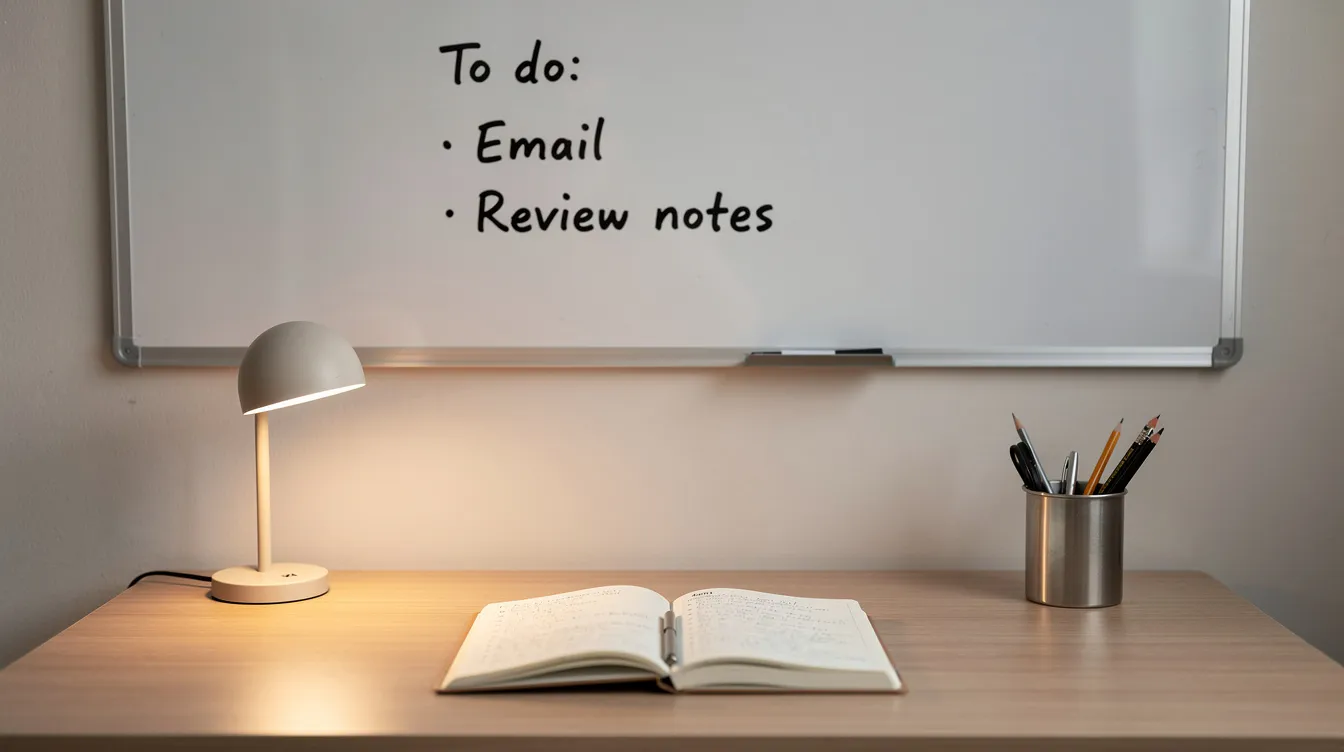
- Whiteboard or A4 paper checklist on the wall next to the study area
- Colour-coded subject folders so the child grabs only one subject at a time; single-tasking reduces the mental costs associated with task-switching
- Homework logbook listing tasks from the Student Handbook or SLS portal
- Visible wall calendar for project deadlines and exam dates
Micro-step breakdowns: Instead of “Do Science,” list: “1) Read page 34 example. 2) Answer Q1 to Q3. 3) Check answers with the answer key. 4) Highlight doubts to ask teacher.” This directly reduces pressure on working memory and executive planning.
Visual timers and focus sprints: Use the Pomodoro Technique or similar: 10 to 20 minute blocks for lower primary, 20 to 30 minutes for upper primary and lower secondary. Set a clear goal for each sprint (“finish three sums”) rather than “work until the timer ends.” Short, timed practice sessions build concentration like a muscle; the child practises sustaining attention for a defined, manageable period and then earns a genuine break. Frequent breaks refresh attention and engagement during study.
For children who need targeted help building attention tracking, working memory capacity, and cognitive stamina beyond what home tools provide, structured focus and attention support programmes can train these skills directly.
Parent as Co-Regulator and Coach, Not Just Supervisor
Two roles produce very different outcomes. The “homework police” monitors, criticises, and catches mistakes. The “learning coach” models calm, chunks tasks, and celebrates effort. Parental involvement should focus on building autonomy rather than direct management.
Co-regulation means the child borrows the parent’s calm nervous system. If the adult is tense, rushing, or scolding while checking emails, the child’s stress rises in response.
Coaching behaviours that work:
- Sit nearby for the first five to ten minutes to help the child begin. Task initiation is often the hardest step.
- Read your own book during their focus sprint. Your quiet presence signals safety.
- Help them plan which subject to tackle first. Completing homework for one subject before switching prevents overwhelm.
- Check only the first question together to ensure understanding, then step back.
Process-reinforcing phrases: “I saw you stayed with that hard question for eight minutes.” “You tried three methods before asking for help.” These build motivation tied to effort rather than outcomes. Avoid “Why still wrong?”
The goal is gradually fading support. Start with more hands-on co-working for younger or more anxious kids, then slowly increase independence as routines stabilise. Even secondary students may need brief “launch support” at the start of study time but prefer privacy once they get going.
Designing Calmer Study Time Routines in a Singapore Home
Routines reduce nightly negotiations. When the brain knows what comes next, it automates transitions and spends less energy resisting.
Sample weekday routine for a P4 child:
| Time | Activity |
|---|---|
| 3.30 pm | Arrive home, snack, rest |
| 4.00 pm | 20-minute focus block (one subject) |
| 4.20 pm | 10-minute break with movement |
| 4.30 pm | 20-minute focus block (second subject) |
| 4.50 pm | Free time until dinner |
Sample for a Sec 1 student with CCA:
| Time | Activity |
|---|---|
| 6.30 pm | Return home, decompress, dinner |
| 7.30 pm | 30-minute study block |
| 8.00 pm | 10-minute break |
| 8.10 pm | 30-minute study block |
| 8.40 pm | Reading or screen-free wind-down |
| 9.45 pm | Lights out |
Match session length to realistic attention spans and working memory capacity rather than idealised expectations. A child who cannot stay focused for 30 minutes gains nothing from being forced to sit for 60.
The physical environment matters:
- Establishing an optimal homework environment is essential for effective studying. A conducive study environment is crucial for student concentration.
- Keep one clean surface with good lighting. Only materials for the current task should be visible. A quiet, clean area enhances focus. A clear workspace free from distractions enhances performance during study sessions.
- A consistent study spot helps cue the brain for work. Creating a predictable homework spot reduces anxiety and aids focus for children.
- Minimising distractions can help children focus on homework tasks; research suggests it can reduce homework time by up to 40%. Remove toys from sight, silence phone notifications, and close unrelated browser tabs.
- Families in smaller flats can create a “study corner” using portable baskets or caddies to signal study time even when the table is shared with dining and chores.
When Home Strategies Are Not Enough: Getting Targeted Support
If homework remains a major battle despite calmer routines, decompression buffers, and external supports used consistently for two to three months, deeper assessment may help. Regular communication among teachers, parents, and students can help identify homework challenges early, but sometimes a child needs more than classroom adjustments.
Red flags suggesting underlying issues:
- Tasks regularly taking double the teacher’s expected time
- Frequent letter reversals or reading avoidance beyond P2 to P3
- Severe difficulty copying from the board
- Chronic forgetfulness of materials and assignments
- Meltdowns at even minor written work
A psycho-educational assessment clarifies cognitive strengths and weaknesses: working memory, processing speed, attention, and specific academic skills. A randomised trial with six- and seven-year-olds found that targeted working memory training increased the probability of entering an advanced secondary school track by 16 percentage points over three years. Process-based support can produce real, measurable gains.
A learning intervention that trains attention, planning, and independent study habits differs from piling on more worksheets. It addresses the process of learning, not just the content.
Parents should seek professional help by collaborating with teachers, form teachers, and allied professionals early. Frame discussions around specific observations: how long homework takes, which subjects trigger the biggest reactions, what strategies you have already tested at home. Students should communicate difficulties early instead of waiting until after deadlines. Communicate proactively with teachers if homework takes consistently longer than expected.
Conclusion: From Power Struggles to Partnership in Learning
Homework battles usually point to overload in working memory, executive function, and the nervous system, not defiance or laziness. Shifting from blame to understanding changes the home climate: decompression buffers, structured study time, and co-regulation replace shouting and last-minute panic.
Protecting a child’s emotional safety and sense of competence is the foundation of long-term academic resilience, far beyond any single exam year. With process-based support at home and, where needed, specialised professional help, it is possible to move from nightly warfare to a calmer, more confident learner-parent partnership. The progress may be gradual, but every calmer night builds habits, relationships, and skills that carry a child well beyond the next test.
Frequently Asked Questions
Below are answers to practical concerns not fully covered in the sections above.
How long should homework take by level before I worry it is “too much”?
- Lower primary (P1 to P2): 30 to 45 minutes on regular days.
- Upper primary (P3 to P6): 60 to 90 minutes.
- Lower secondary (S1 to S2): 90 to 120 minutes.
- Upper secondary (S3 to S5): up to two to three hours on heavy days.
- If a P5 child consistently takes three hours on a typical workload while classmates finish in 90 minutes, investigate working pace, workload distribution, and possible learning difficulties.
- Ask teachers how long each assignment is meant to take. Track actual time over one to two weeks before raising concerns at a parent-teacher meeting. Teachers should clarify instructions and handle misunderstandings proactively when informed.
What if my child only starts homework under “last-minute” pressure and refuses early study time?
- Some children rely on adrenaline from urgency to kickstart focus. This strains the nervous system and damages sleep quality.
- Shift the pattern gradually: use small, timed focus sprints earlier in the evening tied to a reasonable reward (e.g., 20 minutes of screen time after completing one subject). Leave a smaller portion for later if needed.
- Practice “starting earlier” as a skill, not just a rule. Praise any earlier-than-usual start, even by 10 minutes, to reinforce the new habit. Write down the agreed start time so it is visible and concrete.
Is it okay to let my child skip homework if they are very dysregulated or exhausted?
- Occasional, thoughtfully chosen skips on extreme nights can be protective for mental health. A single missed worksheet rarely damages long-term progress.
- Communicate proactively with the teacher, explaining observable signs (meltdown, headache, extreme fatigue) rather than simply not submitting.
- Use these moments to review overall load, sleep schedule, and life demands rather than treating each meltdown as an isolated event.
How can I talk to my child’s teacher about homework battles without sounding like I am making excuses?
- Bring concrete data: how long typical assignments take, which types cause the biggest reactions, and what strategies you have already tested at home.
- Use collaborative language: “Can we explore how to support her working memory during open-ended questions?” rather than “You give too much homework.”
- Many teachers are open to adjustments such as reduced question sets, extended deadlines, or focusing on core items. Clear data and a cooperative tone make these conversations productive.
Should I sit with my child for all their homework, or will that make them dependent?
- Younger or more anxious children often need more co-regulation upfront. Sitting nearby is not the same as doing the work for them.
- Use a phased approach: sit closely for the first 5 to 15 minutes to help them begin and check understanding, then move a short distance away while staying accessible.
- Periodically review which supports can be reduced: the child now sets their own timer, writes their own checklist, or identifies which subject to start with. Each step of independence builds confidence rather than long-term dependence.
Comments are closed