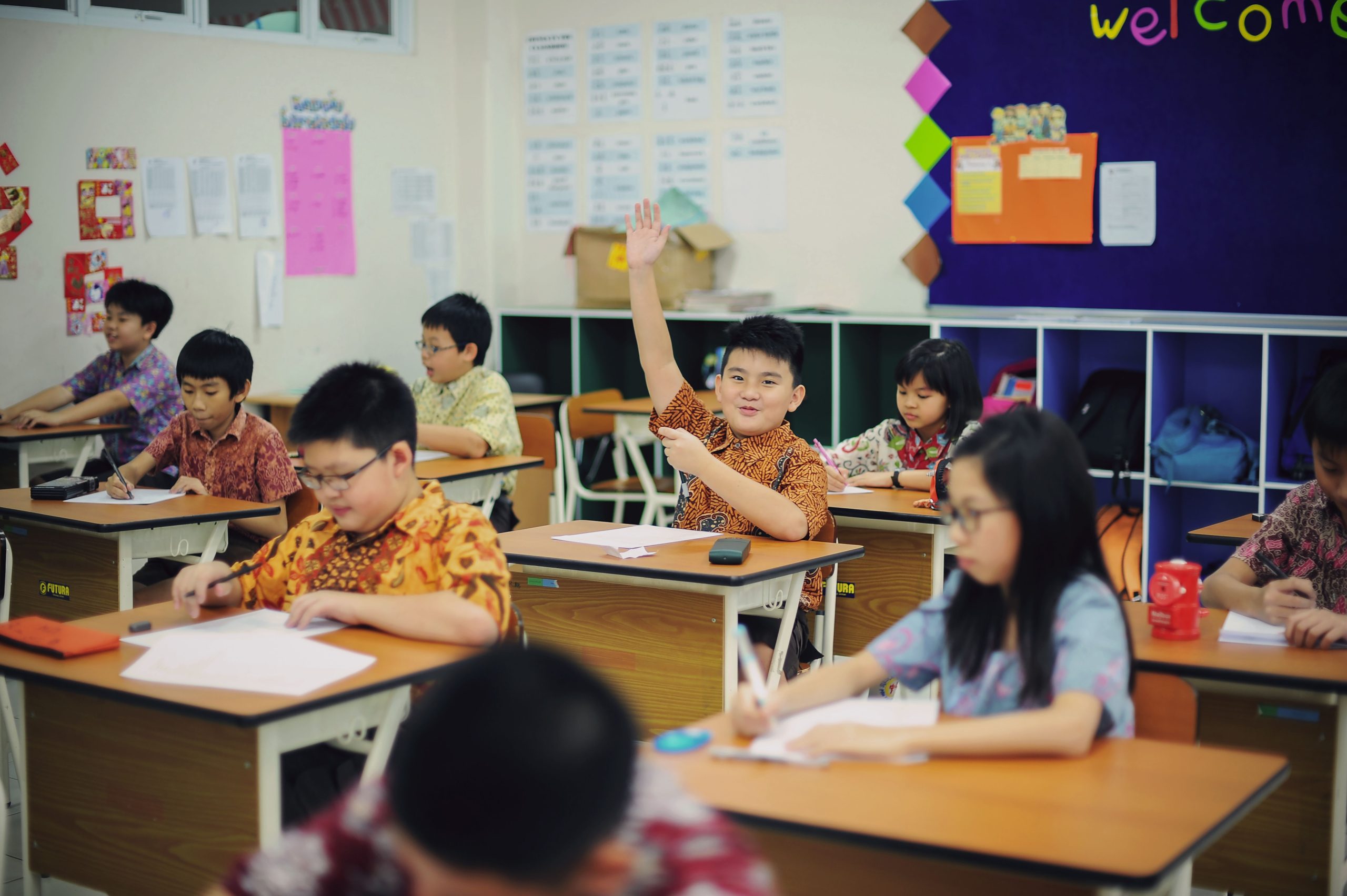
Many Singaporean students sail through primary school with strong grades, pass the PSLE comfortably, and then hit an unexpected wall in Secondary 1 or 2. If this sounds familiar, you are not alone – and it is almost certainly not about laziness.
Key Takeaways
- Many children who did well in primary school struggle in secondary because rising executive functioning demands – not a loss of intelligence – expose hidden gaps in planning, organisation, and self management.
- Primary school is a highly scaffolded environment where one primary teacher closely monitors a child’s well-being; secondary school expects students to independently manage complex schedules across 8–9 subjects, CCAs, and overlapping deadlines.
- Hidden weaknesses in working memory, task initiation, and time management often surface only when secondary workloads increase and external scaffolds drop away.
- Adding more subject tuition alone rarely fixes the problem and can worsen stress if underlying learning processes and executive skills are not addressed.
- Process-based support – such as secondary school learning support or structured learning intervention – rebuilds confidence and helps teens develop independent learning journeys.
Introduction: The “Secondary School Drop” Mystery
Picture this: your child scored AL 3–5 across PSLE subjects, entered Secondary 1 Express or IP in 2024, and by Term 2 you notice slipping grades, incomplete homework on the SLS portal, and a rising sense of anxiety at home. They forget to bring books, cram at midnight before class tests, and say things like “I don’t know how to study” – despite years of strong results in primary school.
This pattern is remarkably common during the PSLE-to-secondary transition. Research from Singapore’s National Institute of Education found that lower self-regulated learning competencies among Sec 1–2 students correlate strongly with higher test anxiety and poorer academic outcomes. Nearly one in four lower secondary students falls into “limited” or “at risk” profiles for self-regulated learning.
This article unpacks why children cope in primary school but struggle in secondary, and what parents can do about it – constructively, without simply piling on pressure or tuition hours.
From Primary School to Secondary: A Hidden Structural Shift
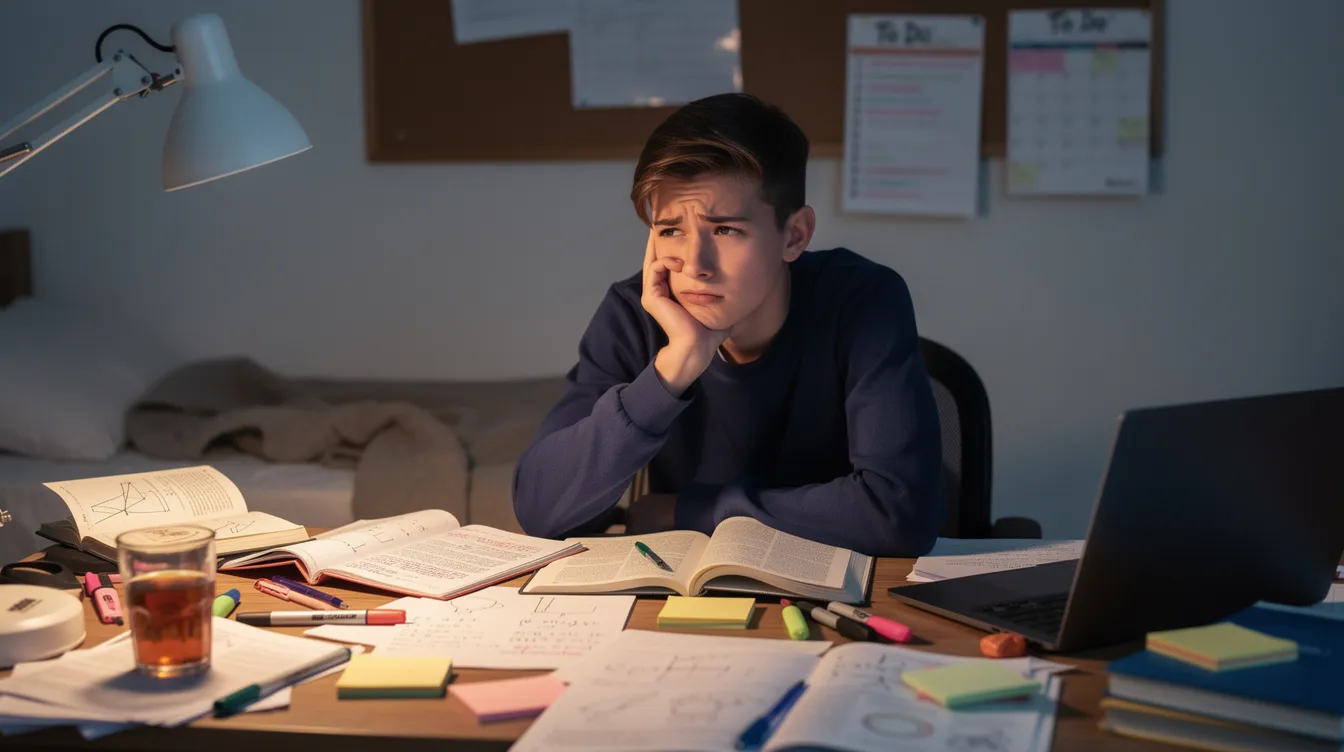
Children experience a smoother adjustment in primary school than secondary school, and the reasons are structural. The primary school curriculum focuses on foundational learning with less pressure. Primary schools typically feature a single main classroom, a consistent timetable, and a small, cohesive peer group. One form teacher handles most subjects, writes homework on the board, and reminds the class about upcoming tests. Parents pack bags, check worksheets, and supervise revision.
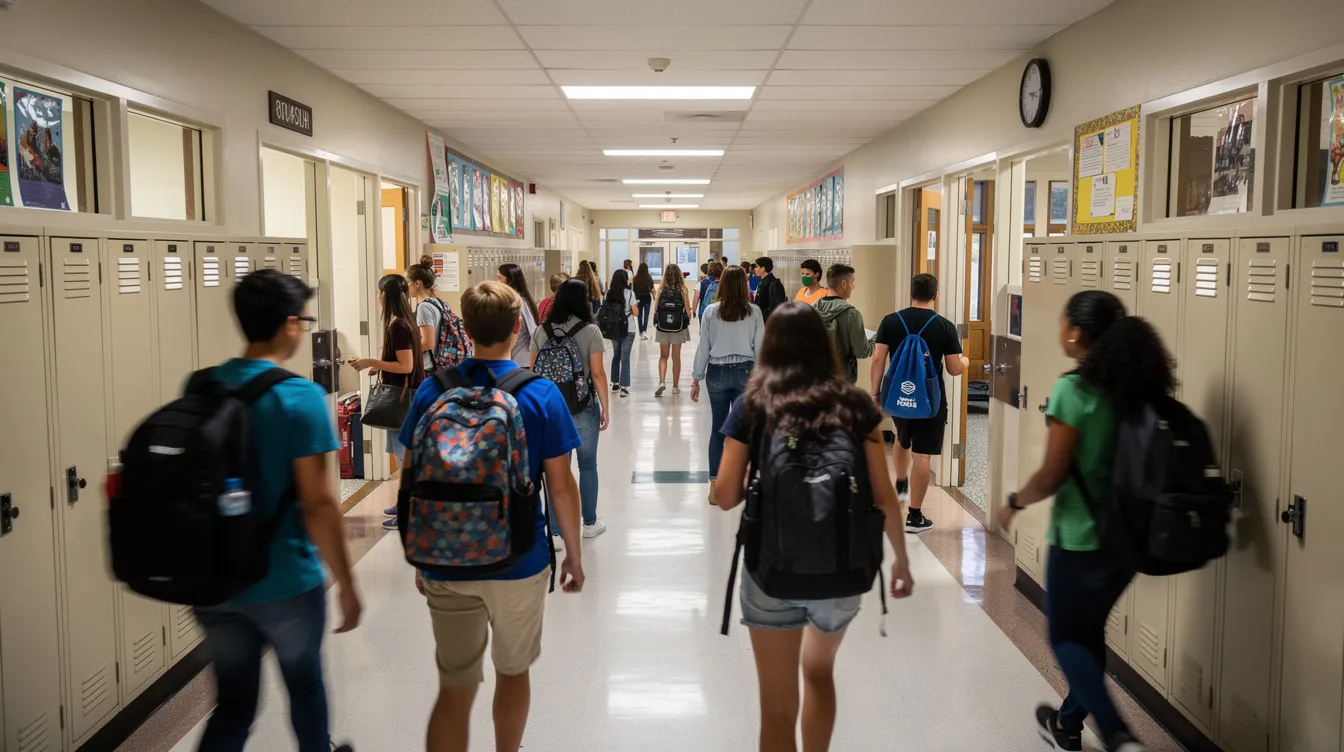
Secondary school flips this entirely. Students now juggle 8–9 examinable subjects – English, Mother Tongue, Mathematics, Science, Geography, History, Literature, D&T or FCE – each taught by a different specialist. Secondary school introduces fragmented environments with multiple teachers, rotating labs, and different expectations per subject. Friendship networks often change significantly when moving to secondary school, adding social adjustment on top of academic pressure.
Bright children who relied on raw ability and parental micromanagement in primary school – rather than their own independent organisation – suddenly find that the strategies that worked before no longer hold.
How Primary School Scaffolding Masks Executive Function Gaps
Executive functioning is the brain’s management system: the set of skills responsible for planning, organising, starting tasks, and sustaining effort over time. These skills develop in the prefrontal cortex and are learned at various developmental stages, meaning a 12-year-old may have strong verbal reasoning but immature planning capacity.
In primary school, external scaffolds compensate for weak executive skills almost invisibly:
- Teachers verbally repeat homework instructions and write them on the whiteboard
- Parents pack bags, set revision schedules, and escort children to tuition
- Weekly spelling lists, ting xie drills, and repeated PSLE drill papers create predictable routines
- A P6 child can memorise Science MCQ answers from Ten-Year Series without understanding experiment design, or copy model compositions without learning to plan an original essay
Because grades look fine in P5–P6, parents and educators may miss subtle signs of executive fragility: difficulty starting homework without supervision, messy files, lost worksheets, or panic when routines change. The pandemic has also negatively affected students’ executive functioning skills, making this cohort of secondary entrants particularly vulnerable. PSLE scores can sometimes reflect how well a child copes within a scaffolded system, rather than how ready they are to self-manage secondary demands.
Secondary School: Sudden Autonomy and High Executive Demand
A typical Secondary 1 timetable in 2025 runs from around 7.30am to 1.30pm or later, followed by CCA two to three afternoons a week until 5–6pm. The secondary school curriculum is compartmentalised and rigorous. Increased autonomy is expected of students in secondary school – checking online portals for homework updates, coordinating group projects, tracking multiple test dates, and filing worksheets across subjects.
The transition to secondary school coincides with early adolescence and puberty, layering biological change onto academic pressure. The complexity of social dynamics increases as students enter secondary school, with new peers, new hierarchies, and new expectations around identity. Secondary schools feature decentralised environments that complicate peer relationships and amplify the need for self awareness.
Subjects become conceptually heavier: secondary Science involves experiment-based questions requiring synthesis, Mathematics introduces algebra and geometry proofs, and Literature demands inference of themes and character motivation. Teachers now assume students learn through pre-reading, independent revision, and active clarification during consultation time.
This autonomy is developmentally appropriate. But it collides with students whose executive functioning is several years behind their cognitive potential – producing the sharp “secondary school drop.”
The Three Cognitive Bottlenecks Exposed in Secondary
Secondary struggles typically cluster around three core systems. When subject complexity and independent study demands increase, these weaknesses surface clearly, often leading parents to seek secondary school learning support rather than just extra tuition.
Executive Function & Time Management Breakdown
Higher autonomy demands in secondary school can lead to disorganisation. Students who cannot break a week into priorities – sorting between homework, tests, and CCA – fall behind across all subjects simultaneously.
Concrete symptoms include:
- Starting assignments the night before they are due
- Only studying when there is a test the next day
- Misjudging how long mathematics problem sets or Chinese composition writing will take
- Failing to track overlapping continual assessments across 8–9 subjects
Without visual schedules, checklists, and systematic routines, the child appears “careless” or “disinterested” when they actually lack internal planning systems. A study published in Nature Mental Health with over 33,000 adolescents confirmed that inhibitory control continues to mature into late adolescence, meaning early secondary students are still developing the very skills the school environment demands.
Working Memory Overload and Content Complexity
Working memory is the brain’s “mental notepad” – the capacity to hold and manipulate information over short periods. In 2004, Baddeley and Hitch proposed that working memory components are in place at six years, but the load placed on these components escalates dramatically in secondary school. Increased cognitive load affects students’ performance in classrooms, particularly when tasks require multi-step problem solving.
Examples of overload:
- Losing track of earlier algebra steps while solving multi-step equations
- Forgetting conditions in a science experiment halfway through answering
- Struggling to synthesise information across different parts of a textbook, diagrams, and prior topics in Geography or Literature
Cognitive load also increases as children lack general knowledge to anchor new concepts – a particular challenge in Humanities subjects that assume broad reading. Students with weaker working memory need modified strategies (chunking, note skeletons, visual organisers) rather than just more repeated practice of the same problem types. Research has even shown that gesturing helps children reduce cognitive load while speaking, suggesting that multi-sensory approaches can support overloaded learners. Heavy cognitive load can disturb balance in elderly individuals, illustrating just how resource-intensive it is as a process across the lifespan. Children in impoverished families experience higher cognitive load due to fewer baseline resources, making equitable access to support essential.
Task Initiation, Avoidance, and Burnout
Task initiation is the ability to start work without long delays. When emotional stress can affect academic performance in secondary school – and it frequently does – overwhelmed students experience paralysis rather than productivity.
Typical patterns include:
- Staring at homework but being unable to begin
- Spending excessive time “setting up” or scrolling as avoidance
- Rushing everything at midnight, then arriving at school exhausted
Long CCA hours, late return from training, and heavy homework nights compound the problem. Challenges in secondary school can create cycles of academic and social difficulties: poor grades lead to shame, shame leads to avoidance, avoidance leads to worse grades. Parents often misread this paralysis as “stubbornness” or a behavioral issue, when it is actually a signal that the student has no clear entry strategy for breaking large tasks into first steps.
Why High-Ability Students May Fall Harder in Secondary
Students who cruised through primary school using natural intelligence and short-term memorisation often feel the most shocked when marks dip. “Effortless success” in primary can lead to under-developed study habits: limited experience with genuine struggle, minimal note-taking practice, and over-reliance on teacher-provided summaries.
The identity impact is significant. A teen who has always been “the smart one” may experience a deep hit to self-esteem when they first score 50–60% on Secondary 2 tests. Students may experience increased pressure to conform during adolescence, and secondary school environments can amplify anxieties regarding peer judgment – making academic failure feel socially devastating.
Some high-ability students may have ADHD, ASD, or specific learning disorders but previously compensated through parental structure and strong memory. Secondary school exposes those masked vulnerabilities. This group especially benefits from explicit coaching in planning and monitoring rather than being told to “just work harder.”
Why Extra Subject Tuition Often Escalates the Problem
As grades fall, a familiar pattern emerges: families add more Mathematics, Science, or English tuition sessions – sometimes stacking 2–4 different classes on weekdays and weekends. If the core issue is organisational and executive, increasing subject-specific instruction does not fix the child’s ability to track homework, plan revision, or manage long-term projects.
Extra tuition increases total weekly workload and travel time, leaving less downtime and sleep. Sleep deprivation directly impairs attention, working memory, and mood – the very systems already under strain. Parents who are unsure whether their child is genuinely struggling or simply not trying can explore resources on the difference between learning difficulties and laziness.
Content-heavy tuition assumes the child can already self-organise materials and apply strategies across subjects. When this isn’t true, parents see no significant improvement despite heavy investment. Understanding why tuition doesn’t help some children can redirect effort towards more effective support.
Full Subject-Based Banding (SBB) and New Academic Pathways
Singapore’s full subject-based banding rollout from 2024 onwards allows students to take different subjects at G1, G2, or G3 levels instead of fixed Express or Normal streams. While SBB supports differentiated learning journeys, it also increases complexity: timetable variations, different exam expectations by level per subject, and the need to track multiple combinations when planning revision.
For students already struggling with planning and working memory, managing varied subject levels becomes cognitively demanding without clear systems and adult guidance. Decisions about subject levels also affect later options for O-Levels, N-Levels, or entry into polytechnic, JC, or ITE pathways – adding long-term stakes to short-term organisation challenges. Experiential learning activities within SBB pathways can boost teamwork and confidence, but only when students have the self management tools to engage fully.
Rebuilding Success: Process-Based Intervention for Older Students
Instead of focusing only on content revision, process-based support targets how the student plans, studies, organises, and monitors their learning over weeks and months. Effective school transition supports address both emotional and academic needs. Students of all ages benefit from practising executive functioning skills – the key is making training explicit rather than hoping it develops on its own.
Building Planning, Organisation, and Time Structures
Practical strategies include:
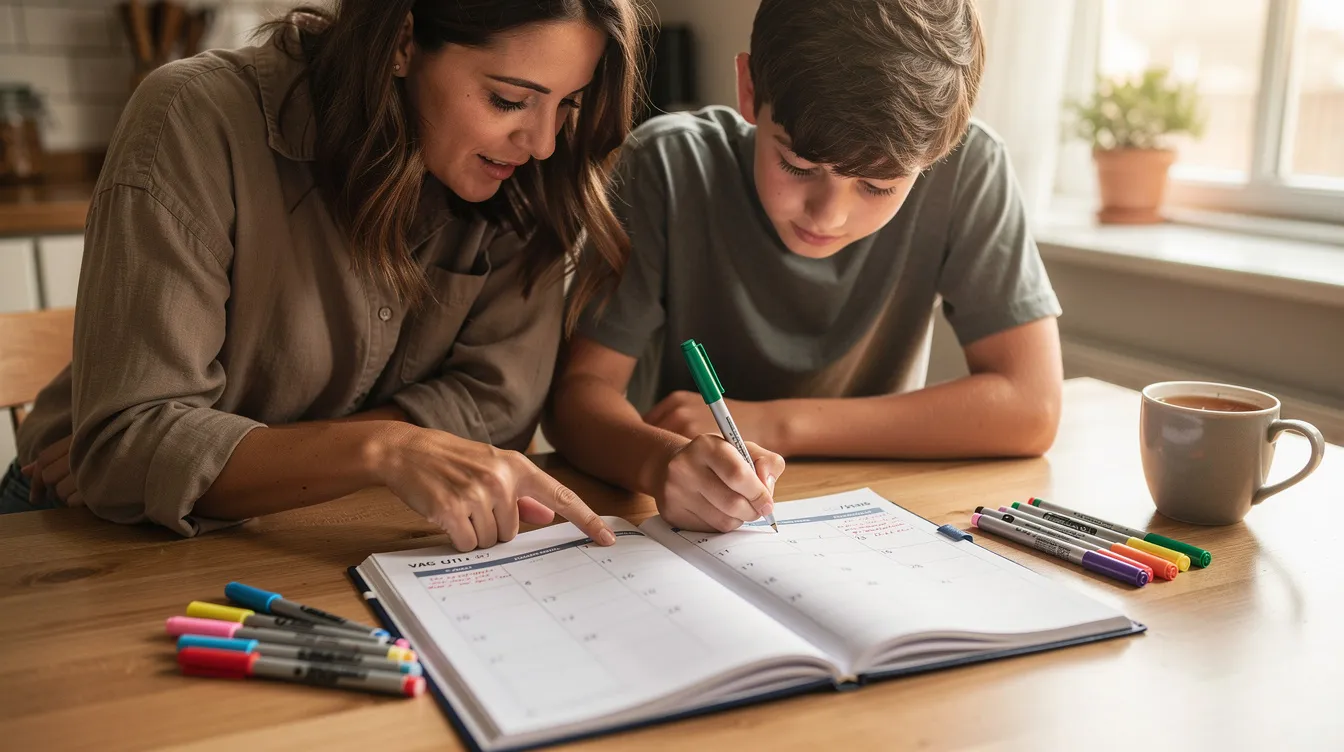
- Using a single master planner for school, tuition, and CCA commitments
- Colour-coding subjects and blocking out regular weekly revision slots
- Deconstructing assignments (history essays, science projects) into mini-steps with specific deadlines attached to days and times
- Using digital tools like Google Calendar or physical wall planners to externalise memory
Parents should shift from nagging to structured check-ins: reviewing the planner together rather than repeatedly asking, “Have you finished all your homework?” Mentoring programmes – whether through school or external coaches – improve students’ sense of belonging and provide accountability that teens accept more readily than parental reminders.
Strengthening Working Memory and Active Learning Techniques
Explicit teaching of note-taking systems helps across subjects: Cornell notes for Humanities, formula sheets for Mathematics, concept maps for Science. Active retrieval strategies – flashcards, self-quizzing, teaching a parent or sibling – build durable knowledge far more effectively than passive re-reading.
For writing-heavy subjects, working memory supports like essay outlines, sentence starters, and highlighting key parts of questions before answering reduce cognitive demand. Short, focused study intervals of 25–30 minutes with specific goals (“finish Q1–3, summarise one page”) outperform vague sessions of “study Science for two hours.” This approach trains focus and attention support as a skill, not just a trait.
Shifting from Parental Policing to Cognitive Coaching
Constant reminders, lectures, or scolding usually damage the parent-teen relationship without improving executive functioning. Teens learn to resist, hide, or lie about work done. Peer support also strengthens socio-emotional learning competencies – meaning teens often respond better to structured coaching from a neutral adult than from a frustrated parent.
A process-based coach or learning specialist models planning, asks guiding questions (“What’s due first? What will be hardest?”), and helps the teen reflect after tests. A structured learning intervention typically includes initial assessment of executive skills, customised routines built around the teen’s real schoolwork, practice sessions, and regular progress reviews with parents. The goal is internalisation: over time, the teen becomes capable of planning their week, starting difficult tasks independently, and adjusting strategies when marks dip.
Supporting Emotional Health During the Secondary Transition
Academic struggles rarely arrive alone. Transitioning from primary to secondary school can trigger social anxiety, and peer hierarchies become more rigid in secondary school. Socio-emotional support enhances students’ academic motivation – meaning emotional wellbeing is not a “soft” concern but a direct driver of grades.
Practical support includes:
- Listening to how your teen describes school (“everything is too fast”, “I study but still fail”) and treating these statements as data about cognitive overload
- Normalising the difficulty of transition and setting realistic expectations for early Sec 1–2 grades
- Using positive reinforcement to affirm effort rather than only celebrating marks
- Encouraging physical activity and new interests outside academics to build resilience
- Maintaining boundaries around sleep and screen use, since 6-hour nights plus late phone use directly harm attention and working memory
If there are signs of severe distress – panic attacks, self-harm talk, persistent refusal to attend school – seek professional assessment promptly. Adequate preparation can improve social-emotional outcomes during school transitions, and early intervention matters.
Conclusion: Restoring Confidence and Independent Learning Journeys
The primary-to-secondary shift in Singapore is a structural and cognitive leap: from externally managed primary school routines to self-directed, high-load secondary environments. Struggling after doing well in primary or PSLE is not a sign of reduced intelligence. It is a signal that the student’s executive functioning, working memory, and task initiation skills need upgrading – not more of the same content drilling.
Move from panic to problem-solving. Map out where breakdowns occur – tracking homework, starting revision, handling test pressure – and seek targeted, process-based support. With the right scaffolding, patient coaching, and explicit skill-building, most teens rebuild their confidence, regain academic momentum, and develop the self management and self awareness needed for the road ahead.
FAQ
How long does it usually take for a Secondary 1 student to adjust to the new demands?
Most students need at least one full semester (Terms 1–2) to adapt to secondary routines. Grade fluctuations during this period are normal. If significant organisational chaos, missing work, or very low marks persist into the second half of Secondary 1, it may be time to assess executive functioning and consider structured learning support rather than assuming the child will “grow out of it.”
How can I tell if my child’s struggles are “normal teenage behaviour” or a deeper learning issue?
Look for consistent patterns across subjects and settings: chronic forgetfulness, incomplete work despite genuine effort, and a marked gap between what they can explain verbally and what they produce in writing. If these patterns persist for more than one term, it is worth exploring whether processing or executive factors are at play, rather than attributing everything to attitude.
Is it too late to work on executive functioning in Secondary 3 or 4?
It is not too late. The adolescent brain remains highly plastic, and executive functioning skills can be applied for all ages. Many teens make significant gains in organisation and study skills even at Secondary 3–4, particularly with targeted coaching before major exams like O-Levels. Starting in Secondary 1–2 gives more runway, but older students still benefit greatly.
Should I reduce my child’s CCA load if they are struggling academically?
CCAs support wellbeing, community, and resilience through sports, arts, and leadership. Before cutting them, first try to improve planning routines and time structures. If school days regularly run past 7–8pm with homework still unfinished, discuss temporary role adjustments with the CCA teacher. Avoid sudden complete withdrawal unless there is burnout or serious health concerns.
What can primary school parents do early to prepare their child for secondary?
Begin in P5–P6 by gradually shifting responsibility: let your child pack their own bag, track their own homework, and plan their own revision schedule with light supervision. Encourage independent study skills – note-taking, weekly planners, goal-setting – so that secondary school becomes an extension of existing habits rather than a complete shock. This early investment in the child’s development of process skills pays dividends far beyond any last-minute PSLE drill.
Comments are closed