
Key Takeaways
- Learning is an active construction process inside the brain, not passive absorption. When your child struggles, it is rarely about intelligence or effort-it is usually about how their cognitive systems handle information during homework and exams.
- Information travels through a pipeline: sensory input → attention → working memory → long-term memory → retrieval. Overload at any stage causes the “I don’t understand” moments parents see during Primary 3 problem sums or PSLE comprehension passages.
- More tuition and practice papers sometimes fail because they target content gaps while ignoring process bottlenecks in attention, memory, language, or executive functioning. Incorporating active learning strategies that strengthen the learning process itself produces deeper, more lasting results.
- Parents can evaluate learning readiness and systematically decide between tuition, therapy, and specialised learning intervention using a staged, profile-based approach rather than guesswork.
- The brain remains highly plastic throughout childhood and adolescence. With the right support, children continue to build strong foundations for independent, real world problem solving well beyond school exams.
Introduction: Unlocking the Mechanics of the Learning Brain
Picture a Primary 4 child-bright, well-behaved, attends tuition twice a week-who freezes the moment she opens her Maths paper. She can do computation drills. But when the problem sum requires reading, holding several numbers in her head, and choosing the right operation, she stares at the page. Her parents wonder: is she not trying hard enough?
The answer is almost never about effort or intelligence. Children learn actively through sensory engagement, play, and social interaction-not by passively hearing a teacher or completing worksheets on autopilot. True learning is an internal construction: linking new ideas to prior knowledge, practising retrieval, and applying concepts to real world contexts. A child’s learning is influenced by prior knowledge, environmental factors, and biological traits that shape how the brain takes in, holds, and uses information.
When children struggle, it is usually because of how their cognitive systems-attention, working memory, language, processing speed-handle the demands of the task, not because they are lazy or incapable.
This article gives you a comprehensive framework grounded in cognitive science and the Singapore curriculum, so you can understand what is actually happening when your child learns-or cannot seem to learn-in class and at home. Cognitive Development Learning Centre in Jurong East has supported children since 2009 by focusing on these underlying processes, and the principles below reflect that same evidence-based, process-first approach.
The Cognitive Pipeline: How Information Travels from Page to Mind
Think of your child’s brain as an information pipeline with distinct stages:
Sensory Input → Attention → Working Memory → Long-Term Memory → Retrieval

Here is how it works in a real classroom scenario-say, copying a fraction problem from the whiteboard:
- Sensory input: Eyes read digits and symbols; ears hear the teacher’s explanation. In a busy Singapore classroom of 30–40 students, noise and movement compete for the child’s senses.
- Attention filters: The brain must select relevant information and suppress distractions. If those filters are weak, irrelevant details flood the system.
- Working memory: This is the “mental workbench”-limited to roughly 3–5 meaningful chunks for many children. It holds the numbers, decides which operation to use, and carries figures across steps. When capacity is exceeded, children omit steps, copy wrong digits, or freeze.
- Long-term memory: Understanding, facts, and skills are stored here. Both encoding (getting information in) and retrieval (getting information out) matter. A child may seem to grasp a concept during lessons but fail in exams because encoding was shallow or retrieval cues differ.
Breakdowns at each stage produce specific school behaviours: careless mistakes (attentional slip), copying errors (sensory or working memory overload), forgetting methods within days (weak encoding), or blanking during tests (retrieval failure under stress). For parents who want a deeper overview of how their child’s mind interacts with new material, understanding how children learn is a useful starting reference.
Core Brain Systems That Shape How Children Learn
Understanding the key components of the learning brain helps explain why children learn in diverse ways, utilising a combination of sensory inputs and developmental approaches.
- Selective and sustained attention: A Primary 1 child must listen to multi-step instructions; a Primary 6 student must maintain focus across a 1-hour paper. Children with ADHD-like profiles often lose information before it even reaches working memory.
- Working memory (verbal and visual-spatial): Verbal WM supports mental arithmetic and sentence processing. Visual-spatial WM supports model drawing and geometry. Weaknesses in either cause different error patterns.
- Processing speed: How quickly a child takes in, makes sense of, and responds to information. Research by Kail and Ferrer (2007) shows processing speed follows a nonlinear growth curve through childhood. Slow processing speed explains why some children are accurate but run out of time during PSLE or mid-year assessments.
- Language systems: Vocabulary, grammar, and oral comprehension underpin reading comprehension, composition, and wordy Maths questions. Hidden language weaknesses can be misread as “careless” or “lazy” when the real issue is that the child did not fully parse the question.
- Executive functions: Planning, organisation, inhibition, and cognitive flexibility influence everyday tasks-packing school bags, breaking down revision, checking work, and adjusting to unfamiliar question types.
Strengths and weaknesses across these systems explain individual differences in how students learn the same content in the same classroom.
From Passive to Active Learning: How Children Actually Build Understanding
There is a world of difference between a child silently copying notes and a child explaining a concept back to you at the dinner table. The first is passive. The second is active learning-brains-on engagement where the learner does something with the information.
Active learning was defined in 1991 by Bonwell and Eison as instructional activities that involve students in doing things and thinking about what they are doing. Active learning boosts retention by engaging learners with content rather than letting it wash over them, and it cultivates critical thinking and problem solving skills that transfer across academic disciplines.
Active learning strategies suitable for primary and lower-secondary students include:
- Think-aloud problem solving: Verbalising each step during a Maths problem sum.
- Self-explanation: Asking “why does this work?” after completing a Science question.
- Concept mapping: Drawing visual organisers that show how ideas connect.
- Retrieval practice: Short, low-stress recall sessions spaced over several days.
Active learning increases learner engagement through interactive activities, and it often involves teamwork and collaboration among students-for example, peer learning through paired discussions or group work.
In a high-stakes exam context, active learning does not mean abandoning practice questions. It transforms how practice is used: less copying of model answers, more discussion of reasoning and error analysis. This is what produces deeper understanding rather than surface-level memorisation.
Why Children Learn Differently: Profiles, Strengths, and Variations
Diverse learning profiles are normal. Many bright children have uneven cognitive profiles-strong reasoning but weak processing speed, or excellent verbal ability but weaker visual-spatial skills.
Common profiles in Singapore schools include:
| Profile | What parents see | Likely cognitive factor |
|---|---|---|
| Fast-intuitive thinker | Careless mistakes | Weak inhibition / rushing |
| Slow-accurate worker | Runs out of exam time | Low processing speed |
| Strong verbal, weaker spatial | Struggles with model drawing | Visual-spatial WM gap |
| Strong spatial, weaker verbal | Avoids compositions and comprehension | Language processing gap |
Children may struggle due to different learning processing styles. Individual learning style shapes a child’s learning process and may include visual and kinesthetic styles. Visual learners process information best through images, charts, maps, and videos. Auditory learners learn best through hearing and speaking. Tactile or kinesthetic learners learn best by doing and moving.
Conditions such as dyslexia, ADHD, autism spectrum, and developmental language disorder alter how children process written language, instructions, and social cues. But labels are not the goal-understanding patterns helps parents and educators choose learning strategies that work with the child’s natural processing style.
Learning Readiness: When Is a Child Truly Ready to Learn?
Learning readiness is not simply about age or syllabus level. Learner readiness is the emotional and motivational capacity to engage with classroom learning. It includes whether a child can:
- Sit, attend, and follow basic routines
- Understand and use classroom language
- Hold and manipulate small chunks of information
- Regulate emotions enough to try tasks and cope with mistakes
Students with a healthy self-concept are more ready to learn, and Positive Action’s framework, drawing on over 40 years of educational leadership experience, has shown that improving academic performance through emotional readiness is both measurable and practical. Student readiness, therefore, is not fixed-it can be built.
Singapore’s structured curriculum (phonics expectations by K2, basic problem sums by Primary 2) can expose readiness gaps early. Emotional readiness matters too: anxiety and perfectionism can block even a capable child from attempting higher-order questions.
Home-based observation tips:
- Can your child follow 2–3 step instructions without repeated prompting?
- Can they retell a simple story in sequence?
- Can they copy a short sentence without significant errors?
If these remain difficult by K2 or Primary 1, early support-rather than a “wait and see” approach-often prevents larger academic crises later.
When Drilling Fails: The Limit of Rote Repetition
A familiar scene: a Primary 5 child completes another stack of assessment books, still scoring 50–60 marks, growing increasingly demoralised despite more tuition and weekend classes.
The core problem is that repetitive drilling assumes exposure plus practice equals learning. But if the cognitive pipeline is overloaded or misaligned, extra practice merely repeats the same weak processing. The child practises making the same errors faster.
There is an important distinction:
- Content gap: The child has not been taught a topic or is missing specific formulae. Tuition and guided practice can fix this.
- Process bottleneck: The child cannot hold all problem data in working memory, cannot decode long word problems, or cannot filter classroom noise. More worksheets will not resolve this.
Excessive drilling can actively backfire: cognitive overload, reduced motivation, increased anxiety, and learned helplessness-especially in children who already struggle with attention or memory. When traditional tuition and practice papers are not producing results, parents can refer to why tuition doesn’t help some children for a fuller description of when drilling is ineffective.
Recognising the limits of drilling is not giving up. It is a pivot towards strengthening the child’s underlying learning architecture.
Active Learning Strategies That Work for Children
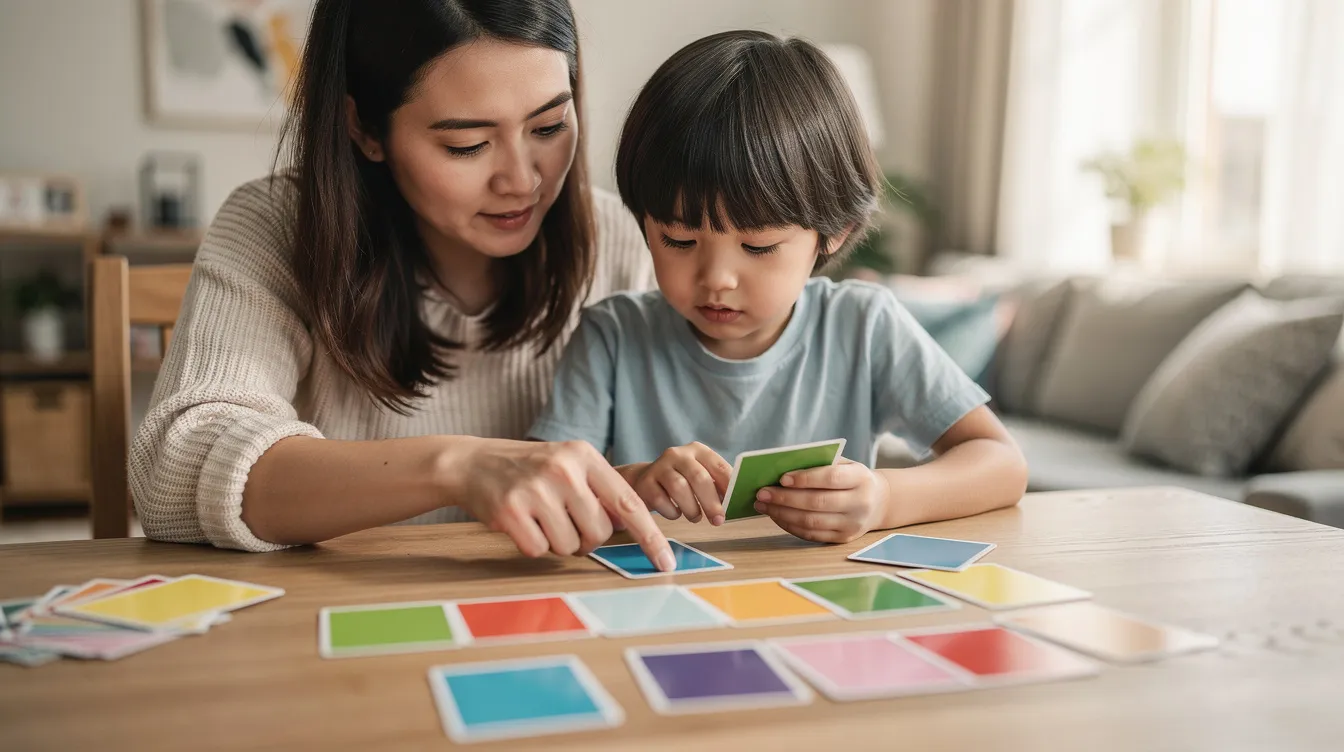
Here is a practical toolkit of strategies, each tied to specific cognitive processes:
- Retrieval practice: Short oral quizzes or written recall of key ideas without notes, spaced over days. This strengthens long-term memory far more than re-reading. Effective teaching involves testing understanding, not just coverage.
- Self-explanation: Ask your child to talk through how they solved a Maths problem. This builds metacognition and surfaces errors the child would otherwise miss.
- Problem based learning at home: Real world problems like budgeting pocket money, planning MRT routes, or comparing food labels bring Maths and Science to life as hands on experiences.
- Active reading strategies: Predicting what comes next, underlining key phrases, summarising each paragraph in one sentence, and asking “why did this happen?” boosts reading comprehension in English and Science.
- Spaced repetition: Revisiting material at increasing intervals (1 day, 3 days, 7 days) prevents the steep forgetting curve that undermines exam preparation.
These practical strategies help students understand and retain material because they engage the brain’s encoding and retrieval systems rather than passively passing information through.
Purposeful play also supports cognitive, social, emotional, and physical development. Learning through play helps children develop problem-solving, creativity, language, and social skills-making it one of the most valuable tools for younger learners.
Problem-Based Learning and Real-World Application
Problem based learning is one powerful form of active learning, particularly suited to Singapore’s shift towards application questions in Maths and Science. It starts with an authentic, open-ended problem-reducing food waste at home, comparing mobile data plans, planning a class outing on a budget-and asks the child to identify what knowledge and skills are needed to solve it.
Problem-based learning emphasises active student participation, with teachers and parents acting as facilitators rather than lecturers. Students tackle real-world problems, and the process of problem-based learning includes six distinct stages: identifying the problem, exploring what is known, generating hypotheses, researching, applying solutions, and reflecting on outcomes.
Problem-based learning enhances critical thinking and decision-making skills while developing skills like adaptability and collaboration. It naturally integrates different perspectives and prepares students for real world problems that do not come with a model answer at the back of the book. This is what preparing students for lifelong learning actually looks like-building problem solving skills, not just drilling procedures.
For younger children, start with well-structured, one-step problems. For upper primary and secondary students, increase complexity gradually as confidence and learning readiness improve.
Emotional Climate, Motivation, and Mindset
Cognitive systems do not operate in a vacuum. Psychological health affects a child’s ability to engage with new material, and emotional well-being is closely connected to academic success in children. Mental wellness is crucial for student motivation and engagement.
Chronic stress and fear of failure-common around PSLE and streaming decisions-reduce working memory capacity and impair flexible thinking. Academic pressure can turn a capable child into one who freezes during exams. Children learn best when they feel safe and supported.
Practical ways to support a healthier mindset:
- Praise process over results: “I noticed you tried three different methods before you got it.”
- Normalise mistakes as data: “What did that wrong answer teach you?”
- Use growth language: “You haven’t mastered this yet-let’s break it into smaller steps.”
Intrinsic motivation-curiosity, mastery-is more sustainable than purely extrinsic motivators like grades. When children feel motivated and feel confident about their ability to improve, they are far more likely to fully engage with challenging material, enhancing motivation from the inside out. Collaborative learning and emotional support at home play a large role in keeping that motivation alive.
Home Environment and Daily Habits That Support Learning

For busy Singapore families living in flats with tight schedules, small, high-impact changes matter more than idealised routines.
- Consistent study space: A designated area with reduced digital distractions during focused work.
- Predictable routines: Regular schedules for daily activities help children feel secure and support their learning. Stable family environments promote effective learning experiences for children.
- Sleep and physical activity: Both are essential for memory consolidation and attention. Given early school start times and CCA loads, protecting sleep is one of the highest-return investments parents can make.
- Model active learning at home: Talk about news articles at dinner, analyse advertisements together, or involve children in planning and budgeting for groceries.
- Leverage natural interests: If your child loves football, Minecraft, or anime, use those as entry points for reading, writing, and Maths practice. The well being of a child improves when learning connects with genuine curiosity.
Rebuilding the Learning Foundations via Intervention
There is an important distinction between curriculum support (tuition) and process-based cognitive intervention. Tuition teaches more of the “what.” Intervention rebuilds the “how” of learning.
At a centre like Cognitive Development Learning Centre, intervention begins with assessment to identify each child’s cognitive profile, followed by personalised targets and weekly sessions focused on attention, memory, language, and executive functioning. Personalised learning approaches help children cope with academic demands that generic tuition cannot address. Learning support is tailored to each child’s unique needs.
Intervention typically uses active learning, game-like tasks, and carefully sequenced challenges to gradually increase a learner’s capacity, cognitive stamina, and flexibility-rather than piling on extra homework. Parents can read more about structured learning intervention and how it differs from standard tuition.
Realistic timelines matter. Foundational change usually occurs over 6–18 months. Early changes include better settling to tasks and fewer meltdowns. Over time, parents observe more independent homework completion and stronger exam coping. More than 90% of students progressed to secondary school through this kind of sustained, process-focused support. Over 90% of students supported progressed to secondary school since 2009-a track record built on addressing cognitive development, not just curriculum gaps.
Assessing What Support Your Child Really Needs
This is a decision framework. Ask yourself:
| Question | If yes, consider… |
|---|---|
| Is my child behind in only one subject? | Tuition for that subject |
| Does my child understand during lessons but forget quickly? | Process-focused intervention |
| Is reading the main barrier across subjects? | Literacy or language intervention |
| Are attention and organisation bigger issues than content? | Cognitive learning intervention |
When difficulties cut across subjects and persist despite consistent tuition, a process-focused approach is usually needed. Use local parent guides as a structured way to analyse your child’s profile, compare options, and plan next steps.
Seek professional assessment-educational psychology, speech-language therapy, or centre-based screening-when red flags appear early or struggles persist beyond one academic year. Individual learning plans informed by proper assessment lead to better learning outcomes than guesswork.
Executive Function Skills: Planning, Organisation, and Self-Regulation
Executive functions are the “control tower” of the brain. They determine whether knowledge actually shows up in tests, homework, and daily routines.
- Planning and organisation: Packing school bags the night before, mapping out revision for CA1 or SA2, breaking a project into smaller tasks. These are new skills children must develop-they are not automatic.
- Inhibitory control: Resisting the urge to shout out, waiting for turns, staying calm enough to attempt difficult questions. Students who can maintain focus on a task despite distractions consistently outperform those who cannot.
- Cognitive flexibility: Shifting between different question types, adjusting to a new method taught in class, coping when the exam paper is “different from the practice papers.”
Practical scaffolds:
- Visual schedules and checklists for homework routines
- Step-by-step Maths templates (read → underline → plan → solve → check)
- Simple self-monitoring cards: “Did I read the question twice? Did I show my working?”
These tools help children develop higher order thinking skills and the ability to self-regulate, which are essential across all educational contexts.
Language, Literacy, and the Hidden Demands of Text-Heavy Learning
Language underpins nearly every subject in the Singapore system. English comprehension, Science explanatory questions, and Maths word problems are all language-heavy. In different cultural contexts and bilingual environments, children must navigate multiple linguistic demands simultaneously.
The progression matters:
- Oral language → Phonological awareness → Decoding → Fluency → Comprehension
Subtle language weaknesses can masquerade as carelessness or slow work, particularly in PSLE-style inference questions and Science open-ended responses where students must articulate reasoning.
Language-focused strategies:
- Explicit vocabulary teaching, including academic words used across subjects
- Oral rehearsal before writing answers
- Structured reading aloud with guided questioning
In the digital era, reading comprehension demands are increasing, not decreasing. When reading accuracy and fluency lag behind age expectations for more than a year, consider specialised literacy or language intervention alongside general cognitive support. Research by the Dyslexia Association of Singapore (DAS) found that structured literacy programmes improved average scores from approximately 48.5% to 62.4% across reading, writing, and spelling over three years-evidence that effective teaching of language foundations makes a measurable difference.
Maths Problem Solving and Critical Thinking
Singapore’s emphasis on complex problem sums and model drawing demands integration of multiple cognitive and linguistic skills. Here is what solving a typical upper-primary problem sum actually requires:
- Reading and parsing the question language
- Holding data in working memory (multiple quantities, relationships)
- Visualising relationships via bar models or diagrams
- Planning operations in the correct sequence
- Checking for reasonableness
Weaknesses in any component-language comprehension, visual-spatial reasoning, working memory-cause recurring error patterns that more drilling alone cannot fix.
High-level guidance for parents and educators:
- Use think-alouds: solve a problem step by step while narrating your reasoning
- Teach children to annotate key information in the question
- Explicitly compare multiple solution paths and discuss why each works
- Ask “how do you know this answer makes sense?” to build critical thinking
These strategies help students focus on the reasoning behind procedures, not just the procedures themselves. When children can explain why a method works, they can generalise principles to new, unfamiliar research questions on exams.
Monitoring Progress: What to Look For Beyond Marks
Do not rely solely on exam scores to judge whether interventions are working. Look for concrete behavioural indicators:
- Faster settling down to tasks
- Fewer repetitions of instructions needed
- Fewer omissions in multi-step problems
- More independent homework completion
- Reduced meltdowns; increased willingness to try challenging questions
Centres like Cognitive Development Learning Centre monitor progress across focus, reading, and school coping-not just academic marks-and adjust programmes as demands change with each school year. Expect gradual improvement with occasional plateaus. Short-term dips may occur when tasks become more challenging; this is normal and often signals growth.
Partnering with Schools and Professionals
Open communication between home and school enhances children’s learning support. Building collaborative relationships with form teachers, subject teachers, school counsellors, and allied educators in Singapore’s mainstream system is essential.
Effective communication tips:
- Share specific observations: “She needs instructions broken into two steps” rather than “She’s lazy.”
- Request work samples, teacher comments on focus and stamina, and details about what has or has not helped in class.
- Ask about reasonable classroom adjustments when needed: preferential seating, visual supports, or extra time where school policies permit.
Educational institutions in Singapore are increasingly oriented toward inclusive education. When parents, schools, and professionals align goals, children are not overloaded with conflicting expectations and are far more likely to develop interpersonal skills and emotional development alongside academic competence.
Conclusion: Nurturing Confident, Independent Learners
Real progress happens when we align teaching with how the brain actually learns-by reducing overload, strengthening core cognitive processes, and using active, meaningful learning strategies. The child’s brain is highly plastic throughout childhood and adolescence. With process-based scaffolding and tailored support, many struggling learners become confident, independent problem solvers who carry new skills well beyond the classroom.
The goal is not to chase short-term exam scores. It is to build functional independence, resilience, and a genuine love for lifelong learning-an education that prepares children for adult learners’ demands in the real world. If you are unsure about next steps, seek a structured, profile-based review through an intervention centre or professional assessment, rather than adding yet another tuition class. One group of strategies focuses on content; the other transforms how your child processes information. Understanding the difference is the first step.

Frequently Asked Questions
How can I tell if my child’s problem is content-related or process-related?
Content issues usually appear as gaps in specific topics-only fractions, only grammar cloze-while process issues show up across subjects: forgetting instructions, misreading questions, slow work even on easy topics. Try a simple home check: after a clear explanation and guided examples, can your child do similar questions? If yes but they forget the method within days, this points to weak encoding or retrieval, not lack of teaching. Persistent multi-subject struggles despite consistent tuition warrant a cognitive or educational assessment rather than more drilling. Contextual factors like classroom environment and emotional state can also play a role.
At what age should I consider learning intervention instead of waiting?
If by K2–Primary 1 a child still struggles significantly with basic pre-literacy skills-rhyming, recognising letters, following simple instructions-early intervention is beneficial. For primary students, if difficulties in reading, writing, attention, or problem solving persist across at least two school terms despite reasonable support, explore structured learning intervention. Brain plasticity is high in the early primary years, but older primary and secondary students can still make meaningful gains with targeted, process-focused support. Encouraged by research from Singapore’s preschool ECE studies, early attendance and structured programmes are associated with better literacy and fewer behavioural problems, making a case that class ready preparation begins well before Primary 1.
How much homework or extra practice is healthy for primary school children in Singapore?
Quality matters more than quantity. For most primary children, 60–90 minutes of focused, well-structured home learning on school days-including school homework-is usually sufficient. Incorporate short breaks every 20–30 minutes, especially for younger children or those with varying levels of attention, to prevent overload. Prioritise active learning within that time: explaining, practising retrieval, applying concepts. Simply adding more similar worksheets rarely improves outcomes.
Can I build my child’s cognitive skills at home without formal intervention?
Parents can certainly support attention, memory, language, and problem solving through everyday activities: memory games, storytelling, strategy board games, and real-life problem based learning like planning transport routes. Home efforts are most effective when they are consistent, enjoyable, and matched to the child’s current learning readiness, without turning every moment into a lesson. For children with significant or persistent difficulties, home efforts work best in combination with structured, professionally designed intervention programmes.
What should I bring or prepare before consulting a learning intervention centre?
Gather recent school reports, teacher comments, samples of classwork and test papers (especially those showing typical errors), and any previous assessment reports from psychologists or therapists. Write down specific concerns, questions, and observations about how your child learns at home-time taken for homework, typical frustrations, strategies that seem to help. This concrete information helps professionals quickly identify patterns and design a more precise, efficient intervention plan.
Comments are closed