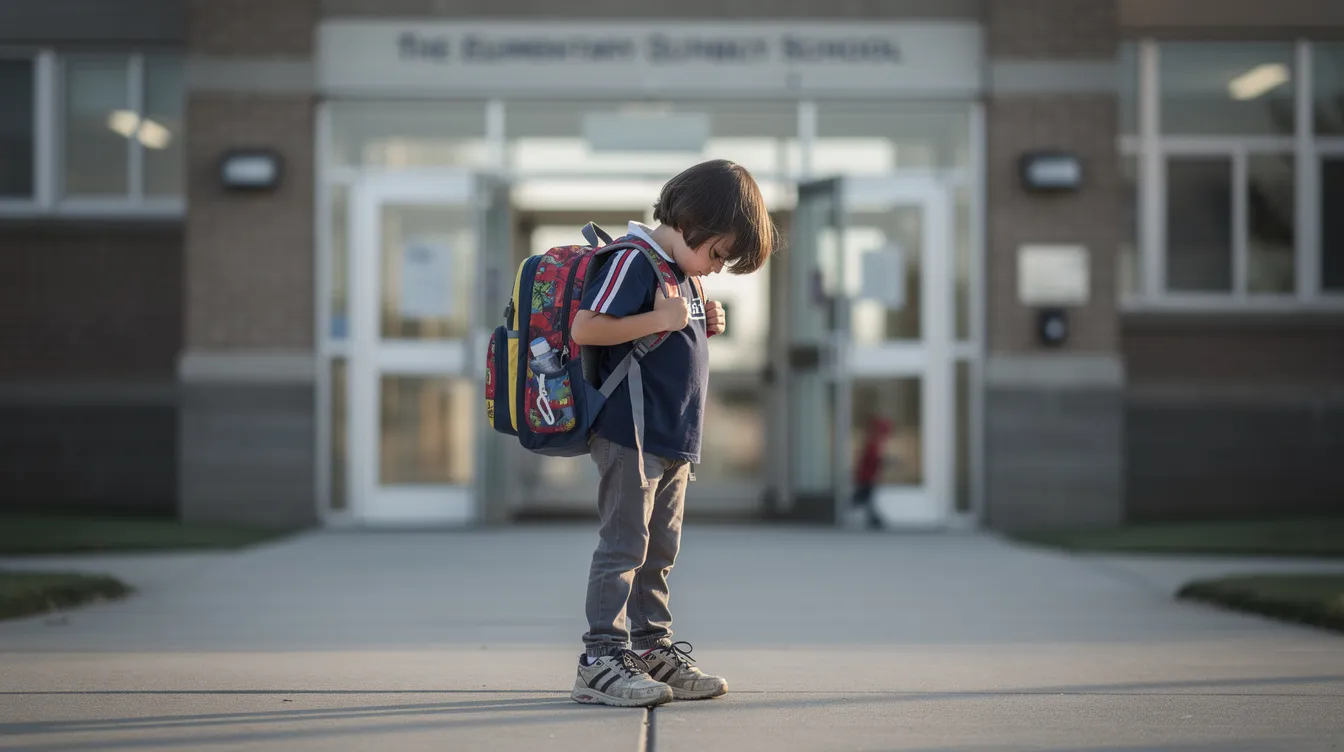
Every parent wants their child to thrive at school. But when Sunday evenings bring tears, Monday mornings bring stomachaches, and homework time turns into a battlefield, something deeper may be going on. School anxiety in children in Singapore is far more common than most families realise, and it does not respond well to more pressure. It responds to understanding, safety, and the right kind of support.
Key Takeaways
- If your child cries every Sunday night or complains of stomach pain before school, it may be school anxiety, not stubbornness or laziness.
- School anxiety and school refusal are closely linked to mental health challenges, not attitude problems. In Singapore’s high-pressure academic culture, these patterns are increasingly common.
- When a child feels anxious, their learning brain shuts down. More tuition, scolding, or drilling usually creates more anxiety, not better grades.
- Underlying issues such as learning disabilities, attention difficulties, or social anxiety often fuel school-related distress and need to be identified early.
- Effective help is available. Specialised psychological therapy, emotional regulation work, and structured learning intervention can help your child rebuild confidence and re-engage with school.
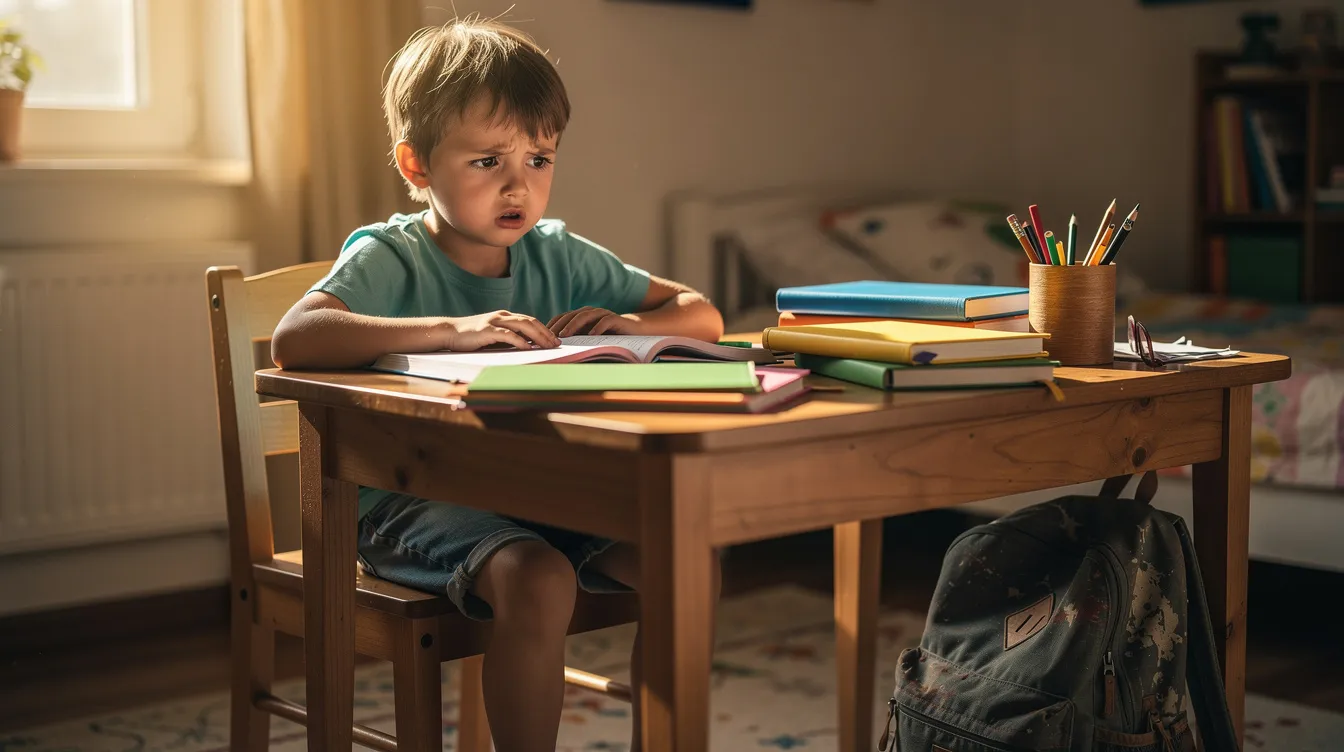
When School in Singapore Starts to Feel Scary Instead of Safe
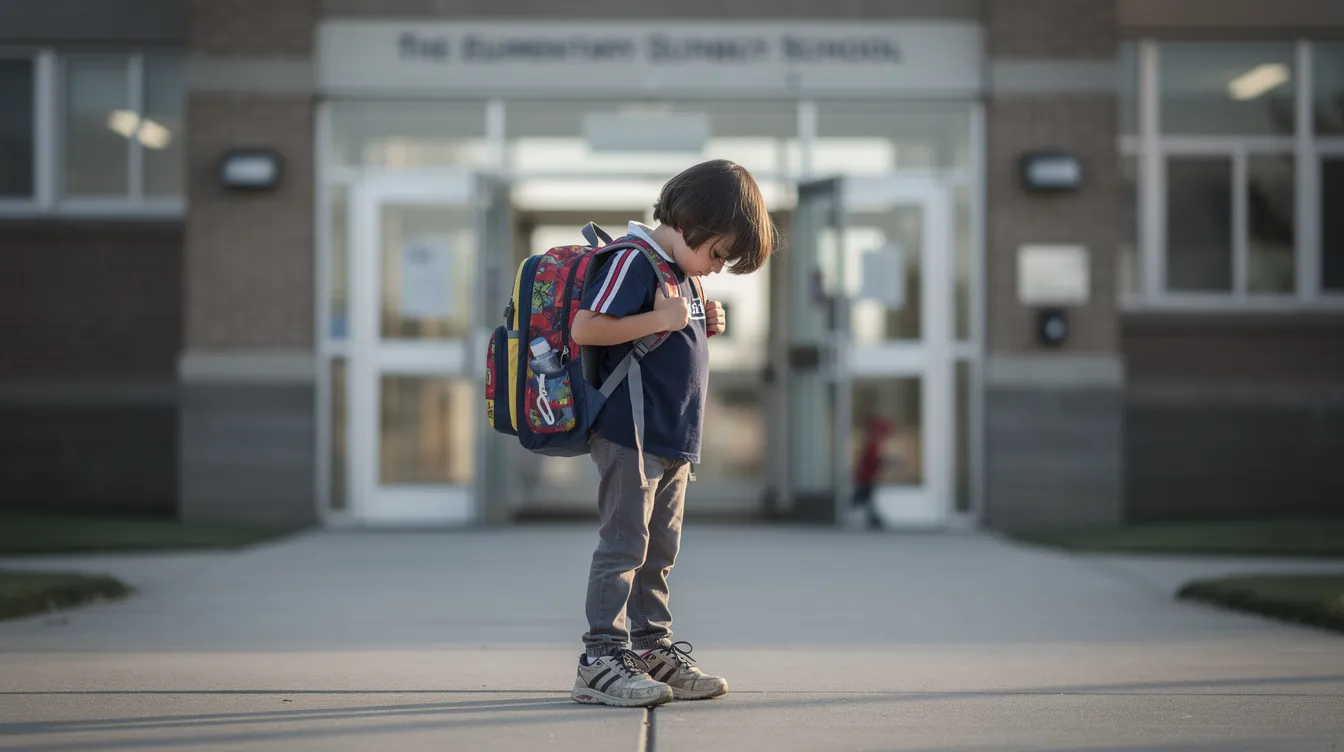
It is 6.30am. Your child is curled up in bed, complaining of a stomachache. By the time you reach the void deck or the carpark, there are tears. By the school gate, full resistance. This is not a one-off bad morning. It has been happening for weeks.
Many parents in Singapore recognise this pattern: the Sunday evening dread, the homework tears, the perfectionistic erasing and rewriting, the growing reluctance to go to school. Children may throw tantrums or cry about attending school, and parents are left wondering whether this is misbehaviour or something more serious.
In a system shaped by PSLE pressure, competitive secondary school entry, CCA demands, and long school days from Primary 1 through lower secondary, it is not surprising that most children experience stress at some point. But there is a meaningful difference between typical nervousness and persistent school anxiety that disrupts a child’s school attendance and family life.
Here is the core idea: when a child’s body is stuck in fight-or-flight mode, their brain cannot learn effectively. Emotional safety is a prerequisite for academic performance. If your child is expressing reluctance to attend school regularly, that reluctance is telling you something important.
The Mind–Body Block: How Anxiety Hijacks the Learning Brain
Picture a Primary 5 child who breezes through her math worksheets at home but goes completely blank during a weighted assessment. She knows the material. She practised it last night. But the moment the exam paper lands on her desk, her mind empties.
This is not a lack of ability. It is the neuroscience of anxiety at work. When a child feels threatened, whether by a test, a teacher’s tone, or a crowded classroom, their amygdala fires up the body’s alarm system. Stress hormones flood the brain, and the prefrontal cortex, the region responsible for reasoning, planning, and working memory, goes offline. Research on 11-year-olds found that test anxiety significantly reduced both accuracy and processing speed during tasks that required higher working memory, such as timed mental arithmetic.
This explains so many “careless mistakes,” forgotten instructions, and sudden drops in grades. The child is not being lazy. Their emotional stress is narrowing their attention and consuming the cognitive resources they need for learning. Understanding how emotional stress impacts working memory is essential for parents who cannot understand why a bright child keeps underperforming.
Over time, chronic anxiety leads to academic regression, procrastination, and a painful erosion of self esteem. Children start telling themselves, “I’m stupid” or “I can’t do anything right,” when the real problem is an overwhelmed nervous system.
School Anxiety, School Avoidance, and School Refusal: What’s the Difference?
These terms are often used interchangeably, but they describe different levels of difficulty:
- School anxiety: A child experiences high worry about school tasks, social interactions, or performance but still manages to attend school most days, though with visible distress.
- School avoidance: Frequent late-coming, partial attendance, or repeated requests to leave early. Sometimes called emotionally based school avoidance, this pattern signals growing difficulty coping.
- School refusal: Intense emotional distress that prevents a child from attending school entirely. School refusal affects approximately 5% of school-age children and, if left unaddressed, can lead to frequent absences, absenteeism, and academic issues. Children aged 5 to 6 are more likely to experience school refusal, as are children navigating transitions.
School refusal is distinct from truancy. Truancy usually involves secret skipping without visible anxiety. School refusal, by contrast, involves obvious emotional distress, and frequent absences with visible distress point to an underlying emotional issue rather than deliberate skipping; the child often wants to remain at home with caregivers. Separation anxiety can make it hard for children to attend school, particularly during transitions into Primary 1, the leap to Primary 5–6 before PSLE, or the move from primary to secondary school. Fear of negative events can trigger school avoidance in older children, especially around examinations or after bullying incidents.
Early recognition of these patterns can prevent escalation. If you notice your child is coping with school refusal and academic stress, addressing it sooner rather than later leads to far better outcomes.
Common Signs of School Anxiety in Singapore Children
School anxiety shows up across four areas: body, emotions, thinking, and behaviour. The pattern often intensifies on school days and eases during weekends or holidays.
Physical symptoms:
- Stomach aches, headaches, and nausea that peak on school mornings but improve on Saturdays
- Dizziness or fatigue without a clear medical cause
- Physical complaints that return predictably before tests or presentations
Emotional signs:
- Clinginess at the school gate, especially in younger children
- Crying spells or irritability in the evenings before a school day
- Intense feelings of anxiety or panic about upcoming assessments, group projects, or social interactions
- Panic attacks in severe cases
Behavioural patterns:
- Slow dressing, repeated toilet trips, “forgetting” essential items
- Frequent requests to see the school nurse or tearful phone calls from school
- Complete refusal to get out of bed on school mornings
- Sleep disturbances: difficulty falling asleep, nightmares, or waking frequently
Cognitive changes:
- Difficulty concentrating on homework despite understanding the material earlier
- Rumination and negative self-talk: “What if I fail?” or “Everyone will laugh at me.”
- Perfectionism, such as rewriting notes repeatedly or tearing up worksheets over minor errors
One subtle pattern many parents in Singapore may overlook: excessive screen time after school as a way to numb stress, followed by strong resistance when parents set reasonable boundaries. This is often a coping mechanism, not defiance.
Why School Anxiety Is So Common in Singapore’s Education System
Singapore’s education system produces excellent academic outcomes. It also produces significant academic stress. This is not a contradiction; it is a trade-off that affects many young people.
Academic pressure is a common cause of school anxiety in Singapore. The weight of PSLE, streaming, O-Levels, and competitive school entry creates a long timeline of anticipatory anxiety. Data shows that Singaporean youth miss an average of 24 days of school annually due to anxiety, a figure that reflects how deeply stress penetrates daily life. A community study of 1,655 Singapore schoolchildren found that 9.3% had clinically elevated anxiety symptoms, with social anxiety and separation anxiety among the most common sub-types.
Key drivers include:
- Heavy tuition schedules that fill weekday evenings and weekends, leaving little time to rest
- Comparison with peers or siblings, fuelled by ranking systems and class positions
- Social challenges such as bullying, cyberbullying, difficulty making friends, or fear of being judged
- Traumatic experiences, including humiliation in class or repeated failure, which can lead to school phobia
- Children experiencing anxiety due to bullying or social pressure, particularly in the upper primary and secondary school years
Family factors also play a role. Parental conflict, divorce, illness, or relocation to Singapore can amplify a young person’s school-related fears. Resilience building is a focus in Singapore’s school curricula, and mindfulness and stress management workshops are being implemented in some schools, but the sheer intensity of the academic year still leaves many children struggling.
Anxiety is almost always multi-factorial: a combination of temperament, school environment, past experiences, and sometimes undiagnosed learning or attention difficulties working together.
When More Tuition Makes Things Worse, Not Better
When a child’s grades start slipping, the instinct for many parents in Singapore is to add more tuition, holiday programmes, or extra worksheets. This makes logical sense: if the child is falling behind, surely more practice will help.
But for an anxious child, this approach often backfires. Increasing academic demands without addressing the underlying anxiety raises stress hormones, disrupts sleep, and accelerates burnout. The child’s anxiety symptoms intensify rather than ease, and school avoidance grows stronger.
Consider a Primary 4 child attending school, CCA, and three tuition classes each week. After mid-year exams, she begins complaining of persistent headaches and refusing to go to school. Her parents add a fourth tuition session. Within a month, she is experiencing school refusal and cannot get through a school day without crying.
For anxious learners, the first step is rebuilding emotional safety, self-worth, and regulation skills, not pushing for more drilling. At Cognitive Development Learning Centre, we recognise that mental health and emotional stability must come before academic output. That is why we integrate psychological support with structured learning intervention so that the child’s emotional needs and academic gaps are addressed together.
Shifting focus temporarily from grades to wellbeing usually leads to more sustainable academic progress, not less.
Hidden Triggers: Learning Difficulties, Attention Issues, and Sensory Overload
Some children feel anxious about school because learning itself is unexpectedly hard, confusing, or exhausting compared with their peers. When a child struggles to read, write, or focus and does not understand why, repeated failure experiences build into anxiety.
Common underlying factors include:
- Dyslexia or other reading difficulties (affecting an estimated 3–10% of children)
- Problems with writing speed or fine motor control
- ADHD or attention issues (affecting 5–8% of children and adolescents)
- Sensory sensitivities to noise, bright lights, or crowded spaces
These challenges lead to a painful cycle. A child who cannot keep up is scolded for being careless, slow, or not paying attention. They internalise shame. Over time, the underlying issue drives perfectionism, avoidance, and loss of motivation. Research shows that children with additional health and developmental needs have 10.5 times greater odds of high anxiety than neurotypical peers.
A comprehensive cognitive assessment can clarify a child’s learning profile, identifying both strengths and areas of difficulty. Once these underlying factors are understood, support can be tailored: targeted learning strategies, classroom accommodations through a special educational plan, or an individual education plan with the school, and realistic expectations that reduce stress at its source.
Recognising these root causes often brings great relief. The story shifts from “lazy” to “struggling and in need of the right support.”
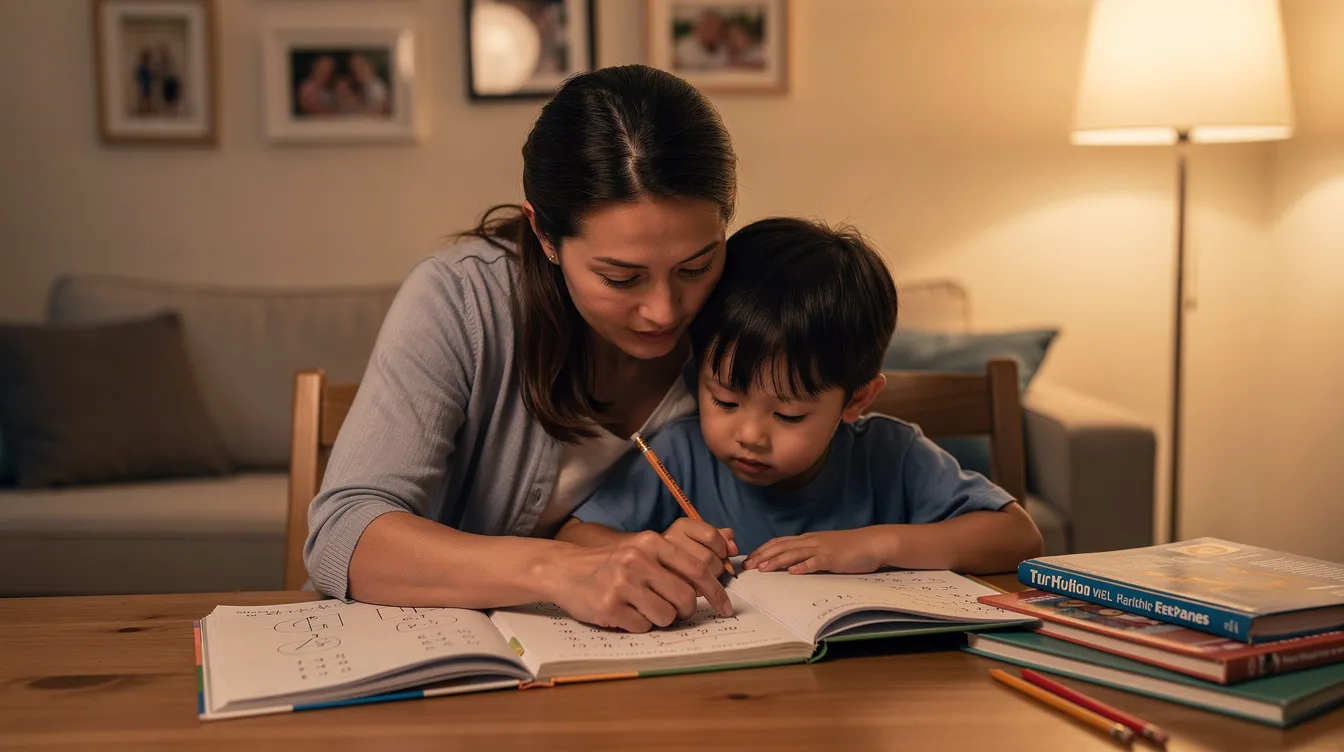
Practical Strategies at Home: Calmer Mornings and Easier Evenings
Daily school battles are exhausting. If you are juggling work, commuting, and caring for multiple children, the last thing you need is a 45-minute standoff before school assembly. Here are practical strategies that can reduce stress for the whole family.
Morning routines:
- Creating a morning routine with consistent wake-up times reduces daily uncertainty. Visual schedules can help younger children manage each step independently.
- Prepare uniforms, water bottles, and bags the night before. Removing small decisions lowers morning friction.
- Build in a brief connection ritual: five minutes of quiet chat, a hug, or a short walk together before leaving. This small investment in emotional safety pays off.
Evening routines:
- Set predictable homework slots with short breaks. Avoid high-stress tasks late at night.
- Establish a firm cut-off time for schoolwork. A tired, anxious child doing revision at 10pm learns almost nothing.
- Encouraging relaxation activities, whether reading, drawing, or gentle stretching, helps children recharge before bed.
Screen time boundaries:
- Acknowledge that devices help children decompress, but set firm limits on late-night gaming or scrolling, as these worsen sleep disturbances and anxiety.
- Screen time works best as a limited reward after school attendance and coping efforts, not as an all-day refuge during school hours.
Shift your language:
- Recognizing small achievements boosts children’s confidence. Praise effort, courage, and small steps rather than only test scores.
- Separate behaviour from worth. A child who refused school today is not a “bad” child. They are a struggling child.
Open communication between parents and teachers supports children’s emotional health. A partnership with parents is vital in addressing school anxiety. Let your child’s form teacher or pastoral lead know what is happening at home.
Helping Your Child Manage Anxiety: Emotional and Cognitive Tools
Even very anxious children can learn coping skills to manage their worry and gradually return to more regular school attendance. Here are tools you can practise together.
Regulation techniques:
- Coping skills such as deep breathing help calm the nervous system. Try slow belly breathing: inhale for four counts, hold for four, exhale for six.
- Name feelings out loud: “I feel scared about the test” is far more powerful than “I don’t want to go.” Acknowledging your child’s feelings helps them feel heard.
- Use grounding through senses: five things you can see, four you can touch, three you can hear, two you can smell, one you can taste.
Cognitive tools:
- Help children challenge catastrophic thinking gently: “What else could happen?” or “Has this always been true?”
- Using a worry box, a physical container where children write down worries and place them inside, can help contain anxieties and create a sense of control.
- Set small, specific goals for school attendance rather than demanding a full, immediate return: “I will stay in class until recess today.”
Connection matters:
- Regular one-on-one time, even 15 minutes daily, builds emotional security.
- Validate rather than fix: “Of course you feel anxious. This is hard, and I’m here with you.”
- Encourage enjoyable activities outside school to maintain a sense of identity and competence beyond academics.
For many children, these home strategies work best when combined with professional support to address deeper patterns of fear and avoidance. Routine and consistent attendance, even partial, helps maintain the child’s connection to school while anxiety is being addressed.
When to Seek Professional Help in Singapore
Professional support is crucial if anxiety affects daily life. Consider reaching out if:
- Your child refuses to go to school for more than a few days
- There are signs of immediate risk, such as panic attacks, self-harm talk, or extreme emotional distress
- Anxiety has persisted for weeks and is worsening despite home efforts
- Your child has frequent absences. Seek help if your child misses more than 5% of school days, as this threshold signals a pattern that is unlikely to resolve on its own
- Your child is becoming chronically absent, withdrawing socially, or losing interest in activities they once enjoyed
Typical pathways in Singapore:
- Consult a GP if school anxiety persists, to rule out medical causes for physical symptoms
- Speak with your child’s school counsellor. School counselors provide support for students experiencing anxiety and can coordinate with teachers
- Seek a mental health professional, either through community services like REACH or a private child psychologist. If a young person has frequent absences alongside visible distress, professional evaluation can help distinguish school refusal from truancy. Contact CAMHS for significant emotional challenges
- Consider specialised psychological therapy that focuses specifically on school anxiety and refusal
Effective intervention is crucial to prevent long-term disengagement from school. Therapy may explore family patterns, academic expectations, and stressful situations such as bullying or repeated failure. Early intervention improves outcomes for school refusal, and it is never too early or too small a concern to seek professional help.
How Cognitive Development Learning Centre Supports Anxious Learners
At Cognitive Development Learning Centre, we treat emotional wellbeing as the foundation for learning, not an optional extra. A calm, supported, and emotionally secure child is far more ready to learn, take on challenges, and re-engage with school life.
The typical journey for a child with school anxiety:
- Initial consultation: We meet with parents to understand the child’s history, school avoidance patterns, and family context.
- Assessment: Where useful, we conduct a comprehensive cognitive assessment to understand the child’s learning profile, including strengths and any underlying cause of difficulty.
- Integrated plan: Our psychologists and learning specialists collaborate to design a plan that may include individual therapy, parent coaching, and targeted academic support addressing specific gaps.
- Gradual re-engagement: Our work on managing anxiety and school-related stress includes gradual exposure to school tasks, rebuilding confidence after setbacks, and close coordination with teachers where families consent.
We understand the practicalities Singapore parents care about: flexibility in scheduling sessions around school hours, consideration of examination seasons, and clear communication about progress. We aim for good outcomes that last, not quick fixes that crumble under the next round of pressure.
Taking the Next Step: Rebuilding Safety, Confidence, and School Attendance
School anxiety and school refusal are signals of a child’s distress, not defiance. They respond best to empathy combined with structured support, not more pressure.
This week, try observing patterns: when does your child feel most anxious? How do mornings and evenings unfold? Is school avoidance starting to shape your family’s routines?
Consider small, realistic first actions:
- Talk calmly with your child about their worries without immediately trying to “fix” things
- Reach out to the form teacher, school counsellor, or the local authority responsible for educational welfare
- Schedule an initial consultation with Cognitive Development Learning Centre
You do not have to navigate this alone. Reaching out for professional support is an act of care, not failure. With the right support, more peaceful mornings are possible. A child who feels safe enough to learn again, and a family that no longer dreads the school week, are within reach.

Frequently Asked Questions About School Anxiety in Singapore
Is it okay to let my child stay home if they feel very anxious about school?
Occasional compassionate rest days may help, but repeated staying home strengthens school avoidance and makes returning much harder. Children learn that avoidance brings relief, which reinforces the cycle. Consider alternatives such as partial attendance, a late start, or attending only key periods, in collaboration with the school. If missing school is becoming a pattern rather than a rare exception, or there are frequent absences, seek professional guidance promptly.
How can I tell if my child’s stomachaches are “real” or caused by anxiety?
Anxiety-related physical symptoms are real bodily experiences, even when medical tests show no clear illness. Anxiety related absence often begins with genuine physical complaints. Start by ruling out medical conditions with a GP, then notice patterns: does the pain appear on school days but disappear on weekends? Respond with empathy and coping strategies rather than dismissing it as fake or attention-seeking.
What role should screen time play when my child is avoiding school?
Many anxious young people in Singapore retreat into screens to escape stress. While some decompression is healthy, unlimited screen time during school hours reinforces avoidance. Use screen time thoughtfully as a limited reward after attempts at attendance, self-care, or therapy tasks. Maintain a daytime routine that includes sunlight, movement, and offline activities to support mental health.
Can school anxiety improve without medication?
Many children’s school anxiety improves significantly with psychological therapy, family support, and school-based strategies, without medication. Effective treatment typically involves CBT, emotional regulation skills, and gradual exposure. In severe cases, a child psychiatrist may recommend medication alongside therapy, carefully assessed on an individual basis. If you are unsure, consult a mental health professional to understand your options rather than deciding alone.
How long does it usually take for a child to return to regular school attendance?
Timelines vary depending on how long anxiety and school refusal have been present, their severity, the age of the young person, and what support is in place. Many children show early changes within a few weeks of consistent support, but full, stable recovery often takes months. Small, steady steps forward are more sustainable than forcing an immediate return to rebuild confidence. Professional guidance helps pace this process safely and keeps families on track.
Comments are closed