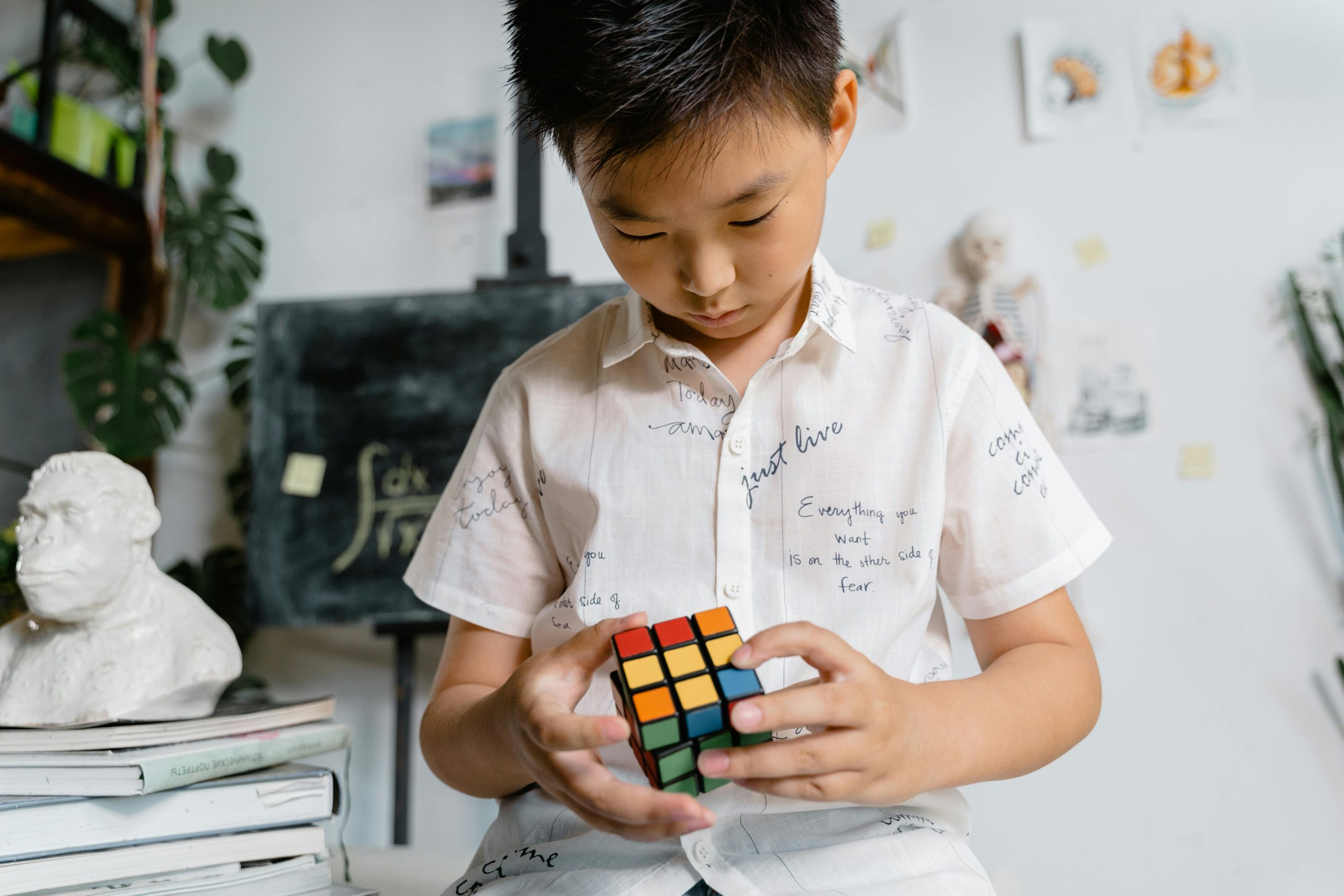
Play is far more than a way for children to pass the time — it’s their method of understanding the world around them. Play is a foundational element that supports overall child development, influencing cognitive, social, emotional, and physical growth. Children’s play is also a critical activity for early brain development, enhancing neural connections and learning experiences during childhood. Whether they’re stacking blocks or creating stories with friends, every moment of play exercises their minds. Building blocks, in particular, foster spatial awareness, creativity, and problem-solving abilities as children construct and experiment during play. Through play, children sharpen problem-solving skills, boost memory, and enhance cognitive flexibility — all essential foundations for lifelong learning.
The Importance of Play for Brain Development
During early childhood, the brain undergoes rapid growth, forming connections that influence how children think, reason, and tackle challenges. Play is one of the most effective ways to stimulate these neural pathways. Engaging in different types of play, such as puzzles and physical activities, directly supports a child’s cognitive development by enhancing problem-solving skills and overall mental growth. It encourages children to experiment, observe results, and make decisions — processes similar to scientific inquiry. The learning process is an integral part of children’s exploratory play and curiosity-driven activities, fostering cognitive development, creativity, and ongoing engagement with new ideas.
When a child engages in a matching game or completes a jigsaw puzzle, their brain actively processes visual information, recognises patterns, and adapts strategies when things don’t fit. This kind of cognitive involvement develops executive functions — including attention control, working memory, and flexible thinking — which are crucial for academic success later in life. Early development of these problem-solving skills during the preschool years lays the foundation for lifelong learning and adaptation.
Problem-Solving Through Play: Embracing Exploration
Every play activity offers chances for children to solve problems, whether simple or complex. For instance:
- A toddler learning to fit shapes into a sorter is building spatial awareness and logical thinking.
- A preschooler trying to build a stable tower is cultivating persistence, creativity, and fine motor skills.
- A group of children negotiating rules in a game of tag are practising social reasoning and compromise through group play, which helps develop social skills and understanding of social norms.
Engaging children in collaborative problem-solving tasks during play promotes teamwork, empathy, and sharing responsibilities.
In all these scenarios, play encourages children to think critically — asking “why,” experimenting with “what if,” and discovering “how.” These mental exercises teach children to approach challenges systematically, a skill vital for both school and everyday life. Play also helps children problem solve by navigating complex situations and formulating strategies. Additionally, play scenarios provide opportunities for resolving conflicts, allowing children to build emotional intelligence and resilience.
Learning Through Trial and Error
One of the greatest cognitive advantages of play is how it normalises failure. When a tower collapses or a puzzle piece doesn’t fit, children naturally try again. Through these experiences, children develop skills by exploring their environment and interacting with others. This trial and error process fosters a growth mindset — the understanding that abilities improve through effort and practice.
Each setback becomes an opportunity to learn. Over time, children discover that problems can be solved by analysing mistakes, considering alternatives, and testing new solutions. This approach nurtures persistence, adaptability, and innovation — qualities that benefit them throughout their education and beyond. Play also enhances a child’s ability for sharing, reasoning, and independence, which are vital for cognitive and social development. Open-ended play encourages independent thinking and self-reliance, helping children build confidence and decision-making skills.
Types of Play That Foster Thinking Skills
1. Constructive Play
Activities such as building with LEGO, stacking blocks, or crafting with recycled materials help children develop planning, sequencing, and spatial reasoning. Constructive play with building materials is essential for developing cognitive skills such as logical reasoning, spatial awareness, and problem-solving. Constructive play also sparks creativity, as children envision ideas and bring them to life.
2. Pretend Play (Imaginative or Dramatic Play)
When children role-play as shopkeepers, astronauts, or doctors, they engage in symbolic thinking — a key cognitive milestone. Imaginative games are vital for childhood development, fostering creativity, problem-solving, and social skills as children invent and explore new scenarios. This play encourages flexible thinking, empathy, and problem-solving as children navigate imaginary scenarios and social roles.
3. Rule-Based Games
Games like “Simon Says,” board games, or card games teach children to follow rules while strategising to win. These games enhance working memory, self-control, and logical reasoning, requiring children to anticipate and adjust their actions.
Rule-based games are especially important during the concrete operational stage, as they help children develop the ability to understand others’ perspectives and improve their reasoning skills. As children mature, they enter the formal operational stage, where they develop advanced reasoning abilities such as abstract thinking and deductive reasoning.
4. Outdoor and Physical Play
Activities such as running, climbing, or team sports are forms of active play, which is a key component of physical development. These activities help improve children’s motor skills, strength, balance, and coordination. Physical development is supported by active play, sports, and outdoor activities, which strengthen muscles and bones while enhancing overall physical fitness. Physical play also improves focus, coordination, and decision-making as children learn to assess risks and react quickly. Engaging in diverse play experiences, including outdoor and sensory activities, is essential for healthy development, supporting children’s physical, cognitive, and social growth for overall well-being. Research shows that movement enhances brain connectivity and supports better attention and problem-solving.
Language Skills and Emotional Development Through Play
Play is an integral part of a child’s development, offering far more than just entertainment—it is a powerful tool for nurturing language skills and emotional growth. When children engage in pretend play, role playing, and imaginative play, they are not only having fun but also building the foundation for effective communication and emotional intelligence.
Pretend play encourages children to communicate effectively, use new vocabulary, and develop storytelling abilities as they create their own worlds and scenarios. Through these playful interactions, children learn to express their thoughts, negotiate roles, and listen to others, all of which are essential skills for language development. Whether they are acting out a story with friends or narrating their adventures with toys, children naturally expand their language skills and gain confidence in expressing themselves.
Emotional development is also deeply supported by play. Imaginative play and constructive play allow children to explore a range of emotions in a safe environment. By taking on different roles and perspectives, children develop empathy and learn to understand the feelings of others. These experiences help children manage their own emotions, resolve conflicts, and build strong social skills. Social interactions during play, such as group games or collaborative building projects, teach children how to cooperate, share, and navigate relationships—key components of healthy emotional development.
In early childhood education, play-based learning is recognized for its ability to promote cognitive development, language skills, and emotional intelligence. Play serves as a hands-on learning experience, allowing children to develop fine motor skills, gross motor skills, and specific cognitive skills through activities like memory games, puzzles, and creative arts. Unstructured play, in particular, gives children the freedom to explore, create, and learn at their own pace, fostering independence, self-confidence, and a lifelong love of learning.
Outdoor play further enhances a child’s development by providing opportunities for physical activity, social interaction, and cognitive growth. When children play outside, they develop problem-solving abilities, critical thinking skills, and creativity as they navigate new challenges and interact with peers. These experiences are essential for preparing children for academic success and future success in life.
Ultimately, encouraging children to participate in a variety of play-based activities—both structured and unstructured, indoors and outdoors—supports holistic development. By allowing children to play, we help them develop the language skills, emotional intelligence, and cognitive abilities they need to thrive. As parents, educators, and caregivers, it is vital to recognize the benefits of play and to create environments that encourage children to explore, communicate, and grow through play.
How Adults Can Support Cognitive Play
Parents, teachers, and caregivers play a crucial role in transforming play into meaningful learning. Incorporating play into educational settings is essential to promote holistic development and create a supportive environment for children’s growth. They can:
- Ask open-ended questions: Prompt deeper thinking with questions like “What do you think will happen if we try this?” or “How can we make it stronger?”
- Allow time and space for free play: Unstructured play allows children to foster independence, decision-making, and emotional development by letting them lead, make choices, and explore ideas independently.
- Participate playfully: Joining in models cooperation, communication, and shared problem-solving.
- Offer diverse materials: Providing different textures, shapes, and tools sparks curiosity and experimentation.
By actively engaging with children during play, adults reinforce the link between fun and learning. These strategies help prepare children for future success by equipping them with problem-solving and creative skills.
Play’s Role in Holistic Cognitive Growth
Cognitive development is intertwined with emotional and social growth. Play, especially imaginative and unstructured play, supports a child’s development across cognitive, social, and emotional domains. When children solve problems during play, they not only use logic but also manage frustration, express ideas, and collaborate with peers. Children benefit from engaging in play activities that support cognitive, emotional, and mental health, helping them build essential life skills. Introducing developmental activities at an early age is crucial for building foundational skills that support lifelong learning and well-being.
Additionally, play strengthens the brain’s prefrontal cortex, responsible for decision-making and problem-solving. Regular involvement in strategic, imaginative, or physical play enhances this area, improving focus, planning, and emotional regulation.
Nurturing Lifelong Thinking Skills
As children mature, their play evolves — from stacking blocks to tackling complex puzzles or creating digital worlds. During early adolescence, significant developmental milestones and cognitive growth occur in a child’s life, shaping their ability to think critically and solve problems. Yet the core benefit remains: play teaches them how to think, not just what to think.
Through each playful challenge, children build resilience, creativity, and cognitive flexibility — essential skills for innovation and lifelong learning. Children learn through self-directed activities, exploration, and problem-solving during play, which promotes independence and cognitive development.
So, the next time your child is engrossed in play, remember: their imagination is not only at work, but their brain is growing stronger with every decision, action, and idea.
Comments are closed