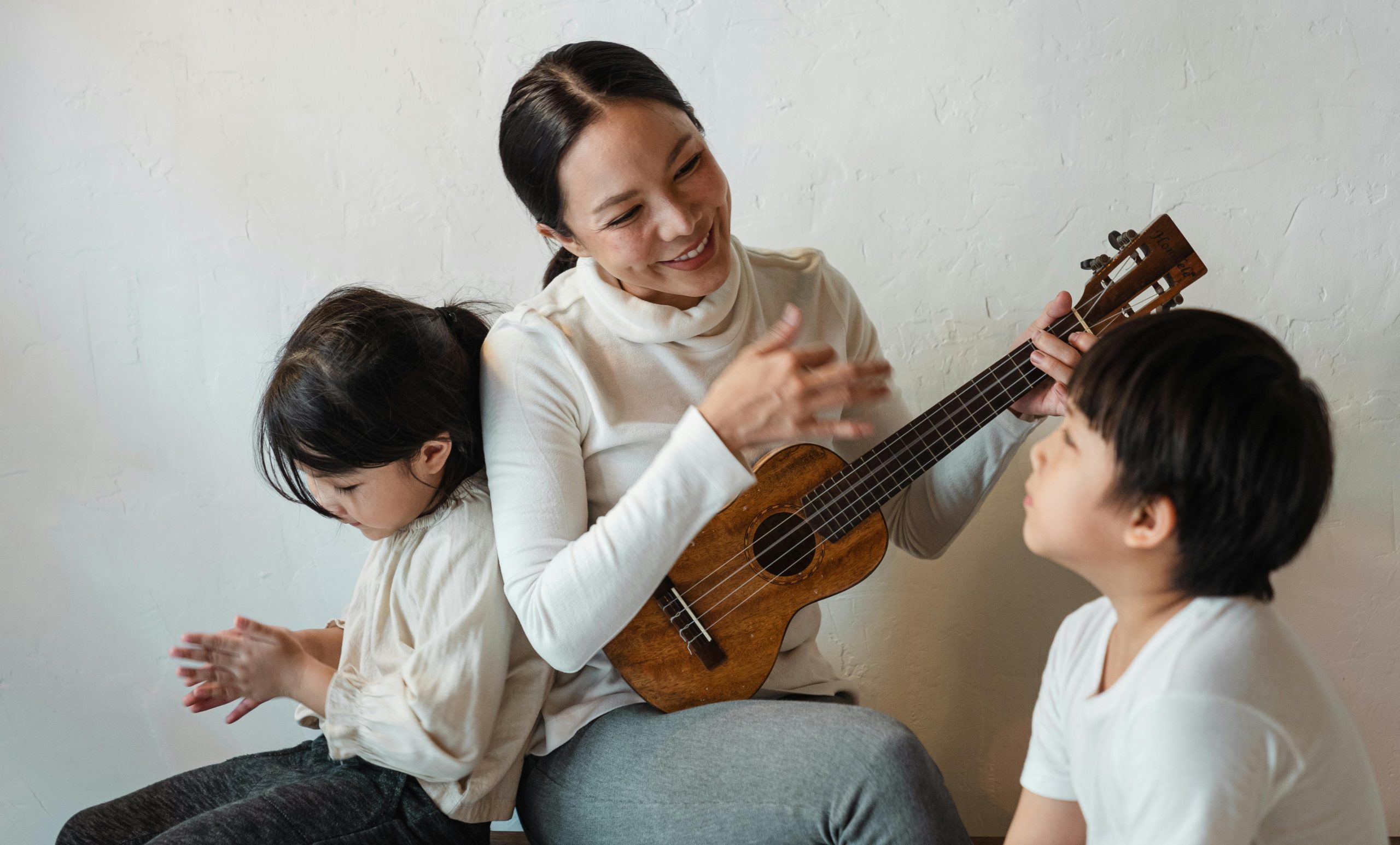
From lullabies to nursery rhymes, music has always been an integral part of childhood. The benefits of music for child development are profound, supporting cognitive, emotional, and social growth in children from an early age. But beyond its soothing melodies and rhythms, music serves as a powerful tool that shapes the brain. For children, songs do much more than entertain — they enhance memory, language, attention, and emotional growth. Music bridges emotion and learning, helping information stick in ways that words alone cannot, and supports a child’s development across multiple domains.
The Science of Music and the Brain
When children listen to or create music, multiple brain regions activate simultaneously — including the auditory system, motor cortex, prefrontal cortex, and emotional centers such as the amygdala. This extensive engagement makes music one of the most effective ways to strengthen neural connections. Music also enhances the brain’s ability to process and integrate information, especially in children.
The rhythm and repetition found in songs offer a predictable framework that aids the brain in processing and storing information efficiently. For example, the familiar melody of the alphabet song helps children remember letter sequences, while rhymes reinforce sound patterns essential for reading. Music supports the development of a child’s brain by building neural pathways and supporting cognitive growth.
Neuroscientific studies show that children involved in musical training often demonstrate enhanced working memory, improved auditory discrimination, better auditory memory, and longer attention spans. These skills are crucial for overall cognitive development and academic achievement. However, the variability in children’s brains, which are highly inhomogeneous, can complicate the assessment of developmental changes due to interventions like musical training and affect research outcomes.
How Music Boosts Memory
Memory relies heavily on association — and music provides this in abundance. Songs combine language with melody and emotion, promoting deeper encoding of information in the brain.
1. Repetition Strengthens Recall
Songs frequently repeat phrases and patterns, helping children effortlessly retain information. Consider how easily a child can sing a rhyme they’ve heard several times, even before they can read the words.
2. Rhythm Structures Information
The rhythmic flow of music breaks down complex information into smaller, manageable segments. This organization assists the brain in storing and retrieving details — similar to how students recall mathematical formulas or spelling rules when set to a beat.
3. Emotion Enhances Learning
Music evokes emotions, and these emotional connections reinforce memory. When children enjoy a song or relate to its meaning, they are more likely to remember it. Joyful, playful, or soothing tunes become emotional anchors for learning.
4. Movement Supports Learning
Activities like clapping, dancing, or tapping along with music engage the motor system, linking physical movement with memory formation. This multisensory involvement helps children retain information more effectively — a technique used in many early learning programs.
Music as a Language Development Tool
Music and language share many neural pathways, relying on rhythm, pitch, and pattern recognition. Singing introduces children to new vocabulary, sentence structures, and phonetic sounds, laying strong foundations for reading and communication. Music also supports language acquisition, especially during sensitive periods in early childhood, by enhancing the brain’s ability to process and master linguistic skills.
Nursery rhymes, for example, assist children in recognizing rhyming words and syllables, critical skills for phonological awareness — a key predictor of reading success. Through singing, children practice listening attentively, develop strong listening skills, pronounce words clearly, and connect sounds to meaning.
Music also supports foreign language learning by making it easier for children to memorize new words, tones, and accents, turning repetition into an enjoyable experience.
Music plays a vital role in early education by supporting language acquisition, listening skills, and cognitive growth in young children.
Enhancing Focus and Attention with Music
In today’s fast-paced digital world, maintaining focus can be challenging, especially for young learners. Music promotes focus through its structure and timing. When children follow rhythms, anticipate beats, or coordinate singing with others, they develop sustained attention and auditory discrimination.
Additionally, learning to play an instrument or master a song cultivates patience and discipline — requiring focus, repetition, and self-control — all of which strengthen executive functions linked to academic success.
Music and Emotional Intelligence
Beyond memory and attention, music helps children recognize and express emotions. The soothing melody of a lullaby, the excitement of a marching tune, or the calmness of gentle instrumental music all teach children to identify emotional cues. This nurtures empathy, emotional regulation, and self-confidence — vital aspects of social and emotional development. Additionally, creating music allows children to process emotions, express themselves, and build resilience.
Participating in group singing or ensembles further encourages cooperation and teamwork. Musical engagement in these settings gives children opportunities to make music together, which fosters social bonding and emotional growth. Children learn to listen, take turns, and harmonize their voices or instruments — a beautiful lesson in collaboration.
Integrating Music into Daily Learning
Formal lessons aren’t the only way to incorporate music into a child’s life. Everyday moments can become musical opportunities that support cognitive and emotional growth. Creating a musical environment at home—with access to musical instruments, musical toys, and dedicated space for musical activity—encourages children to explore, express, and participate in music from an early age.
- Sing during routines: Songs about brushing teeth, tidying up, or getting dressed help associate tasks with positive feelings.
- Sing songs throughout the day: Singing songs during playtime, car rides, or bedtime rituals is especially beneficial for very young children, supporting language development and early musical development.
- Turn facts into songs: Use melodies to teach spelling, counting, or animal names.
- Encourage musical play: Provide musical instruments or household items like pots and spoons for exploring rhythm and sound. Playing musical instruments helps develop hand eye coordination and essential skills such as confidence, perseverance, and teamwork.
- Dance together: Moving to music strengthens coordination and memory through active engagement.
- Expose to diverse styles: Introduce children to various musical genres and cultures, including classical music, to expand creativity, support musical development, and enhance cognitive growth.
Making time to make music and playing music together as a family fosters a child’s ability, child’s growth, and overall musical development, especially when started at an early age. Choose age-appropriate musical instruments and activities for younger children to support their development and ensure a positive, engaging experience.
These joyful practices make learning more engaging and memorable.
Music and Cultural Awareness
Music is a universal language that connects people across continents and generations, making it a powerful tool for fostering cultural awareness in young children. Through music education, children are introduced to a vibrant world of diverse cultures, musical genres, and traditions, all while developing essential language skills, social skills, and cognitive benefits that support their overall growth.
In early childhood education, exploring music from different cultures can be as simple as singing nursery rhymes from around the world, learning call and response songs rooted in African traditions, or moving to the rhythms of Latin American dances. These musical activities not only spark curiosity and creativity but also help children develop fine motor skills, gross motor skills, and body awareness as they clap, dance, and play instruments from various backgrounds.
By incorporating music from diverse cultures into daily routines—whether through music listening at home, attending multicultural music classes, or participating in community events—parents and educators can nurture a child’s brain development and emotional regulation. Exposing children to a variety of musical styles and instruments encourages them to appreciate different musical preferences, understand the significance of music in everyday tasks, and develop a sense of self-expression and self-esteem.
Learning music theory and musical notation in the context of different traditions also enhances academic skills and early reading skills, while supporting working memory and problem-solving skills. For example, playing an instrument from another culture or singing songs in a new language can boost language development and speech development, helping children learn new vocabulary and pronunciation in a fun, engaging way.
Moreover, music serves as a bridge to understanding and respecting diverse cultures, promoting empathy, tolerance, and critical thinking from a young age. When children learn to create music, play music, or simply enjoy music from around the world, they are not only building musical skills and cognitive development but also gaining a deeper appreciation for the world’s rich cultural heritage.
By making music education a regular part of early childhood development, parents and educators can support children’s academic performance, emotional development, and well-being, while also preparing them to thrive in a multicultural world. Whether through music lessons, musical activities, or simply singing songs together, music and cultural awareness go hand in hand in shaping confident, compassionate, and globally-minded individuals.
Music and Brain Development: Long-Term Benefits
Ongoing research reveals music’s profound influence on brain growth. Children who regularly engage with music tend to have stronger connections between brain hemispheres, better auditory processing, and improved academic performance in reading, math, and spatial reasoning.
Importantly, music also fosters resilience and emotional well-being. It offers a safe space for self-expression — helping children manage stress, express happiness, and connect socially.
Over time, these experiences contribute not only to sharper cognitive skills but also to more confident, empathetic, and creative individuals.
Closing Thoughts
Music is far more than background noise — it’s a powerful educational tool that shapes how children think, remember, and grow. Each song, rhyme, or rhythm they experience helps build a more connected and capable brain.
By weaving music into everyday life — from bedtime lullabies to playful learning tunes — parents and educators nurture not only smarter learners but happier, emotionally balanced children.
After all, when children learn through music, they don’t just remember the song — they remember the joy of learning itself.
Comments are closed