Before Academic Acceleration: Why Learning Readiness and Academic Success Drive Long-Term Success
In Singapore, many children attend multiple tuition classes each week, complete stacks of worksheets at home, and still struggle to keep up in the classroom. Parents and educators watch the effort pile up while grades stay flat—or even drop. In these cases, learning readiness is often the factor that most directly shapes academic success: the cognitive and self-regulation skills that support attention, information processing, persistence, and independent learning. The missing piece is rarely more practice.
For families and schools trying to understand why hard work is not translating into progress, this article explains what learning readiness is, how it differs from school readiness, which developmental and self-management skills are involved, and why tuition alone cannot replace them. It also looks at common signs a child is not ready to learn effectively, ways readiness can be assessed, practical support strategies at home, when professional help may be useful, and the long-term benefits for confidence, anxiety, independence, and results in Singapore’s exam-focused system.
Key Takeaways
- Learning readiness acts as the foundation for academic progress. Without sustained attention, working memory, language processing, and self regulation, extra tuition often creates anxiety and avoidance rather than school success.
- Learning readiness directly influences academic success by improving attention and retention-skills that no amount of additional worksheets can replace.
- Cognitive Development Learning Centre in Singapore builds these underlying cognitive skills and self-management capacities before accelerating syllabus content, unlike typical tuition centres.
- Readiness-focused support protects mental health, builds confidence, and fosters independence from early childhood through secondary school, reducing long-term burnout and negative thoughts about learning.
Learning Readiness vs “More Tuition”: A Singapore Parent’s Dilemma
Picture a Primary 3 student who attends English, Math, and Science tuition three evenings a week. Homework still ends in tears. Every assignment requires an adult sitting beside her. She can recite formulas during tuition but freezes on test day.
In Singapore’s exam-focused education system-PSLE, O-Levels, A-Levels-many families assume more practice equals better results. Parents start phonics at age 3 and P1 maths in kindergarten, hoping to give their young child a head start. The intention is good. The assumption, however, is risky.
Learning readiness is crucial for academic success and benefits new educational experiences. It is the child’s capacity to receive, process, and retain new information. A ready learner is better equipped for success and experiences fewer behavioral issues, because the cognitive “engine” can actually use the fuel being poured in. Without readiness, extra worksheets only reinforce a sense of failure.
Short-term grade boosts from drilling rarely last. Sustainable academic progress depends on cognitive and emotional foundations that no worksheet can teach.
Shifting focus to readiness is not “giving up.” It is choosing a more scientifically grounded path.
What Is Learning Readiness (and How Is It Different from School Readiness)?
Parents and educators often use “school readiness” and “learning readiness” interchangeably, but they describe related yet distinct ideas.
School readiness is the broader set of skills a child needs to cope with a school environment: following class routines, queuing at the canteen, basic self-care, cooperating with peers, and simple number and language abilities. School readiness programs focus on key developmental areas like these, and school readiness involves a community effort for student success-teachers, families, and support networks all play a role.
Learning readiness is more precise. It refers to the observable cognitive, language, and self-regulation capacities that let students learn effectively in any subject and support learning across subjects, not just cope with school demands. Learning readiness is a combination of physical, emotional, and cognitive capacity. It involves cognitive, language, and executive skills working together so that a child can pay more attention, understand instructions, and work independently.
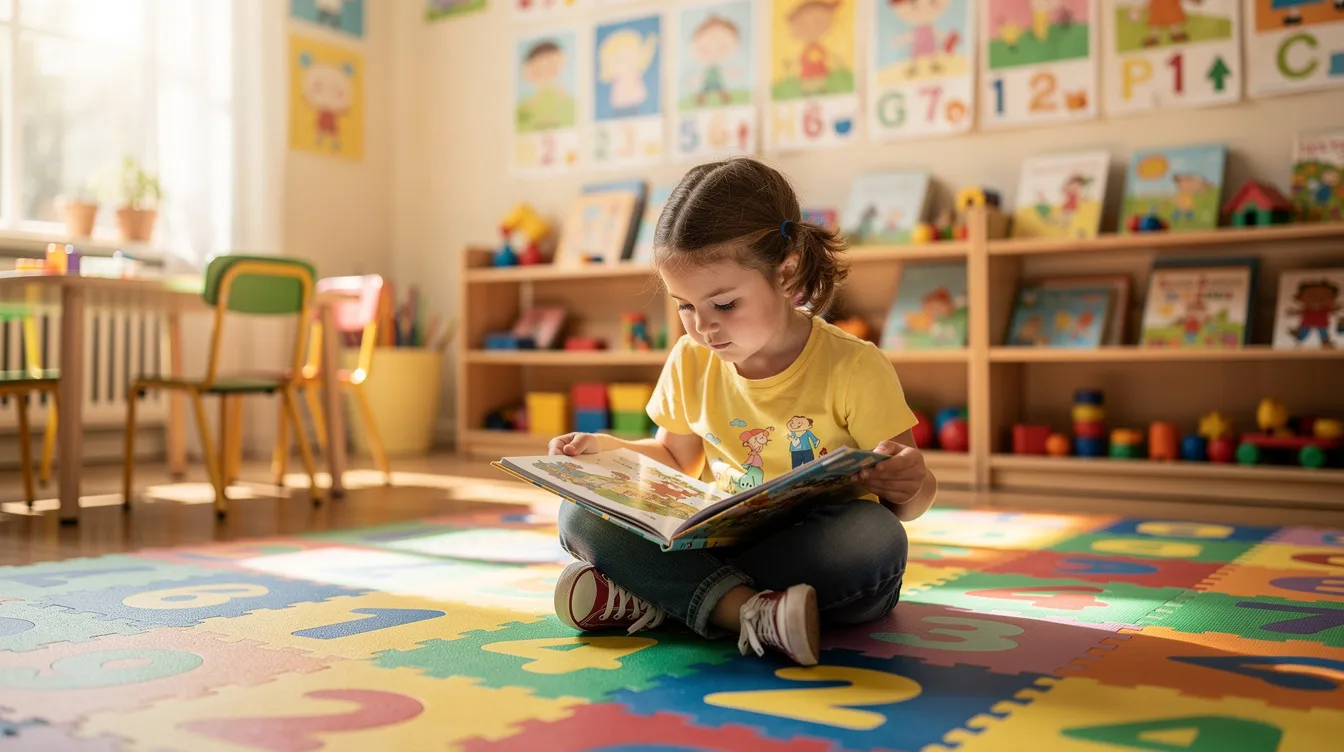
Indicators of readiness include curiosity, attention span, and positive attitudes toward learning. A K2 child who can sit for 10–15 minutes in circle time, follow a two-step instruction, and respond to questions-versus one who zones out or copies peers without understanding-illustrates the difference clearly.
Research since the 1960s, including large-scale longitudinal studies tracking over 33,000 children, repeatedly shows that social and emotional learning and cognitive readiness predict later academic success more strongly than early drilling.
The Anatomy of Learning Readiness: Core Cognitive and Self-Regulation Skills
Think of learning readiness as the engine that powers academic progress from preschool through secondary school. Its key components include attention, executive functions, language abilities, and emotional regulation.
- Sustained attention and focus: The ability to stay with a task for an age-appropriate duration-roughly 10–15 minutes at K1, 20–30 minutes in upper primary-without constant reminders. Cognitive readiness involves prior knowledge and information processing capacity, and when a child’s attention system is underdeveloped, that processing capacity shrinks.
- Self regulation and stamina: Managing impulses, coping with frustration during challenging problem solving in P4 maths, and staying engaged until the task is done. Learning readiness allows students to understand concepts and stay motivated through difficulties instead of shutting down.
- Receptive language and following directions: Language processing is crucial for learning readiness. Children process language at 25 sounds per second, meaning even brief classroom instructions demand rapid decoding. In a typical Singapore class of 30–40 students, a child with weak receptive language can miss critical explanations.
- Working memory and executive functioning: Holding instructions in mind while executing tasks-multi-step word problems, essay planning, checking work. A meta-analysis of nearly 8,000 primary-age children found a correlation of r = 0.365 between executive functions and academic achievement.
- Physical readiness: Children need fine motor skills for classroom tasks like writing. Without them, even copying from a whiteboard becomes exhausting.
When any of these cognitive skills are weak, children can appear “lazy” or unmotivated-when in reality their brains are overloaded.
Early Childhood to Primary School: How Readiness Shapes Academic Progress
Learning readiness looks different across developmental stages.
In early childhood (ages 3–6), signs of readiness include curiosity, basic turn-taking, ability to attend to a storybook, and emerging language abilities. Structured play promotes cognitive development essential for school readiness at this age. Early signs of learning readiness delays can appear by age 3, and language processing delays can be detected as early as preschool-making early learning environments critical.
During transition to primary school (P1–P3), children face copying from the board, managing worksheets, understanding test instructions, and shifting from play-based lessons to formal seatwork. Emotional readiness is crucial for academic success and engagement during this vulnerable period.
In upper primary (P4–P6), weak readiness skills compound. Holistic readiness factors predict later academic performance in various subjects, so gaps that went unaddressed in P1 now affect Science, English, and Maths simultaneously.
Repeated “failure experiences”-red marks, scoldings, comparison with peers-can erode a child’s self esteem and contribute to anxiety, homework avoidance, and even school refusal in later life. Strengthening cognitive development and self regulation early reduces the need for crisis-level interventions before PSLE or O-Levels.

Why Standard Tuition Often Fails Children Who Aren’t Ready
Traditional tuition assumes the learning “engine” is working and simply adds more “fuel”-syllabus content and homework. For children with readiness gaps, extra fuel can flood the engine.
Common warning signs that tuition is not addressing readiness:
- Child performs during 1-to-1 tuition but cannot start homework alone
- Forgets yesterday’s lesson by morning
- Needs parents sitting beside them every time
- Shows avoidance behaviours: frequent toilet breaks, slow copying, “dragging time”
Learning readiness is linked to a child’s self-concept and motivation. When that self-concept is damaged by repeated failure despite effort, learned helplessness sets in. Motivation and self-efficacy are linked to higher grades and better retention, but the reverse is also true: emotional stability and anxiety levels influence a student’s ability to retain information. Children with high self-worth are more likely to succeed academically, while those who develop negative thoughts about their ability disengage further.
Tuition is not inherently harmful. But it becomes ineffective when used before foundational readiness skills are in place, especially those with attention or language vulnerabilities.
From Short-Term Scores to Long-Term Success: The Benefits of Readiness-First Support
Readiness-focused work shifts goals from “How do we pass the next test?” to “How do we help my child become an independent, confident learner over the next 3–5 years?”
Students with strong learning readiness develop better problem-solving and critical-thinking skills, so they are better able to solve problems across subjects and in independent learning situations. Better working memory helps both Science open-ended questions and English inference. High levels of learning readiness are significantly related to better academic achievement across the board.
Parents typically notice real changes after readiness intervention:
- Fewer homework battles
- The child initiating tasks independently, encouraging independence over time
- Improved ability to follow routines
- Reduced need for constant supervision
Emotional development supports persistence and motivation in learning. Positive environments foster children’s motivation and persistence in learning. Children who feel more in control of their learning process experience less chronic stress and greater perseverance when facing challenging content.
Beyond grades, improved executive functioning supports time management for high school students juggling multiple subjects, CCAs, and future tertiary demands. A P3 child who receives readiness support today can be emotionally and cognitively better prepared for PSLE demands three years from now.
How Cognitive Development Learning Centre Builds Learning Readiness
Cognitive Development Learning Centre in Singapore is not a tuition centre. It is a specialised learning intervention provider focused on attention, cognitive processing, and self regulation before pushing higher academic content.
The centre’s sessions are built around customised learning intervention rather than re-teaching the textbook. Differentiated instruction adapts learning tasks based on individual student needs, targeting working memory, processing speed, problem solving, and study stamina through structured cognitive activities-a form of brain training grounded in educational psychology.
Support is delivered through customised 1-to-1 or very small-group sessions, allowing pace and complexity to match each child’s cognitive profile rather than their chronological age or school level. Formative feedback helps tailor instruction based on initial learning data gathered session by session.
Children in supportive environments are more likely to engage in learning. Children with supportive environments show improved academic performance. The centre’s programmes complement school and tuition: once readiness improves, students learn more effectively from their classroom teachers and any subject-specific support they attend.
Assessment: Identifying the Real Barriers Behind Academic Struggle
Surface symptoms-careless mistakes, slow work, poor grades-can stem from very different root causes. Guessing wastes time and money.
Educators assess learning readiness through student knowledge, skill sets, and psychological state. At Cognitive Development Learning Centre, comprehensive cognitive assessment maps a child’s strengths and weaknesses across working memory, processing speed, reasoning, and language abilities.
Concrete examples of assessment outcomes:
- A P2 child with strong reasoning but weak auditory working memory
- A Secondary 2 student with good vocabulary but poor sustained attention and planning skills
- A K2 child whose social skills mask significant receptive language gaps
Multiple assessment methods provide a comprehensive view of a student’s readiness. Diagnostic assessments gauge students’ existing knowledge and skills before instruction begins. Behavioral observations monitor student motivation, focus, and participation, while self-assessment tools allow older students to measure their readiness and confidence.
For younger children (ages 4–7), early intervention and learning readiness support is most effective when delivered before academic failures accumulate. If language processing is the bottleneck, functional communication and language readiness support can be integrated into the plan.
Practical Signs Your Child May Not Be Learning-Ready (Yet)
Many Singapore parents only recognise a readiness issue when repeated tuition still does not produce sustained improvement. Here are signs to watch for.
Preschool and early primary:
- Frequent “daydreaming” during stories or lessons
- Difficulty following 2–3 step instructions
- Limited vocabulary for age
- Needing constant adult presence to complete simple worksheets
Upper primary and lower secondary:
- Copying friends’ work without understanding
- Forgetting instructions quickly
- Chronic disorganisation-missing books, unsubmitted homework
- Emotional outbursts when facing challenging tasks or feeling mentally prepared is impossible
Secure attachments improve children’s problem-solving and learning abilities, and secure attachments improve children’s ability to handle challenges. Positive relationships enhance children’s self-worth and academic success. When those relationships and physical well-being are intact but struggle persists, the issue is likely readiness-based. Good health positively affects a student’s focus and engagement in learning, so rule out sleep and health concerns too.
If these patterns persist over at least 8–10 weeks despite reasonable home support, or if distress is increasing, consider professional attention and learning readiness support.
Supporting Learning Readiness at Home While Protecting Mental Health
Parents do not need to become therapists to support readiness. Simple daily habits at home can nurture attention, thinking skills, and emotional resilience.
Practical strategies:
- Predictable routines: Short, focused study blocks-20 minutes for lower primary, 30 minutes for upper primary-with device-free periods and regular sleep schedules to support cognitive stamina.
- Language-rich interactions: Daily conversations about the world, reading aloud together, discussing stories or current events. These develop language abilities naturally. Positive relationships enhance children’s social skills and problem-solving through everyday engagement.
- Encouraging independence: Gradually let children plan small tasks-packing their school bag, breaking homework into steps. Praise effort, strategy use, and self-correction rather than grades alone.
- Involve the whole family: Family support enhances students’ learning readiness and confidence. Children who are securely attached to family members succeed better in school, so adults and other family members play a vital role.
Differentiate between healthy challenge and chronic anxiety. Red flags include frequent stomach aches, sleep disruption, or strong emotional reactions to schoolwork. When persistent distress appears, seek professional readiness support rather than simply adding more tuition hours.
When and How to Seek Professional Readiness Support in Singapore
Consider a readiness-focused consultation if your child has struggled across at least two school terms despite tuition, or if teachers have flagged attention, behaviour, or comprehension concerns.
A consultation typically involves discussion of school history, observation of how the child approaches tasks, and initial screening of core cognitive and language skills. For some children, support from as early as preschool age can prevent later academic crises-especially those with known risk factors like early speech delay.
Effective support involves collaboration among classroom teachers, parents, and where relevant, allied professionals such as speech therapists or psychologists, creating a comprehensive approach and consistent plan.
If you recognise your child in these descriptions, reach out to Cognitive Development Learning Centre to explore attention and learning readiness support and, if appropriate, a comprehensive cognitive assessment.
Frequently Asked Questions about Learning Readiness and Academic Success
Below are answers to common questions from parents that were not fully addressed above.
How early can learning readiness be assessed?
Certain readiness indicators can be meaningfully observed from around age 3–4-attention span during play, early language skills, and ability to follow simple instructions. In Singapore, many children are seen for early intervention assessments during K1–K2 (ages 4–6) when preschool teachers first notice persistent difficulties. Earlier support typically leads to better outcomes, but it is never “too late”-readiness can still develop in upper primary and secondary school.
Is poor learning readiness the same as having a learning disorder?
No. Learning readiness describes current functional skills-attention, working memory, language, self regulation-while a learning disorder like dyslexia is a specific diagnostic category. Some children have readiness weaknesses without meeting criteria for any disorder; others have a diagnosed condition that affects readiness. A comprehensive cognitive assessment can differentiate between temporary lags, broader readiness issues, and specific learning disorders so that support can be tailored.
Will focusing on readiness delay my child’s academic progress?
In most cases, focusing on readiness actually accelerates long-term academic progress because children can finally understand, retain, and apply what they are taught. A child who spends 6–12 months strengthening working memory and attention in P3 may catch up more sustainably than one who only adds more P3/P4 worksheets. Readiness intervention is done alongside school learning, not in isolation from the syllabus.
How is readiness-focused intervention different from counselling or therapy?
Counselling or psychotherapy focuses primarily on emotions, behaviour, and emotional learning. Readiness-focused intervention at Cognitive Development Learning Centre targets cognitive processing, attention, and learning strategies within an educational framework. For some students, collaborating with mental health professionals is important when anxiety or mood significantly affect the learning process. The two types of support complement each other, and an initial consultation can help determine the right combination.
Can teenagers in secondary school still benefit from learning readiness support?
Yes. Secondary students who struggled through primary school often face heavier demands from O-Levels or N-Levels with under-developed executive functions. Typical issues include poor time management, difficulty sustaining focus during long study sessions, and challenges juggling multiple subjects and CCAs. Strengthening planning, organisation, and self-monitoring helps these students succeed and reduces exam stress-even in the later school years.
Comments are closed