Key Takeaways
- AI will not fully replace human tuition in 2026, but it can radically change how children with dyslexia, ADHD, autism, and other learning difficulties receive support at home and school.
- AI works best as a “co-tutor” alongside parents and teachers who provide emotional guidance, motivation, and supervision that technology cannot replicate.
- Current ai tools already help with reading through text-to-speech, writing through structured prompts, maths through step-by-step hints, and executive function through schedules and reminders.
- AI can make personalised support more affordable than traditional tuition, but families must choose safe, child-appropriate tools and remain vigilant about privacy and over-reliance.
- The most effective approach combines daily AI practice with less frequent but more targeted human sessions focused on strategy, confidence, and school coordination.
Introduction: Why Parents Are Asking If AI Can Replace Tuition
Since 2020, tuition costs have climbed sharply across Singapore, the US, and UK. When ChatGPT launched in late 2022, followed by education-focused tools like Khanmigo, parents began asking a question that once seemed like science fiction: could artificial intelligence replace the tutor? The idea behind AI tutoring platforms is to address gaps in traditional education by providing accessible, affordable, and flexible learning solutions that go beyond the limitations of conventional classes.
For parents of children with special educational needs, this question carries extra weight. Traditional tuition and classes often move too fast, rely heavily on reading, or fail to accommodate sensory and attention differences. Not everyone can access or afford these traditional tuition options or attend physical classes. A child with dyslexia may need text read aloud. A child with ADHD may need tasks broken into five-minute chunks. Standard tutors rarely adapt this precisely. In 2023, Singaporean households spent S$1.8 billion on traditional tuition, highlighting the potential for AI tutors to disrupt this market by offering more affordable and accessible learning support.
This article answers what parents really want to know: to what extent can AI replace or reduce tuition for children’s learning difficulties, how ai works in practice for these learners, and how to use it safely and effectively at home. The perspective here comes from 2026, after several years of rapid adoption in special education and home learning.

What We Mean by “AI for Learning Difficulties”
AI in this context refers to software and assistive technology that can analyse a child’s responses and adapt content, feedback, and pacing in real time. Unlike static worksheets or pre-recorded videos, machine learning allows these tools to identify exactly where the learning process breaks down and adjust accordingly.
“Learning difficulties” here includes dyslexia, ADHD, autism spectrum conditions, dyscalculia, developmental delays, and specific language impairments—not only children with formal special education labels.
Concrete examples of ai for learning difficulties currently in use that support students of all abilities:
- Text-to-speech readers like Microsoft’s Immersive Reader that reduce cognitive load for dyslexic learners
- AI writing assistants like Diffit that provide structured prompts and break essays into manageable steps
- Step-by-step maths ai tutors that offer hints without giving final answers
- Speech recognition tools that allow struggling writers to dictate rather than type
AI tools designed for learning challenges focus on enhancing accessibility, personalization, and task management.
The key difference between general chatbots and education-focused AI is safety, curriculum alignment, and accessibility design. Tools built for children filter content, protect student data, and align with how ai literacy develops at different ages.
Can AI Really Replace Traditional Tuition for These Children?
Here’s the direct answer: AI can significantly reduce the need for frequent in-person tuition for many children with learning difficulties, but cannot fully replace skilled human educators in 2026.
Traditional tuition typically offers fixed session times, one teaching style, and limited personalisation. A tutor might see your child once weekly for an hour. AI tutors offer 24/7 access, instant feedback, adaptive difficulty, and endless patience. Your child can practice at their own pace, repeating concepts without embarrassment, while AI tools respond in real time to student input, adjusting support and content to match their needs.
Where AI matches or exceeds average tuition:
- Drilling basic skills like times tables or phonics patterns
- Providing unlimited practice with immediate feedback
- Adapting question difficulty based on error patterns
- Offering multiple representations of the same concept
- Automating administrative tasks, assisting students with learning at their own pace, and providing valuable insights about student performance
Where human tutors still outperform AI:
- Emotional attunement and confidence building
- Complex behaviour support and motivation coaching
- Coordinating with teachers, therapists, and school systems
- Teaching critical thinking about AI answers themselves
The realistic future isn’t replacement—it’s redesign. Families might shift from twice-weekly 60-minute sessions to monthly specialist appointments plus daily 15-minute AI practice. This hybrid model is more efficient and maintains learning momentum between human sessions.
How AI Supports Specific Learning Difficulties Day-to-Day
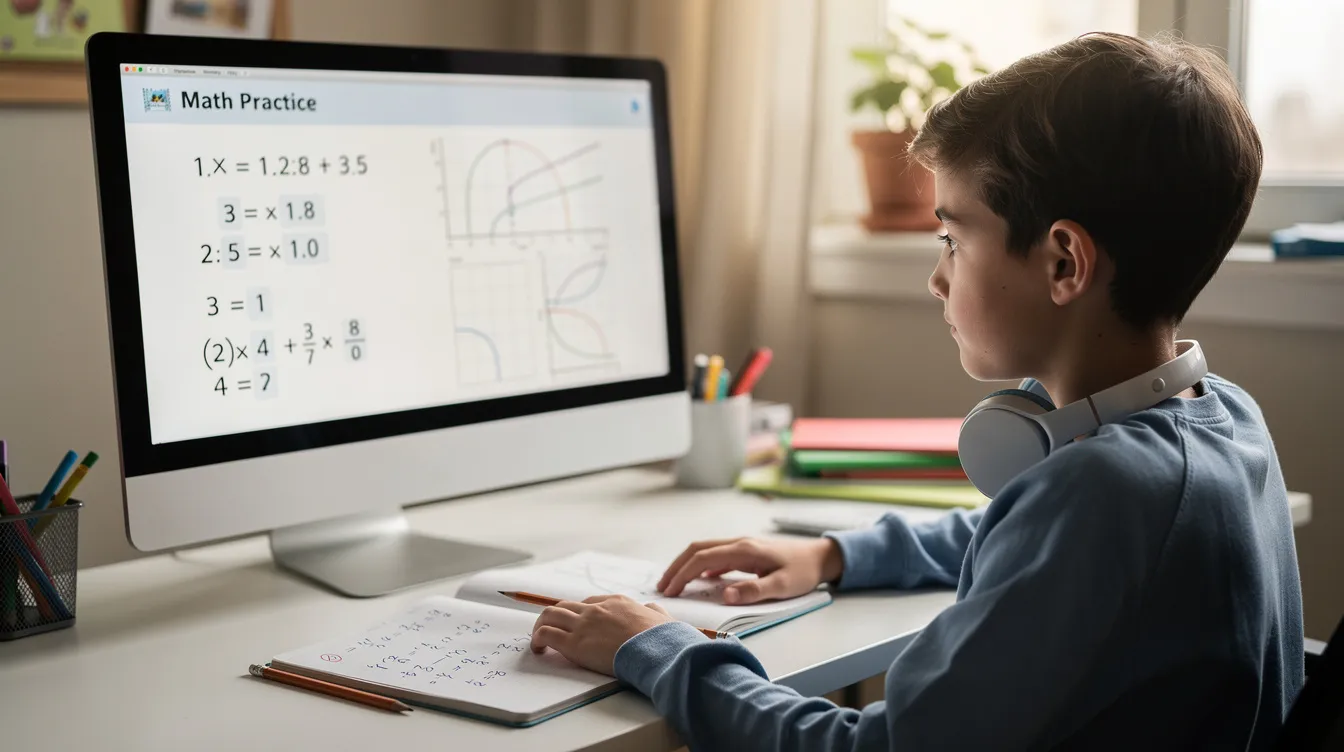
This section provides practical, subject-level examples so parents can picture what AI-supported learning looks like at home. With AI support, students learn by engaging with interactive tools that adapt to their individual needs, helping them acquire knowledge and skills more effectively.
For example, in reading, AI can analyze a child’s fluency and comprehension, then select stories at the right level and offer vocabulary support. In math, AI-powered apps break down concepts into manageable steps, providing hints and feedback as students work through personalized lessons. These lessons are tailored in real time, ensuring that each student receives instruction that matches their current understanding and pace.
AI-driven platforms transform the traditional curriculum into a dynamic experience by adjusting content in real time, making learning more responsive and engaging for every student.
Dyslexia Support
Children with dyslexia struggle with decoding, making long texts exhausting. AI addresses this through:
- Text-to-speech that reads school assignments aloud while highlighting words
- Summarisation tools that condense lengthy passages into key points
- Voice-to-text dictation that bypasses the encoding bottleneck for writing
- Distraction-reduced reading interfaces like Immersive Reader that reduce visual clutter
These tools don’t “fix” dyslexia—they remove barriers so children can access grade-level content and reach their full potential.
ADHD Support
ADHD presents challenges with executive function, working memory, and sustained attention. Useful AI features include:
- AI-generated visual schedules that externalise planning
- Time-boxed study sessions with built-in micro-break prompts
- Goal-setting tools that chunk homework into small, timed tasks
- Intelligent reminders through platforms like Google Classroom
For students with ADHD, the right AI tool can serve as an external working memory, reducing the mental load of keeping track of what comes next.
Autism and Social-Communication Support
AI tools can model social stories, explain figurative language, and provide a safe space to rehearse conversation scripts without the pressure of real-time human interaction. This structured, predictable environment suits many autistic learners.
Dyscalculia and Maths Difficulties
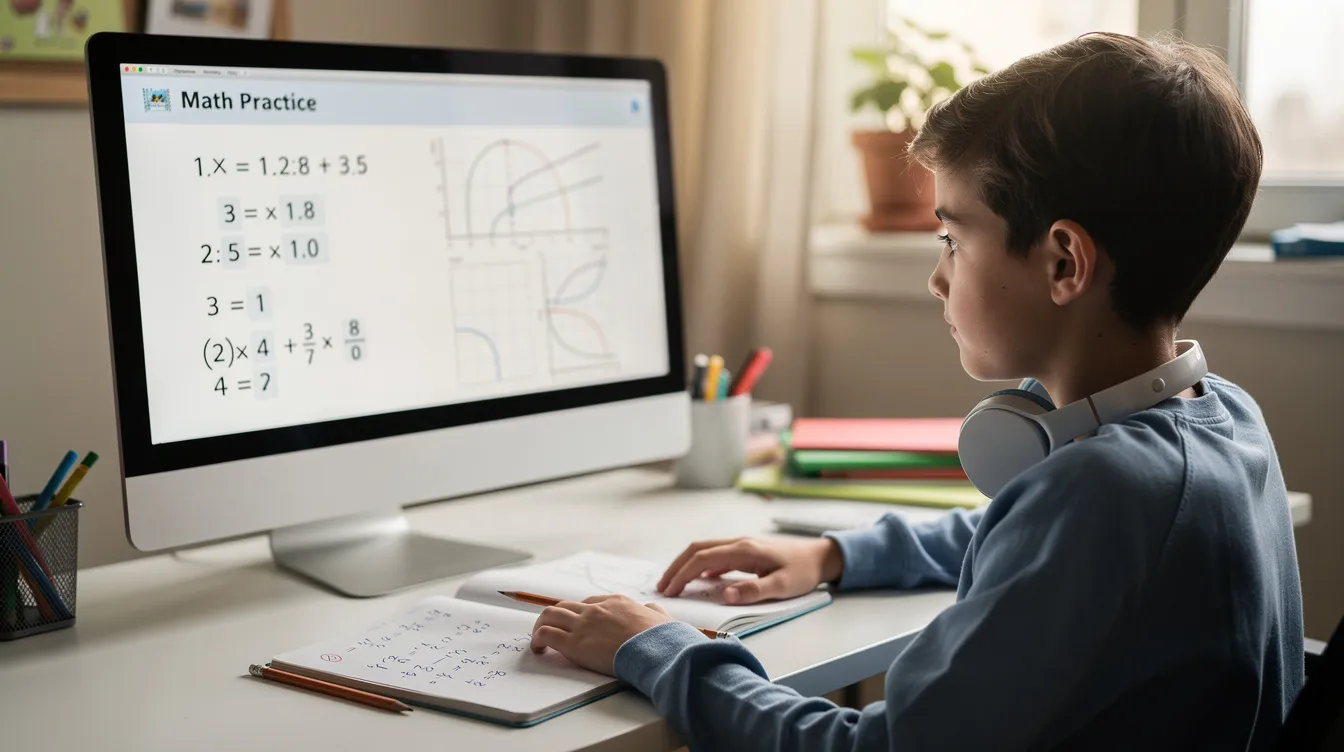
Research shows particularly strong outcomes here. One systematic review found AI interventions produced a Cohen’s d of 1.63 for arithmetic fluency—a large effect size. AI maths tutors:
- Show multiple worked examples using visual representations
- Offer step-by-step hints without revealing final answers
- Adjust question difficulty based on specific error patterns
Levelling the Playing Field: Access, Cost and Equity
Specialist tuition for learning difficulties is expensive. Private dyslexia tutoring can cost £50-150 per week. Educational psychology assessments often have months-long waiting lists. Many families in rural areas lack access to specialists entirely.
AI can democratise additional support. A subscription-based tool costing £10-30 monthly provides daily practice at a fraction of weekly in-person fees. These AI platforms often cover a wide range of subjects, from primary school core topics to secondary and junior college levels, including subjects like social studies, making them accessible and affordable for younger students and their parents. Children on waiting lists for formal assessment can receive structured help immediately.
Neuroinclusive learning removes barriers by offering multiple ways to access content, express understanding, and participate in class, which is essential for students with dyslexia, ADHD, autism, or dyscalculia.
Barriers to acknowledge:
- Not all families have reliable device or internet access
- Most tools are primarily in English
- Parents may lack digital confidence to set up and supervise tools
AI should fill gaps—extra practice, scaffolds, homework help—rather than serve as an excuse for educational institutions to withdraw funded specialist services. School support and formal assessment remain essential.
Why Human Tutors and Parents Still Matter
“Human in the loop” isn’t a buzzword—it’s a necessity. Children with learning difficulties often experience anxiety, shame, and avoidance around academic tasks. They need emotional co-regulation that technology cannot provide.
Parents and best teachers translate AI feedback into meaningful next steps. If an AI tool shows your child struggles with multi-digit addition, you or a tutor must interpret why: visual-spatial difficulty? Working memory? Anxiety? The strategies that follow depend on this human understanding.
Tutors can also teach children how to question AI answers, spot errors, and build metacognition. This is particularly important for struggling learners who may be susceptible to over-reliance on AI-generated solutions.
Effective hybrid models look like:
- Weekly online specialist sessions focused on strategy and confidence
- Daily 15-minute AI-guided practice reinforcing those strategies
- Regular check-ins between parents, tutors, and teachers to ensure alignment
Human connection remains the foundation. AI handles repetitive practice; humans handle motivation, development, and advocacy.
Risks, Limits and “Shortcut Thinking” to Watch Out For
While AI is powerful, misuse can worsen existing problems. Children who already avoid effort may find AI offers an easy escape.
Shortcut thinking occurs when children ask AI for complete solutions instead of attempting problems themselves. In maths and writing, this leads to shallow understanding and weaker retention. The learner clicks through without genuine engagement.
Privacy concerns require attention. Parents should ask:
- Where is student data stored?
- Is it used to train future models?
- Can you delete your child’s data on request?
- Is the tool designed for under-18s or repurposed from adult chatbots?
Bias risks exist too. AI not trained on diverse language patterns, accents, or learning profiles may misinterpret errors or provide unhelpful feedback to neurodivergent students.
Simple family rules help: “try first, then ask for hints not answers” and “always review AI’s work with an adult when stuck” establish healthy boundaries around adoption of these tools.
Practical Steps for Parents Getting Started in 2024-2026
If you feel overwhelmed by AI jargon, know that you can start small and still see benefits.
Step 1: Identify one concrete struggle—reading long texts, organising homework, times tables fluency.
Step 2: Choose a single AI tool that directly addresses that pain point. Speechify for reading, a visual planner app for organisation, an adaptive maths platform for calculation practice.
Step 3: Establish a simple routine:
- Set a clear goal for the session
- Let your child attempt the task first
- Use AI for targeted support
- Debrief together about what worked
Step 4: Keep sessions short. 10-20 minutes of focused AI practice beats hour-long marathons, especially for children with ADHD or processing fatigue.
Talk with teachers and existing tutors about which tools they use. Home and school strategies should align, not conflict.

Looking Ahead: What the Next Few Years Could Bring
Between 2026 and 2030, expect AI that reads a child’s handwriting and provides dyslexia-aware feedback, or listens to speech and coaches reading fluency in real time. Multimodal AI will integrate visual, audio, and written input.
Long-term learning profiles will track a child’s strengths, sensory preferences, and attention patterns across years, enabling increasingly precise personalisation. Regulations around data protection and accessibility will shape which tools educational institutions and clinicians can safely adopt.
Yet AI will not erase the need for human connection, patience, and specialist knowledge. What changes is the everyday “first layer” of support—the daily practice, the immediate scaffolds, the accessible resources. Human educators remain essential for everything beyond.
Frequently Asked Questions
Is AI tutoring suitable for very young children (ages 5-7) with learning difficulties?
AI can support early-primary children through supervised, highly visual and audio-based tools like read-aloud apps, simple phonics games, and picture-supported prompts. Independent chatbot use is not appropriate at this age. Adults should sit with the child, control prompts, and keep sessions short and playful. Prioritise tools explicitly designed for early readers rather than text-heavy interfaces.
How can I tell if an AI tool is genuinely helping my child and not just entertaining them?
Track one or two measurable outcomes over 4-6 weeks: reading fluency, homework completion time, or reduced meltdowns during study. Compare school-based progress with at-home AI use through regular check-ins with teachers. Review AI session logs to see whether your child is genuinely attempting tasks and improving, or mostly clicking through without effort.
Can AI help if my child has not yet received a formal diagnosis?
Yes. AI tools can provide helpful scaffolds like text-to-speech, structured prompts, and visual planners even before diagnosis, potentially reducing daily stress around schoolwork. However, AI should not substitute for assessment. If struggles persist, seek evaluation from qualified psychology professionals or educational specialists. Keep notes on how your child responds to different supports—this information aids future assessments.
What privacy questions should I ask before letting my child use an AI learning tool?
Ask where data is stored, how long it’s retained, whether it trains future models, and whether you can delete your child’s data on request. Choose tools with child-specific privacy protections and plain-language terms. When possible, create accounts without full names or unnecessary identifying details.
How much screen time is reasonable when using AI for learning support?
Consider total daily screen time including entertainment. AI learning sessions are most effective in 15-30 minute blocks. Mix on-screen work with off-screen activities: printed practice sheets, hands-on games, movement breaks. Focus less on raw minutes and more on quality—clear goals, active engagement, and visible progress.
Comments are closed