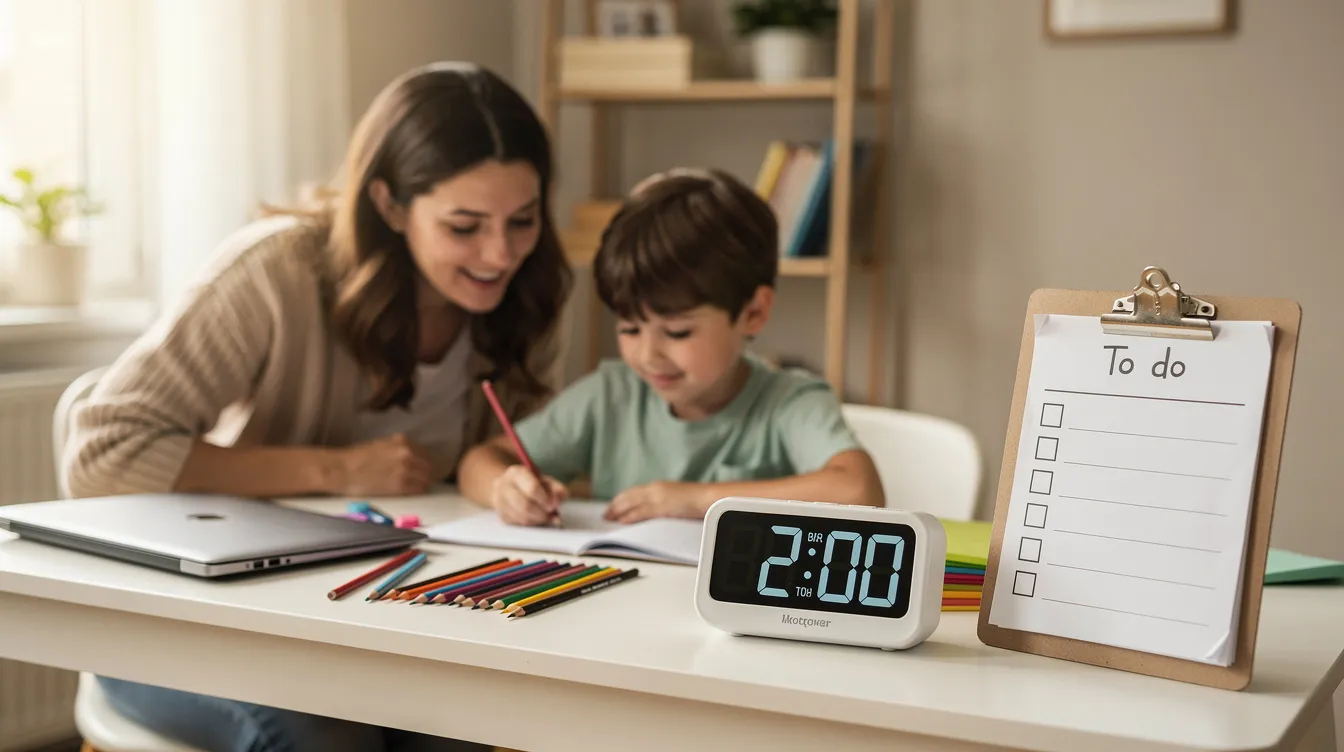
Key Takeaways
- Most schoolwork avoidance in Singapore children is a protective response to cognitive overload, not laziness or defiance. Children avoid schoolwork due to multiple academic, emotional, cognitive, and environmental factors working together.
- Three core drivers fuel the pattern: weak task initiation that makes starting feel impossible, overloaded working memory that causes the brain to “hang,” and rising task anxiety from repeated struggle and criticism.
- Nagging, stricter discipline, and stacking more tuition often intensify avoidance instead of building the executive function skills a child actually needs.
- Concrete, Singapore-specific home strategies-micro-steps, focus sprints, visual supports, and structured homework routines-can reduce cognitive load and rebuild confidence during daily homework.
- Where home strategies are not enough, process-based learning intervention and executive function coaching give children the internal tools to start and finish work calmly and independently.
Introduction: The Anatomy of Task Avoidance
It is 4.30 pm. A Primary 4 child in Singapore sits at the dining table with his English and Math homework fanned out in front of him. Within the first two minutes, he has sharpened two pencils, asked for water, announced he needs the toilet, and is now peeling the eraser wrapper into tiny strips. When his mother reminds him to begin, he slumps, groans, and picks a fight with his younger sister over whose colour pencils are whose. The homework has not moved past the date line.
Many parents watching this scene will arrive at one conclusion: “He is lazy,” or “She is just being defiant.” But something quite different is happening inside the child’s brain-something that has very little to do with attitude and everything to do with how the brain processes effort, uncertainty, and the threat of failure.
- Children do not naturally hate learning. Avoidance is rarely just about laziness or defiance. When a child chronically avoids schoolwork, they are using behavioural avoidance to shield themselves from uncomfortable cognitive friction or anticipated failure.
- Avoidance tends to escalate at predictable transition points-P3 when Science is introduced, P5 when syllabus depth increases, and Sec 1 when organisational demands multiply.
- This article unpacks why children begin avoiding schoolwork, why it gets worse over time, and what concrete steps families in Singapore can take to change the pattern.

From “Won’t Do” to “Can’t Yet”: Reframing Schoolwork Avoidance
The single most important shift a parent can make is to move from “won’t cooperate” to “can’t cope yet without more support and scaffolding.” This is not about excusing poor behaviour. It is about accuracy: if the real barrier is cognitive, then a behavioural punishment will never remove it.
Children often avoid schoolwork due to emotional distress or learning difficulties that are invisible during the school day. A child may appear fine in class-answering orally, following the teacher-but melt down at home over spelling lists, Science open-ended questions, or long Chinese comprehension passages. The classroom offers structure, pacing, and teacher prompts. The dining table at 7 pm offers none of those.
- Instead of: “You’re just being lazy. Sit down and do it now.” Try: “Your brain is working very hard. Let’s figure out why this feels so heavy.”
- Instead of: “Your brother finishes his work in 20 minutes. What’s wrong with you?” Try: “Everyone’s brain handles tasks differently. Let’s find what helps yours get started.”
- Instead of: “If you don’t finish, no iPad tonight.” Try: “I can see this feels like a lot. Let’s break it into smaller pieces and start with just one.”
This reframing lowers anger and opens space for problem solving instead of nightly shouting matches.
The 3 Underlying Cognitive Drivers of Avoidance
Task avoidance is usually driven by three interacting factors rather than attitude alone. Understanding these drivers gives parents a better understanding of what is actually happening when their child stalls, erases, or shuts down.
- Weak task initiation and executive control: The brain struggles to transition from rest to effortful work, creating a mental paralysis when looking at a blank page. Task initiation is a core executive function skill for students of every age.
- Working memory and processing overload: Holding complex, multi-step instructions while retrieving concepts drains mental bandwidth rapidly, making even simple assignments feel like an insurmountable wall. Cognitive overload occurs when tasks are too complex or lengthy for the child’s current capacity.
- Task anxiety and learned helplessness: Expecting to make errors or get criticised leads children to use avoidance (“I don’t care,” “This is boring”) as a psychological shield to protect self-esteem. Fear of failure is a common cause of homework anxiety.
These are all aspects of the child’s executive functions-the brain’s management system for planning, starting, switching, remembering, and finishing tasks. Executive functions include inhibition, working memory, and cognitive flexibility, and they are still developing well into the mid-20s. The good news: they can be strengthened over time.
Driver 1: Weak Task Initiation & Executive Control
Task initiation is the ability to start a non-preferred or effortful activity without long delays, stalling, or drama. It is the bridge between “I know I should start” and “I am actually writing.” When that bridge is underdeveloped, the child’s brain feels stuck in neutral-even when the child genuinely wants to do well.
- P2 child: Stares at a blank spelling page for 15 minutes, arranges and rearranges stationery, cannot write the first word without a parent sitting beside them.
- P5 child: Spends 20 minutes “getting ready” to start a composition-sharpening pencils, adjusting the lamp, flipping through pages-before writing a single sentence.
- Sec 1 teen: Opens the Geography textbook, then reaches for the phone “just to check one thing,” and 40 minutes later has not started.
ADHD makes starting tasks feel overwhelming for students because the brain’s dopamine-driven activation system is less responsive to non-preferred tasks. Children with ADHD often experience time blindness regarding tasks, making a 30-minute assignment feel either infinite or invisible. Students with ADHD may delay starting tasks due to anxiety about not knowing where to begin. But weak task initiation is not exclusive to ADHD-it affects many neurotypical children whose executive function skills are simply still developing.
These behaviours are frequently misread as attitude when they are really a neurological gap the child has not yet bridged.
Driver 2: Working Memory, Short-Term Memory & Processing Overload
To understand why a child freezes mid-question, it helps to know the difference between two memory systems.
- Short term memory holds small bits of information briefly-like remembering a phone number long enough to dial it.
- Working memory actively holds and manipulates information to solve problems-like reading a multi-step Math heuristics question, identifying the model-drawing steps, keeping track of units, and performing calculations simultaneously.
Working memory is essential for reasoning and problem-solving tasks. When too many operations pile on at once, the system overloads. This is where cognitive load theory becomes practical for parents: every task has intrinsic load (the complexity of the subject matter itself) plus extraneous load (messy layouts, unclear instructions, noisy environment). When both exceed working memory capacity, the brain effectively “hangs.”
A Singapore-based study by Ng and Lee (2016) found that 11-year-olds with higher trait anxiety showed impaired working memory during mental arithmetic-not because of momentary stress, but because chronic anxiety was already consuming executive attention before the task even began.
Behaviours that signal overload:
- Erasing work repeatedly, then rewriting the same line
- Jumping steps or skipping lines in Math problem sums
- Staring blankly and saying “I don’t know” for material they learnt yesterday
- Asking you to read the question again and again
Inhibitory control-the ability to resist temptations and impulsive actions-also plays a role. A child whose inhibition is weak will grab distractions (fidgeting, doodling, chatting) the moment working memory is strained. Cognitive flexibility, the capacity to adapt to new demands and perspectives, allows children to switch between subjects or adjust when a question is worded differently from what they practised. When any of these executive functions falter under load, schoolwork stalls.

Driver 3: Task Anxiety, Shame & Learned Helplessness
Task anxiety is fear triggered not by the subject itself, but by the memory of how homework usually goes: scolding, red crosses, or the sinking feeling of being stupid. Fear of failure can trigger avoidance behaviour in children long before the pencil touches the page.
Homework anxiety affects children’s ability to focus and enjoy learning. When a child has been corrected repeatedly on P3 Science open-ended questions or has had compositions returned covered in red marks, they build a mental file: “No matter how hard I try, it’s wrong.” This is the pathway to learned helplessness. Low self-efficacy leads to learned helplessness in children-they stop believing that effort makes any difference.
- The child gives up quickly, shrugs, or pretends not to care.
- They joke around, act silly, or say “This is boring” to deflect attention from their struggle.
- They pick fights or create distractions so they never have to face the moment of sitting down and potentially failing again.
Avoidance statements like “Later lah” or “I don’t care about this subject” act as emotional shields. Adults misread them as laziness, but the child is protecting the last shred of their self-concept. Perfectionistic tendencies may also lead to avoidance of schoolwork-some children would rather not try at all than produce something imperfect.
How the Singapore School & Tuition Load Fuels Avoidance
Consider the typical daily load for a Primary 5 child in Singapore: English worksheet, Math problem sums, Chinese workbook passage, Science revision notes, and possibly a spelling test to prepare for. Add tuition homework from one to three centres-often another stack of worksheets or an assessment book chapter-and the child’s evening stretches past 10 pm.
Data from several Singapore primary schools show that P5–6 students may spend 8 to 11 hours per week on school homework alone. This does not include tuition assignments, CCA commitments, or enrichment classes.
- An overwhelming workload can increase homework anxiety in children, turning mild reluctance into full-blown refusal.
- Tight schedules are common triggers for homework anxiety-when every evening is packed, there is no buffer for a child who processes slowly or needs more breaks.
- High parental expectations can create stress around academic performance, especially when parents compare their child’s pace with classmates or siblings.
- Boredom with repetitive tasks can cause disengagement. When a child has already done the same type of fraction question at school and then faces 20 more at the tuition centre, motivation drops.
Key risk points:
- P3 transition: Science is introduced, adding a new subject with open-ended written answers that tax language and reasoning simultaneously.
- P5 syllabus deepening: Math heuristics become multi-step, English comprehension passages grow longer, and exam pressure builds toward PSLE.
- Sec 1 adjustment: Multiple teachers, different platforms (Student Learning Space, Google Classroom), CCA schedules, and greater independence expected-all demanding organisational skills the child may not yet have.
Early Red Flags: What Schoolwork Avoidance Looks Like in Primary Years
Catching the pattern early allows gentler interventions before PSLE pressure peaks.
Lower primary (P1–P2):
- Frequent toilet or water breaks every few minutes during homework
- Needing a parent beside them for every single sum or spelling word
- “Forgetting” to bring books or worksheets home regularly
- Crying or whining before homework even begins
Mid-primary (P3–P4):
- Rewriting neat headings repeatedly instead of answering questions
- Taking 40 minutes for 5 spelling words
- Erasing whole paragraphs of composition because “it’s not good enough”-perfectionistic tendencies that mask anxiety rather than reflect high standards
- Complaining of stomach aches or headaches only on school nights
Upper primary (P5–P6):
- Hiding unfinished work or stuffing incomplete worksheets deep into the school bag
- Rushing through homework with careless errors to “get it over with”
- Emotional meltdowns when corrections are pointed out
- Disengagement can indicate unmet emotional or academic needs-not simply a “bad attitude”
How Avoidance Evolves in Secondary School
In Sec 1–3, homework avoidance often shifts from visible stalling to quieter, more hidden forms.
- Quietly not submitting work and hoping the teacher does not notice
- Copying answers from classmates during recess
- Last-minute cramming the night before tests, then claiming “I studied”
- Scrolling the phone for long periods before starting, losing track of time entirely
Social pressure from peers can influence academic engagement: teens who see friends struggling or dismissing certain subjects may adopt the same stance. A lack of autonomy-being told exactly when, where, and how to study-can lead to passive avoidance behaviour, where the teen technically sits at the desk but produces nothing.
The planning and time management demands multiply: subject rotations, project deadlines, WhatsApp group-chat distractions, and CCA schedules all require the teen to track multiple commitments mentally. A Sec 2 student who avoids Geography and History readings may not be uninterested-the dense text simply exhausts working memory within minutes, and without a clear plan for how to break the reading into chunks, avoidance feels like the only option.
Why Nagging, Threats & Punishments Backfire
When a parent confiscates the iPad, delivers a 30-minute lecture at 10.30 pm, or compares siblings’ grades at the dinner table, they are activating the child’s stress response. Cortisol and adrenaline flood the brain-and these hormones further impair the prefrontal cortex, worsening task initiation and working memory exactly when the child needs them most.
Anxiety can drain cognitive resources needed for schoolwork. Adding more anxiety through threats does not build the skill that is missing; it only increases fear.
- Scenario 1: Parent shouts “Start your Math NOW or no screen time for a week.” The child sits, heart pounding, stares at Question 1, and cannot process the numbers. Parent interprets this as defiance, escalates further.
- Scenario 2: Parent compares: “Your cousin scores A for Science; why can’t you even finish the worksheet?” The child internalises: “I’m the stupid one.” Shame deepens. Avoidance entrenches.
Strained teacher-student relationships negatively impact student engagement in school; the same principle applies at home. When the parent-child bond is defined by nightly conflict over homework, the child loses the emotional safety needed to take cognitive risks. These strategies may produce one night of forced compliance, but they deepen shame and avoidance in the long run.
When behaviour is driven by “can’t” rather than “won’t,” increasing punishment does not build skill. It only builds walls.
Why “More Tuition” Often Makes Things Worse
Many parents respond to avoidance by adding more content-focused tuition, assuming the problem is not enough practice. The logic feels sound: if the child struggles with Math, more Math worksheets should help.
But this stacks more worksheets onto an already overloaded working memory system, accelerating burnout and resentment. Homework anxiety can lead to negative impacts on academic performance when the total volume exceeds what the child’s cognitive system can absorb. Children with learning differences may find standard tasks exhausting even in manageable quantities-doubling the quantity does not halve the difficulty.
- Conventional tuition targets syllabus knowledge-what to learn-not the underlying executive functions (planning, organisation, sustained attention) that are breaking down.
- Without improving how the child processes, plans, and manages effort, more content simply creates more friction.
- The child begins to associate all study-school, home, and tuition-with stress, which eliminates any remaining intrinsic motivation.
Understanding why tuition doesn’t help some children can help parents distinguish between a knowledge gap (where tuition is useful) and a processing gap (where it is not).
Distinguishing Learning Difficulties from “Laziness”
How can parents start to tell whether their child is genuinely choosing not to work, or is blocked by something they cannot see?
- Large gap between oral ability and written output: The child explains the Science concept perfectly aloud but cannot write a coherent answer. This points to processing or language-output difficulties, not laziness.
- Extreme slowness: Completing assignments takes two to three times longer than peers consistently, not just occasionally.
- Inconsistent performance: The child scores well one week and poorly the next on the same topic-suggesting that performance depends on cognitive load and state rather than knowledge.
- Subject-specific meltdowns: Avoidance only for writing, or only for Math problem sums, or only for Chinese-hinting at a specific processing bottleneck.
- Perceived irrelevance of assignments may lower intrinsic motivation, but when avoidance is paired with visible distress, the issue usually runs deeper than boredom.
Mislabelling these signs as “lazy” damages motivation and self-concept, especially around P4–P6 when academic identity is forming. For a detailed breakdown of how to read these patterns, explore the guide on the difference between learning difficulties and laziness.
How Cognitive Load Theory Explains Erasing, Stalling & “Blank Mind” Moments
Cognitive load theory offers a simple and powerful lens: the brain’s working memory has limited slots. When too much is loaded into those slots at once, the system does not slow down gracefully-it stalls, freezes, or dumps information entirely.
- P5 Science example: A five-mark explanation question requires the child to recall a concept, structure an answer logically, use scientific vocabulary, write in full sentences, and check grammar-all simultaneously. Each demand occupies working memory. When the total exceeds capacity, the child stares at the page, writes nothing, or produces a single confused sentence.
- Composition writing: The child must hold the topic, plan a storyline, choose vocabulary, maintain grammar, apply a structure the teacher taught, and remember the word count-all at once. Too many choices can lead to cognitive overload in students.
Breaking tasks into smaller chunks reduces cognitive overload because each chunk fits within working memory limits. Presenting only essential information-highlighting the key instruction, covering other questions-prevents extraneous load from consuming bandwidth meant for actual thinking.
Visible behaviours connected to overload:
- Constant erasing and restarting
- Freezing at Question 1 and skipping to Question 5, then back again
- Rewriting introductions three times
- Asking “What do I do?” repeatedly despite clear instructions on the page
These are not signs of carelessness. They are signs of a brain trying to process more than it can hold.

Emotional Fallout: Family Conflict, Sibling Comparisons & Nightly Battles
Picture the common evening script: a parent rushes home from work at 7 pm, dinner is quick, and by 7.45 pm the homework battle begins. By 9.30 pm, only half the work is done, voices are raised, and the child is in tears. This scene repeats five nights a week.
- Family stressors can impact a child’s focus and engagement. Financial pressure, marital tension, or a parent’s own work stress all pour into the homework table, even unintentionally.
- Emotional and social factors interact to affect school engagement. When home becomes a place of nightly conflict, the child loses the safe base they need to take risks in learning.
- Sibling comparisons-“Why can your brother do his work and you cannot?”-create shame spirals. The struggling child stops trying to match the sibling and instead withdraws further.
- Over months and years, the child begins to associate “family time” with nagging and criticism. Connection erodes. By the time they are teens, they may shut down communication entirely.
De-escalation and relationship repair are part of academic support, not separate from it. A child who feels emotionally safe at home has more cognitive bandwidth to tackle a difficult task.
When Avoidance Signals Deeper Executive Function Bottlenecks
Executive functions are the brain’s management system-planning, starting, switching between tasks, holding information, and knowing when to stop. Executive functions are critical for academic success and life skills, and they develop unevenly across childhood.
Look beyond homework for clues:
- Chronically messy school bag with crumpled worksheets stuffed at the bottom
- Always forgetting files, water bottles, or PE attire
- Trouble following multi-step instructions at home (“Go upstairs, brush your teeth, put on pyjamas, and bring down your reading book”-child does one step and forgets the rest)
- Difficulty stopping a game or video when time is up
If managing daily routines is already hard, juggling multiple assignments at night becomes overwhelming. These everyday struggles are part of the same executive function picture that drives homework avoidance. When the pattern persists across home and school for more than a few months, it may warrant a closer look from a psychologist or learning specialist.
The encouraging news: EFs can be improved through training and practice at any age. The brain remains plastic, and targeted intervention can build the skills that daily life demands.
Rebuilding Task Engagement: Process-Based Intervention
The shift that changes everything is moving from focusing only on marks and content to strengthening the cognitive “engine” that powers the learning process itself.
- Process-based intervention means targeted practice for working memory, attention, task initiation skills, and learning stamina-not more worksheets on the same syllabus topics.
- When the engine runs more smoothly, the child experiences less friction when facing homework. Avoidance becomes less necessary because starting and sustaining effort feels achievable.
- This approach does not replace school or tuition content. It builds the foundation that allows content learning to stick.
The sections below cover strategies parents can try at home, followed by professional supports available in Singapore.
Micro-Steps: Externalising Task Initiation So Starting Feels Possible
The biggest barrier is often the first five seconds. By slicing assignments into the smallest visible actions, parents can lower the activation barrier so the child’s brain can cross it.
- General principle: Replace “Do your homework” with one tiny, concrete action: “Write the date and your name.”
- English composition: “Just brainstorm 3 ideas on scrap paper. We won’t write anything yet.”
- Math problem sums: “Circle all the important numbers in Question 1. That’s all for now.”
- Chinese workbook: “Read the first paragraph aloud to me. Just the first one.”
- Science open-ended: “Underline the key word in the question. Now tell me the answer in one sentence-don’t write yet.”
Setting shorter deadlines helps manage overwhelming tasks: “Let’s do the first two questions. Then we decide together whether to continue or take a break.”
Children benefit from clear instructions and structured routines when completing assignments. When the child sees that starting means doing one small, manageable thing-not facing the whole mountain-task initiation becomes possible. Over time, the child internalises these micro-steps and begins chunking tasks on their own.
Focus Sprints & Visual Supports to Avoid Cognitive Overload
Long, unbroken blocks of homework after a full school day are a recipe for cognitive overload. Short, timed focus sprints protect the brain from draining completely.
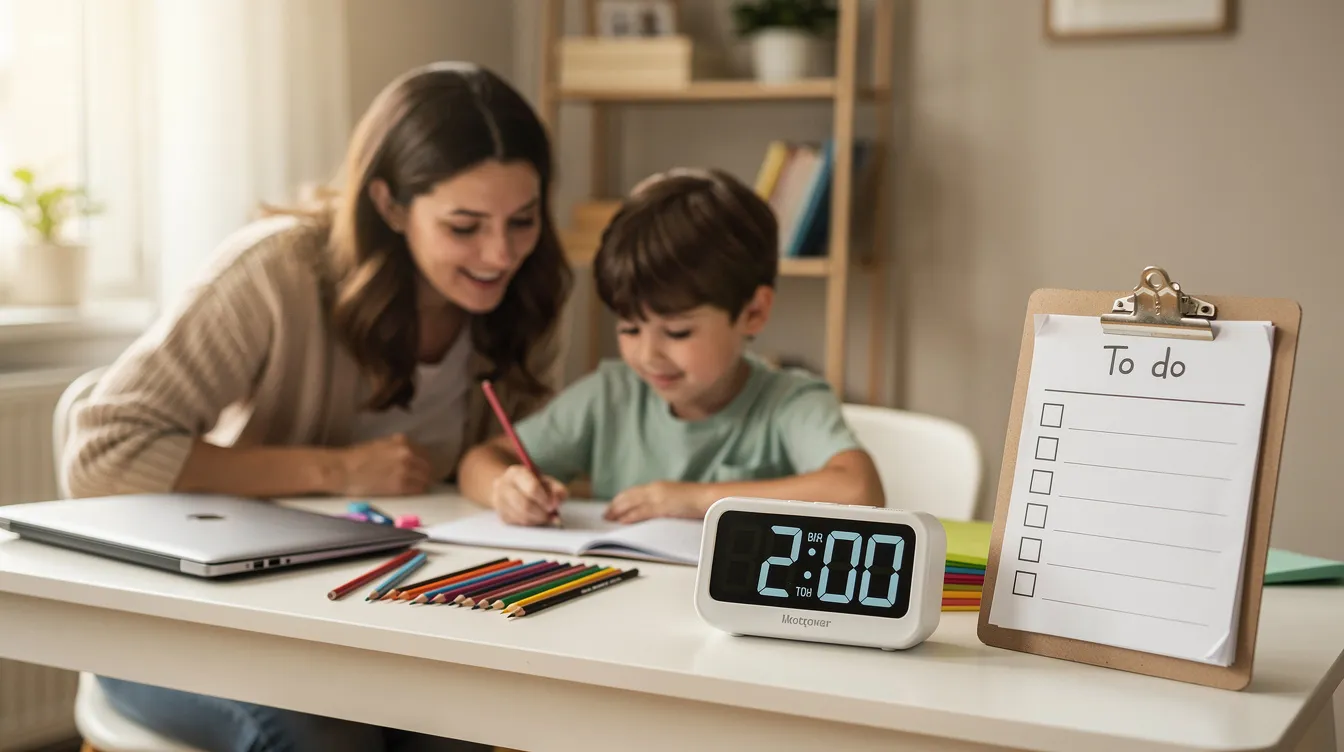
- Use a visual timer (sand timer, phone timer on the table) set for 10–15 minutes. The child works on one task during that sprint.
- After the sprint, take a 3–5 minute movement or water break. Stretching, walking to the kitchen, or even 10 jumping jacks reset attention.
- Repeat for two to three sprints. Most P3–P5 homework can be managed in three focused sprints rather than one 90-minute marathon.
Visual supports unburden working memory by getting information out of the child’s head and onto paper or a board:
- Simple checklists: a sticky note listing tonight’s three tasks, ticked off as each is done
- “First–then” boards for younger children: “First: Math 2 pages. Then: 5-minute Lego break.”
- Colour-coded subject folders or stickers so the child does not have to remember which book is for which subject
- A weekly planner for Sec 1–2 teens, mapping assignments by day so deadlines are visible, not stored in their heads
Homework anxiety can have lasting consequences if unaddressed-but these simple tools give the child a sense of control and predictability that calms the nervous system.
For children whose attention and stamina remain fragile despite home adjustments, targeted focus and attention support can build the baseline capacity that makes focus sprints effective.
Designing After-School Routines That Respect Executive Function Fatigue
After school is when executive function resources are at their lowest. Expecting a child to launch into a long homework block immediately is like asking someone to sprint after running a marathon.
A simple routine template for a Singapore primary school child:
- 3.30–4.00 pm: Arrive home, snack, free play or rest (no homework)
- 4.00–4.15 pm: Short movement-cycling, playground, or even dancing in the living room
- 4.15–4.45 pm: Focus Sprint 1 (one subject, visual timer, then break)
- 4.45–5.00 pm: Break (water, stretch, chat)
- 5.00–5.30 pm: Focus Sprint 2 (second subject)
- 5.30 pm onward: Dinner, family time, reading, wind-down
On tuition days, adjust: if tuition ends at 6.30 pm, shift remaining homework to a single 15-minute sprint after dinner, with the understanding that not all tasks may be completed perfectly. Predictable start times and end times prevent homework from stretching endlessly into the night.
Co-design the routine with your child for buy-in: “When do you feel your brain works best? Should we put Math first or English first?” When the child chooses, they feel a sense of agency rather than being controlled-and this matters because a lack of autonomy can deepen passive avoidance.
Teaching Time Management in Child-Friendly Ways
For many children-especially those with attention difficulties-time is felt, not seen. Telling a child “You have one hour” is abstract and unhelpful. They cannot feel how long an hour is.
- Use visible clocks and timers. Place an analogue clock next to the homework area; point to where the hand will be when it’s break time.
- Run a very short planning huddle before homework: “What 3 things do we need to finish before 8.30 pm?”
- Model chunking aloud: “Math 15 minutes, break, English 10 minutes, break, Chinese 15 minutes.” Write it on a whiteboard or sticky note.
- For teens: a digital planner or even a simple notes app where they list each subject and estimate the time needed. After homework, compare estimates with reality-this builds time awareness without pressure.
When the child sees a clear plan with built-in breaks, the feeling overwhelmed sensation drops. Time management becomes a concrete, visual skill rather than an invisible demand.
Supporting Emotion: De-escalation, Validation & Repair
A panicked child cannot think clearly. Emotional safety is a prerequisite for using higher-level executive functions. If the child is dysregulated-crying, shouting, shutting down-no amount of instruction will land.
- Validate first, solve second: “It looks really tough. No wonder you don’t feel like starting. Let’s figure out one small step together.”
- Name the feeling: “You seem frustrated. That makes sense-this worksheet is long.”
- Take your own time-out: When you feel your own frustration rising, say, “I need a two-minute break to calm down. I’ll be right back.” This models self-regulation rather than shouting.
- Build non-academic connection: Regular walks, board games, supper together, or even a 10-minute chat before bed about anything other than school. Children need a sense of belonging to engage in learning-and that belonging starts at home.
A child’s relationship with teachers influences their willingness to participate in learning at school; the parent-child relationship plays the same role at home. When the relationship is warm, the child is more willing to tolerate the discomfort of a difficult task.
When to Seek More Support Beyond Home Strategies
Home strategies are a powerful first step-but they are not always sufficient. Here are signs that professional input may help:
- Persistent meltdowns around homework lasting more than 3–6 months across multiple subjects
- Significant drop in grades despite consistent effort
- School comments about incomplete work, late submissions, or zoning out in class
- The child expressing hopelessness: “I’m stupid,” “What’s the point,” or refusing to go to school
- Sleep changes, stomach aches before school, or crying spells linked to academic tasks
- Students from marginalised backgrounds may experience micro-alienation in the classroom, adding another layer that home strategies alone cannot address
Professionals who can help in Singapore:
- Educational psychologists: Formal assessments for learning difficulties, IQ-achievement discrepancies, attention profiles
- Clinical psychologists: Anxiety, emotional regulation, or behavioural concerns
- Learning interventionists: Process-based cognitive support targeting working memory, attention, and executive functions
- School counsellors: A first point of contact who can liaise between home and school
Seeking help is not an admission of failure. It is a proactive step to understand the child’s brain and provide tailored extra support. In some cases, formal assessment clarifies whether attention, language, or specific learning difficulties are present-giving both the child and the family a clear path forward.
What Specialised Learning Intervention & Executive Function Coaching Do
A learning intervention is systematic, process-based support that targets how a child learns, not just what they learn in each subject. Unlike tuition, it does not primarily drill curriculum content. Instead, it strengthens the cognitive infrastructure that makes all learning possible.
- Working memory training: Structured exercises that gradually increase the amount of information the child can hold and manipulate, reducing the experience of cognitive overload during homework.
- Attention and tracking: Practice in sustaining focus, filtering distractions, and shifting attention between tasks-skills students learn to apply across subjects.
- Task initiation and planning systems: Building habits for how to start, how to organise materials, and how to sequence steps before diving in.
Executive function coaching differs from tuition in a critical way: it teaches transferable systems for planning, task initiation, time management, and self-monitoring that generalise across subjects and into daily life. A child who learns to break down a Science question into steps can apply the same process to a History source-based question or a Math problem sum.
Teacher support corresponds with greater student engagement in school, and the same principle applies to specialist support: when a trained professional scaffolds the process, the child begins to believe “I can manage this,” and avoidance fades.
Working with Schools & Teachers in the Singapore Context
Parents and teachers are on the same side. Constructive communication about schoolwork avoidance helps both parties support students more effectively.
What to share with teachers:
- Concrete homework behaviours at home: “She takes 45 minutes for 5 Math questions and erases most of her work.”
- How long tasks actually take versus how long they are expected to take
- What supports already help a little: “He manages better when I read the question aloud first.”
What to request (where appropriate):
- Clearer or simplified instructions on worksheets, especially for open-ended tasks
- Reduced copying requirements-some children spend 20 minutes copying questions before they can start answering
- Split deadlines during high-load weeks (e.g. mid-year exam revision period)
- Alignment of strategies: if checklists or visual cues work at home, sharing these with the teacher may help in class too
Sample questions for parent-teacher meetings:
- “Is my child completing work in class, or does she need more support to finish?”
- “Are there specific subjects or question types where you notice her stalling?”
- “Would it help if I shared the strategies we use at home so we can be consistent?”
Conclusion: From Avoidance to Agency
Schoolwork avoidance is usually a signal of overload and skill gaps, not a fixed character flaw. When children receive the right cognitive scaffolding-micro-steps, visual supports, structured routines-and emotional safety from the adults around them, their natural curiosity and drive to master skills re-emerge.
- The goal is not to remove all challenge from homework. It is to make challenge manageable so the child can engage rather than flee.
- Moving from nightly enforcement to collaborative problem solving strengthens both learning and the parent-child relationship.
- With patient adjustments and, where needed, specialised support, children can learn to start, persist with, and complete work more independently.
The simple belief that a child is lazy closes doors. The accurate understanding that a child’s brain needs more support opens them. When we stop asking “Why won’t you just do it?” and start asking “What does your brain need right now?”, the homework table transforms from a battlefield into a workshop-and the child’s mental health is protected in the process.
Frequently Asked Questions
How do I tell if my child’s avoidance is just a phase or something more serious?
- Short-term avoidance around exams, school transitions, or a new subject can be normal. Most children feel stuck occasionally.
- If the pattern persists over 3–6 months across multiple subjects-and you notice increasing intensity (longer meltdowns, more frequent refusals)-it likely points to deeper executive function or learning issues rather than a phase.
- Track practical data: how many minutes per assignment, how many prompts needed, and whether teachers raise similar concerns.
- Seek professional input if avoidance is accompanied by sleep changes, stomach aches, crying spells, or statements like “I’m stupid” or “What’s the point.” These may signal that the child’s mental health is affected beyond homework.
Should I reduce my child’s tuition or enrichment if they are already avoiding homework?
- Review the total weekly load honestly. If homework time from school plus tuition exceeds recommended guidelines or leaves no downtime, something needs to give.
- Tuition that adds heavy worksheet homework on top of school assignments may need to be trimmed-especially if it targets content the child already covers in class.
- Prioritise supports that build underlying skills (attention, working memory, planning) rather than stacking more of the same content practice.
- Trial a 1–2 month period with a reduced load and more structured home routines. If task initiation and mood improve, the reduction was warranted. If not, the issue may require specialised assessment.
What can I say to relatives who think my child is just “spoilt” or “lazy”?
- Keep it simple and factual: “His brain works very hard to keep up. When it’s overloaded, he shuts down. We’re working on strengthening his focus and planning, not just forcing more homework.”
- You can explain that avoidance is linked to cognitive overload and anxiety, not a lack of care about school-research consistently shows this.
- You do not need to justify every parenting decision. A calm, brief response-“We’re following professional guidance that fits his needs”-is enough.
- Redirect the conversation: “We appreciate your concern. The best way to help right now is to keep homework time calm and supportive when he’s at your place.”
How much help should I give during homework without doing it for my child?
- Adopt a coaching stance: help with the first step, break questions down, check understanding-but let the child write the answers themselves.
- A useful rule of thumb from NIE researchers: if you are talking more than your child during homework, you may be over-helping. Aim to ask guiding questions (“What do you notice about the numbers?”) rather than giving answers.
- Note which prompts actually help the child move forward-these are the prompts they can eventually internalise as self-talk when working alone.
- Gradually fade your presence: sit nearby but not right next to them, then move to the next room, checking in at sprint breaks.
Is it too late to work on executive functions if my child is already in Secondary school?
- Executive functions continue developing into the mid-20s. Sec 1–4 is still a powerful window for change-as is the period for young adults and even college students building independent study skills.
- Strategies may look different for teens: digital planners, self-monitoring checklists, collaborative goal-setting rather than parent-directed routines.
- The principles remain the same: reduce extraneous cognitive load, teach planning and task initiation explicitly, and create emotional safety around making mistakes.
- If independent study habits and planning remain weak despite consistent home efforts, executive function coaching or learning intervention can provide structured, professional support to bridge the gap. Family members play a role too-siblings and parents modelling planning and self regulation at home normalise these skills as part of everyday life, not just “homework fixes.”
Comments are closed