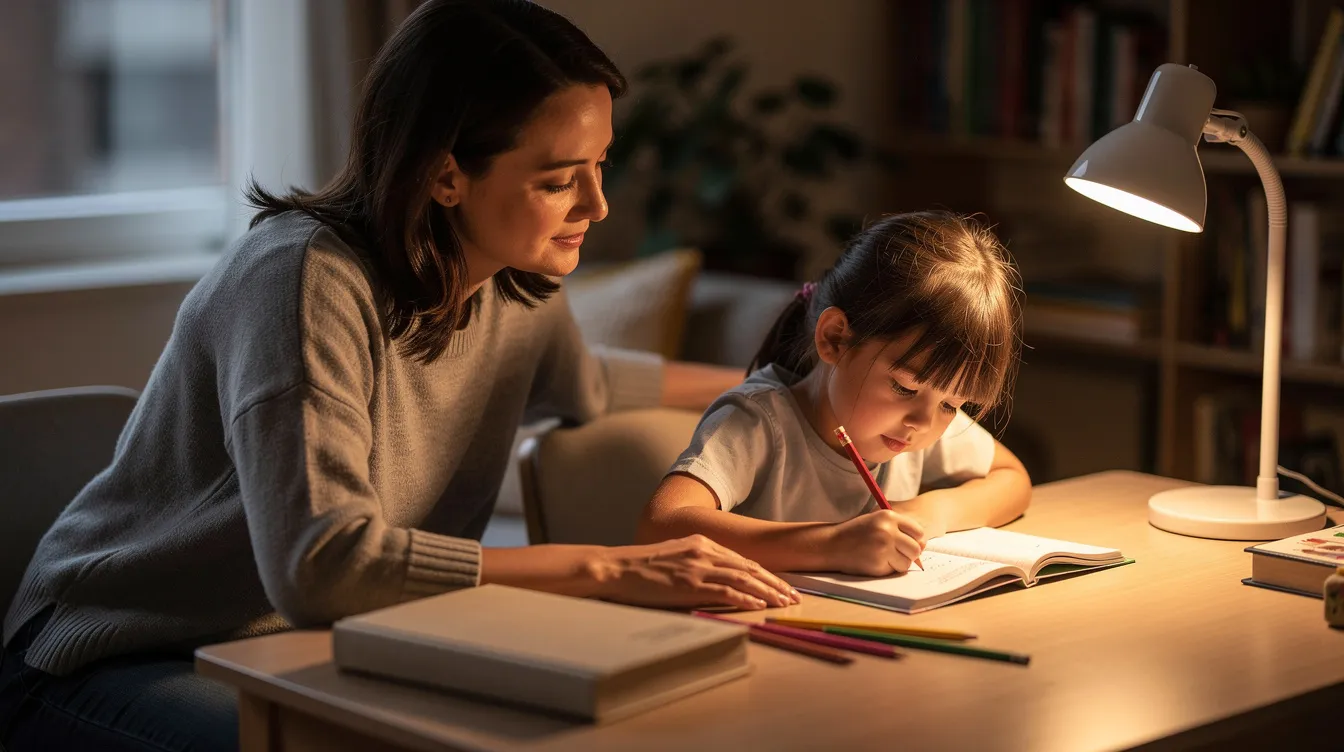
Every evening in thousands of Singapore homes, the same scene plays out: a parent sits beside their Primary 4 or 5 child for two hours, pointing out every mistake, repeating instructions, and managing each step of the homework. The child waits to be told what to do next. The parent grows exhausted. Nothing changes.
This article breaks down why that pattern persists and what to do about it, with strategies grounded in educational psychology and local research.
Key Takeaways
- Homework battles are usually linked to weak self regulation skills and underdeveloped executive functioning, not laziness or poor parenting. This is especially common among Primary 3 to Secondary 2 students adjusting to rising workload and PSLE or O-Level pressure.
- Independent learning is not a personality trait. It is a set of trainable skills: task initiation, planning, self-monitoring, and frustration tolerance. Children can develop these through small, consistent routine shifts at homework time.
- Constant supervision and drill-focused tuition often increase dependency. The child performs when watched but struggles alone in exam conditions or when secondary school workload jumps.
- A consistent homework routine reduces resistance. Pairing that routine with visual checklists, coaching questions, and brief reflection exercises builds habits that replace nagging.
- Cognitive Development Learning Centre builds independent learners through 1-to-1 cognitive coaching, executive functioning intervention, and self-regulation training, not homework babysitting or worksheet drilling.
From Nightly Homework Battles to Independent Learning
Picture this: it is 7:30 pm on a Tuesday. A parent in Tampines sits at the dining table beside their Primary 5 child. The child stares at an open maths worksheet, pencil untouched. The parent says, “Start with question one.” The child writes one digit, then stops. “Is this right?” Across the room, a younger sibling waits for bedtime reading that never happens because homework is still not done.
This is what homework battles, or homework struggles, look like for many parents in Singapore. The stalling after dinner. The “I don’t know how” before attempting a single worksheet. The meltdowns before mid-year exams. The dependence on a tutor to sit and watch every step.
The core problem is tutor and parent dependency. When children only work with an adult beside them, they cannot transfer that capacity to an exam hall, a new classroom, or a secondary school environment where teachers do not hover. Independent learning is not something a child is born with. It is a cluster of skills, including task initiation, planning, self-checking, and emotional regulation, that can be built over time. This article provides specific routines and scripts you can use this week to begin stepping back, especially when these scenes feel overwhelming for children as well as adults.
What Is Independent Learning (for Primary and Secondary Students)?
Independent learning means a child can start, organise, and complete school work with only light guidance, not step-by-step supervision. Students who engage in independent learning show higher academic achievements because they take ownership of their learning process rather than waiting for instructions at every turn.
A common myth: “independent learning means leaving them alone.” The reality is different. Children need scaffolding, clear frameworks, and coaching in self-monitoring before they can operate alone. Independent learning enhances problem-solving skills and deeper understanding because the child practises thinking, not just copying.
What this looks like changes with age. A Primary 2 child might set up spelling revision using a simple checklist. A Secondary 1 student might plan revision for a class test across three evenings without being told. Independent learning skills shift responsibility from adults (reminding, checking, planning) to the child, gradually. Independent learning also builds self direction and personal responsibility, which carry into post-school life. These habits support smoother transitions at key points: Primary 1 entry, the Primary 5 to 6 PSLE years, and the Sec 1 adjustment period.

The Anatomy of an Independent Learner
An independent learner looks like this: starts homework at the agreed time, asks focused questions when genuinely stuck, checks their own answers before handing work in, and packs their school bag without nagging. Most parents can spot this profile instantly because it is the opposite of what they live with.
Here are the core skills behind that profile:
Task initiation. The ability to start a task without external pressure. A child who can open their maths workbook and begin question one without 15 minutes of prodding has strong task initiation.
Planning and organisation. Knowing which subjects to tackle first, estimating time needed, and gathering materials before starting. A Primary 5 student planning a science project across four days instead of cramming the night before is using this skill.
Self-monitoring and self-correction. Checking work during execution rather than handing it to a parent for correction. Self-monitoring is crucial for effective independent learning because it allows the child to catch errors before they compound. Effective self-regulated learning includes cognitive and metacognitive strategies that students apply during the task, not only after.
Metacognition. Knowing how you learn best: whether you retain Chinese ting xie vocabulary better through writing or speaking aloud, whether diagrams help you with science, or whether you need to re-read a question twice before starting.
Frustration tolerance. Managing the emotional discomfort of a hard question without shutting down or demanding an answer. A Secondary 2 student who stays with a challenging history source-based question for five minutes before asking for help is showing this.
Many children are strong in content knowledge but weak in one or two of these skills. That gap explains why a child who understands fractions in class still falls apart at the dining table. These components are closely linked to executive functioning skills and self-regulation.
Why Homework Battles Happen (Beyond “Laziness”)
Resistance to homework often reflects mental fatigue after a full school day plus CCAs, not bad attitude. A child who finishes school at 1:30 pm, has CCA until 4 pm, and reaches home at 5 pm has already spent 8 to 9 hours on sustained cognitive effort. Executive functions run on mental stamina, and by evening that stamina is low.
Anxiety about PSLE or O-Levels, or past experiences of failure, can make homework time feel threatening. When a child has repeatedly struggled with fractions or composition structure, sitting down to practise those same skills triggers avoidance and conflict. Gaps in understanding turn homework into a repeated experience of “I don’t get it” without immediate classroom support.
Homework battles also connect to immature executive function. Difficulty switching from free time to homework, losing track of materials, and underestimating how long assignments take are not character flaws. They reflect developmental realities. A Singapore longitudinal study of 630 children across ages 5, 7, 9, and 11 found that working memory, inhibition, and task-switching skills contributed directly to mathematical competence at each age.
When parents realise that homework battles are skill problems rather than behaviour problems, they can respond with teaching and structure rather than only punishment.
Understanding Self-Regulation and Executive Functioning
Self regulation is the ability to manage attention, emotions, and behaviour towards a learning goal. Executive functions are the cognitive controls that make this possible: planning, working memory, inhibition, and cognitive flexibility. Self-regulation includes cognitive flexibility, inhibition, and working memory as its core components.
Self-regulation skills predict academic success in early childhood. The Singapore Kindergarten Impact Project (SKIP) followed 1,537 children from 80 preschools and found that self-regulation measured in Kindergarten 1 predicted academic outcomes and social adjustment in Primary 1. Children with strong self-regulation skills perform better in math and literacy across multiple studies.
The long-term stakes are real. Self-regulation skills are linked to higher income and better health in adulthood, and self-regulated learning is linked to better labor market outcomes across longitudinal research.
At home, weak executive functioning looks like this: losing worksheets, taking 30 minutes to start a 10-minute task, needing instructions repeated three times, or melting down when something is “too hard.” A child who struggles with effortful control, the capacity to suppress impulses and sustain focus, will find independent work genuinely difficult.
Strengthening these underlying systems is different from drilling more maths or English. It is about how the brain organises learning, not just content. You can learn more about how these skills develop in children through resources on learning readiness and independent study habits.
How Traditional Tuition Can Accidentally Increase Dependency
A typical tuition session: the tutor sits beside the child, points to each line of a worksheet, and corrects errors in real time. The child completes the page with near-perfect answers. The parent sees completed homework and assumes progress.
The short-term benefit is clear: better homework completion and fewer immediate mistakes. The long-term cost is hidden. The child learns to wait for external cues rather than generating their own strategies. Signs of tuition dependency include: the child refuses to try school work without the tutor, waits for someone to “go through” everything first, or demands model answers for every question.
Effective support builds thinking routines and independent learning skills rather than simply increasing the number of worksheets completed each week. Encouraging students to solve problems independently builds critical thinking skills that transfer across subjects and contexts.
Cognitive Development Learning Centre focuses on underlying learning processes and self regulation, not drill-based content delivery. The goal is a child who no longer needs the tutor, not one who needs more hours.
Hidden Cognitive Bottlenecks Blocking Independence
Three common bottlenecks keep children dependent on adults during homework:
Executive dysfunction. Poor planning, messy organisational systems, and weak time perception. A Primary 3 child forgets the steps in long division not because they do not understand division but because holding multiple steps in sequence overloads their planning capacity.
Working memory overload. Multi-step instructions vanish from memory mid-task. A Secondary 1 student cannot break an essay question into parts without someone doing it with them because their working memory cannot hold the question, the structure, and the content simultaneously.
Fear of failure and low confidence. After repeated experiences of getting things wrong, some children develop learned helplessness: a belief that they cannot solve problems on their own without adult validation. They stop trying before they start.
These bottlenecks make parents and tutors feel they must sit beside the child constantly just to keep them on task. But these are trainable cognitive skills, not fixed traits or evidence of low ability. A comprehensive cognitive assessment can identify which bottlenecks are present and which interventions will be most effective.
Independent Learning Skills by Age and Stage
Parents often ask what they should expect at each age. Here is a realistic guide:
| Stage | What Independent Learning Looks Like |
|---|---|
| Early childhood (K2) | Follows a 2-step routine (e.g. take out colouring sheet, put it back when done). Needs close adult presence but can complete simple familiar tasks with verbal prompts only. |
| Lower primary (P1–P3) | Follows a 3-step homework routine with a visual checklist. Can attempt short tasks (spelling practice, 10 maths sums) with check-ins every 10–15 minutes. Younger children at this stage still need a parent nearby. |
| Upper primary (P4–P6) | Plans weekly revision for spelling, ting xie, and class tests. Starts and completes most homework without a parent hovering. Begins self-checking work and organising subject materials. Primary school students at this level should manage most nightly homework with parents monitoring big-picture organisation. |
| Lower secondary (Sec1–Sec2) | Manages multiple deadlines across subjects. Plans study schedules for major tests. Knows when to seek help. Packs school bag without reminders. Secondary students should steadily move towards independent workload management. |
Singapore’s Ministry of Education indicated in 2026 that Primary 4 pupils have developed enough executive functioning to begin using AI tools under supervision, suggesting that by P4, children are expected to have some capacity for planning and self-evaluation.
Independence is a gradual curve across primary school and early secondary school, not a switch that flips after PSLE.
Fix the Homework Routine to Reduce Battles
A consistent homework routine reduces resistance because it removes the nightly negotiation over when, where, and how to start. A predictable environment with established routines supports children’s autonomy.
Here is a workable after-school flow:
- Arrive home, change, unpack bag.
- Snack and 20 to 30 minute free break (no screens if possible).
- Homework starts at a consistent time, matched to the child’s energy level.
- Focused work in blocks (15 to 25 minutes depending on age), with short breaks.
- Pack completed work back into bag before free time.
Create a simple, visual “homework checklist” that the child follows daily. Teaching children to use visual aids like checklists supports self-monitoring and replaces verbal nagging with structural prompts. Pre-agree on homework time windows and default locations so there is nothing to negotiate each evening.
For children with attention and task initiation difficulties, these routines are not optional; they are the foundation. You can explore approaches for focus, attention, and task initiation support to complement home routines.
Create a Study Environment that Promotes Self-Regulation
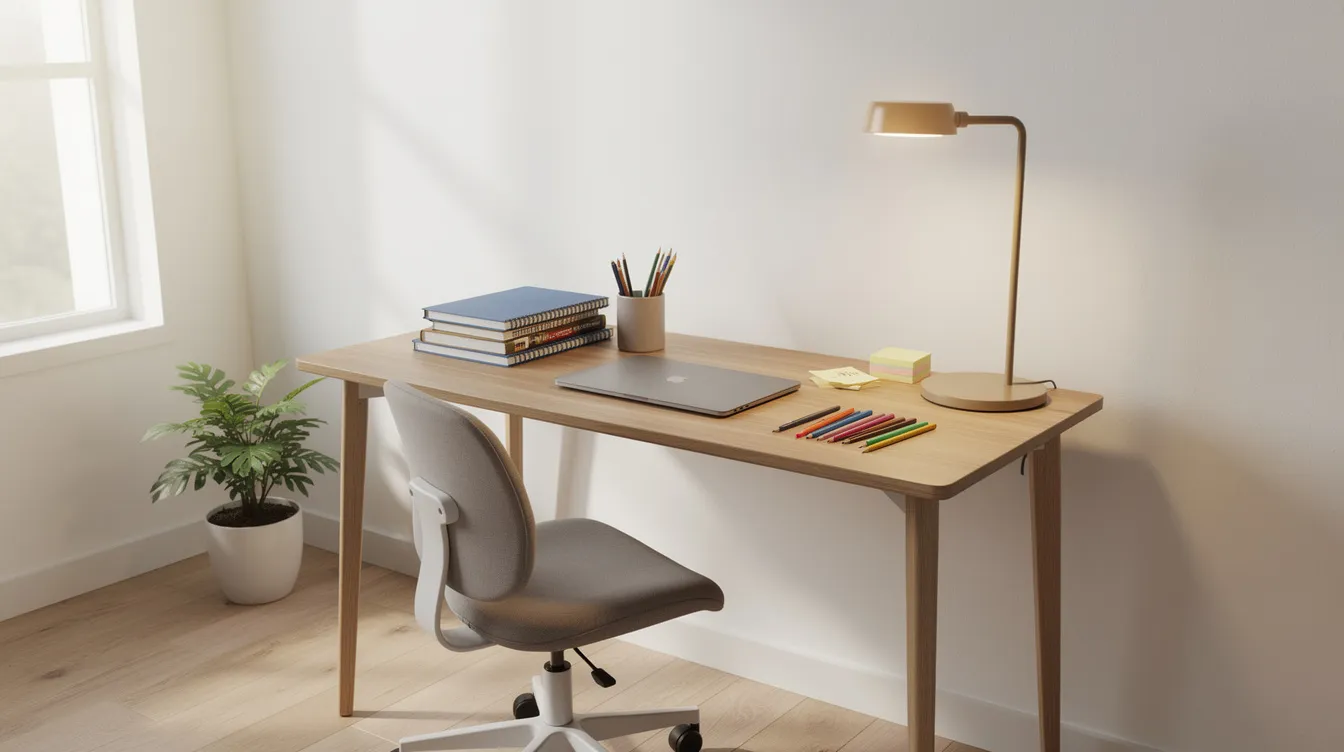
Children benefit from a clutter-free, designated study space. A consistent homework area helps children “switch into” learning mode by reducing visual and digital distractions.
Practical setup:
- Same table every day, with basic stationery within reach.
- No TV in background. Only necessary devices allowed, with notifications off.
- For younger children (P1 to P3), a “homework mat” or designated caddy creates a physical cue for focused work.
- For older students, set shared expectations on device use: phone in another room during a 25-minute work block.
The goal is to create a supportive environment where children practise self-regulation through environmental structure, not through constant policing. Environment acts as training wheels. Once the habit is established, children carry the focus with them even when the space changes, such as in an exam hall or a secondary school classroom.
Changing Your Role: From Homework Supervisor to Learning Coach
The “homework supervisor” hovers, checks every question, and gives answers when the child hesitates. The “learning coach” sets structure, asks guiding questions, then steps back.
A practical 3-step pattern:
- Settle. Help the child organise materials and review what needs to be done (2 to 3 minutes).
- Clarify. Make sure instructions are understood. Ask: “What is this question asking you to find?” and “Which part do you already know how to do?”
- Step away. Leave the child to work alone for a set period. Return to review, not to supervise.
Socratic questioning helps children activate existing knowledge during homework. Instead of giving the answer, ask: “What could you try first?” or “Where have you seen a problem like this before?” Adults should model their thinking to demonstrate problem-solving strategies; saying “If I were stuck here, I would reread the question and underline the key words” shows the child a transferable method.
Positive adult-child interactions enhance the development of self-regulation skills. Independence develops through explicit teaching, modelling, and gradually reducing support. Gradual release of responsibility helps children develop independence in learning. Parental engagement is associated with better learning outcomes, but families support independence best when they use the same coaching approach at home, not a controlling one.
Stepping back may feel uncomfortable at first. Work may be slower. That is expected. The long-term payoff is a child who no longer needs you at the table.
Practical Tools: The 15-Minute Rule, Checklists, and Self-Checking Routines
The 15-minute rule. Agree that your child works independently for 10 to 15 minutes before asking for help, unless they genuinely cannot understand the instructions. This builds task initiation and sustained attention. Encouraging productive struggle allows children to overcome obstacles in learning rather than bypassing them.
“Before I Ask Mum/Dad” checklist. Co-create a short list the child refers to before calling for help:
- Read the question twice.
- Circle key words.
- Try one method.
- Check earlier examples in the textbook.
Chunking homework tasks makes them feel more manageable for children. Instead of facing an entire worksheet at once, break it into groups of five questions with a brief stretch in between.
Self-checking frameworks by subject:
| Subject | Self-Check Method |
|---|---|
| Mathematics | Re-calculate 2 to 3 sums, check units and labels |
| English composition | Read aloud to catch missing words or awkward phrasing |
| Science | Underline key terms in answers, match them to the question |
Feedback improves students’ confidence in working independently. Students who receive timely feedback are more likely to self-assess accurately. Cognitive’s individual customised learning intervention programmes teach and rehearse these learning tools until students can apply them across subjects without prompting.
Encouraging Motivation Without Bribery or Nagging
There is a gap between external rewards (stickers, screen time) and internal self motivation (feeling capable, seeing progress, having some control). The goal is to move from the first to the second.
Give children small autonomy choices that encourage collaboration between parent and child: choosing the order of subjects, deciding whether to start with easier or harder tasks, or selecting which revision questions to attempt first. These choices build ownership without handing over all control.
Praise effort, not just results, to boost homework motivation. Specific, effort-focused praise works:
- “You started on time without me reminding you.”
- “You checked your answers and found two mistakes on your own.”
- “You stayed with that hard question for five minutes before asking.”
Praise for effort rather than results boosts student motivation across multiple studies. Effective feedback focuses on personal growth and learning opportunities rather than comparison with classmates. Feedback should encourage students to interpret mistakes as learning opportunities.
Mistakes should be framed as learning opportunities to build resilience. Children’s abilities can develop through effort and persistence, and reinforcing this growth mindset helps them see struggle as a normal part of learning, not evidence that they are “not smart enough.” For younger children, simple reward systems tied to sustained effort and independence (not grades) can serve as short-term scaffolds while internal motivation builds.
Encouraging children to solve problems independently builds critical thinking skills. The long-term goal is a child who can manage homework without constant external incentives because their own strategies produce success.
Using Peer Assessment and Collaboration to Build Independence
Independent learning does not mean learning in isolation. High self-regulated learning classrooms provide opportunities for self-assessment, and similar principles apply at home. Peer assessment, where students check each other’s summaries or explain math steps, deepens understanding and self-awareness.
Home-based examples: siblings checking each other’s spelling lists, or classmates running short online study groups with clear learning goals and rules. Effective learning involves a partnership between home and school, focusing on autonomy and support. You can encourage collaboration by setting ground rules: discuss strategies and compare approaches rather than copy solutions.
This connects to classroom practices like group projects and teacher-led peer assessment. When educators use these methods in school, parents who reinforce the same habits at home create consistency. The point is not to replace independent work but to complement it: collaboration builds the reflection and self-monitoring muscles that feed back into solo performance.
Supporting Self-Monitoring, Reflection, and Learning Goals
Children should be encouraged to plan, monitor, and evaluate their own learning. A simple reflection routine at the end of homework time takes one to two minutes:
- What went well today?
- What was hard?
- What will I do differently tomorrow?
Regular reflection and self-evaluation promote metacognitive skills in children. Self-regulated learners set goals and monitor their progress, so guide your child to set concrete, short-term learning goals. Examples: “This week I want to start homework by 7:30 pm four days out of five” or “I will check every math problem before I close my book.” Independent learning involves setting personal academic goals that give the child direction and ownership.
Older students benefit from a brief weekly planner or learning diary. They can track which strategies helped them absorb science content or Chinese vocabulary. The value of self and peer assessment lies in building realistic self-knowledge, which drives better goal-setting and progress over time.
Keep reflection low-pressure: two to three minutes, driven by curiosity rather than blame. The space should feel safe, not like an interrogation.
When Homework Battles Signal Deeper Attention or Learning Issues
Some red flags go beyond routine resistance:
- Daily tears or shutdowns during homework.
- Homework consistently taking two to three times longer than classmates report.
- Strong knowledge in conversation but very slow or inaccurate written work.
- Extreme dependence on adults for every step, even for tasks the child has done many times.
Attention difficulties, working memory limitations, language processing issues, or visual-spatial challenges can make independent learning feel impossible without specialised help. Some children in upper primary only reveal difficulties when volume and complexity increase; early primary school may have seemed smooth because tasks were simpler.
Addressing focus, attention, and task initiation support often requires targeted strategies beyond schedule changes. A comprehensive cognitive assessment can clarify whether underlying learning differences or executive function weaknesses are contributing to the homework battles, and point to the right interventions.
How Cognitive Development Learning Centre Builds Independent Learners
Cognitive Development Learning Centre is a Singapore-based specialised intervention centre. It focuses on executive functioning, self regulation, and independent learning, not routine tuition or homework supervision.
Core programme elements:
- 1-to-1 cognitive coaching targeting task initiation, planning, self-monitoring, and emotional regulation.
- Customised learning intervention programmes designed from each child’s cognitive profile, not from a standard syllabus.
- Structured practice where adult prompts are faded over sessions, giving students repeated experience managing tasks on their own.
Interventions are tailored using information from a cognitive assessment and ongoing progress tracking rather than one-size-fits-all worksheets.
What this looks like in practice: a Primary 4 student who previously needed a parent beside her for every maths assignment now uses a self-checking routine and completes homework within 40 minutes, asking for help only on genuinely unfamiliar question types. A Secondary 2 student who used to avoid homework entirely now plans his own weekly revision schedule and identifies which subjects need more time before tests.
Parents are coached on how to shift their role at home, reinforcing growing independence instead of reverting to micromanagement. Family members learn specific coaching language and routines to maintain consistency between sessions and home.
Taking the Next Step: Assessment and Support Options
If you see frequent, intense homework battles or clear independence gaps, consider a structured evaluation of your child’s executive functioning and learning profile.
A comprehensive cognitive assessment in this context typically covers attention, working memory, processing speed, planning, and academic skills tied to school demands. At Cognitive Development Learning Centre, the process includes an intake discussion, assessment sessions, a feedback meeting, and recommendation of customised learning intervention programmes if needed.
Seek support early. Primary 3 to 5 or early secondary is the window where independent learning skills can be built before major exam years like PSLE and O-Levels. Waiting until Secondary 3 or 4 leaves less time for habits to take root.
Independence is a realistic goal for most children when the right skills are identified and deliberately strengthened. If your child’s homework time has become a nightly struggle, reach out to Cognitive Development Learning Centre for a consultation. The first step is understanding what is happening; the second step is building the skills that change it.
Frequently Asked Questions
At what age should my child be able to do homework completely on their own?
There is no single age. Most Primary 1 to 2 children still need close scaffolding, with a parent nearby to clarify instructions and keep them on track. By Primary 3 to 4, children should manage short tasks with periodic check-ins rather than continuous supervision. By Primary 5 to 6, many can handle most nightly homework independently, with parents monitoring big-picture organisation like packing for the next school day or checking that all subjects are covered. Secondary school students should steadily move towards managing workload and study plans with only periodic guidance. If your child is well past these milestones and still cannot start a single worksheet without you sitting beside them, that gap is worth investigating through an assessment rather than waiting for them to “grow out of it.”
How long should homework take if my child is working independently?
Realistic ranges based on local practice: 30 to 45 minutes for lower primary school students on a regular school day, 60 to 90 minutes for upper primary, and 1.5 to 2 hours for lower secondary on days without heavy project work. If your child consistently takes two to three times these durations, even with a quiet space and no distractions, the issue is likely not effort. It may signal routine problems, gaps in understanding, or cognitive bottlenecks like working memory overload that a structured assessment can help identify.
Is it okay to sit with my child during homework if they are very anxious?
Yes, especially at first. Start with brief periods of co-presence during the first 5 to 10 minutes to help them settle and clarify tasks. Then gradually shift to being nearby but not directly involved, perhaps in the same room but doing your own work. Use the 15-minute rule and checklists to reduce anxiety without sustaining dependence. The goal is not to cut support overnight but to fade it over weeks so your child builds confidence from repeated experiences of managing tasks alone. If anxiety remains intense despite these adjustments, a professional assessment can determine whether additional support is needed.
What if my child only works when there is a reward like screen time?
External rewards can serve as short-term scaffolds when a child has no other source of motivation. The problem arises when rewards escalate each term: 15 minutes of screen time becomes 30, becomes a new game purchase. Simultaneously, build internal motivation through experiences of competence, meaningful choices (which subject first, which method to try), and effort-based praise. Over time, the child who regularly experiences “I did that on my own” starts to draw motivation from that success rather than from the reward. If your child cannot do any focused work at all without an external incentive, that pattern often points to underlying frustration or skill gaps worth exploring with professional guidance.
How is Cognitive Development Learning Centre different from regular tuition?
Regular tuition centres focus on content coverage: completing worksheets, reviewing textbook chapters, and preparing answers for exams. Cognitive Development Learning Centre focuses on strengthening executive functioning skills, attention, and self regulation so children can become independent learners across all subjects. Interventions are customised based on cognitive assessment rather than standardised worksheets. The difference shows up in the outcome: a child who finishes regular tuition still needs the tutor next term; a child who completes Cognitive’s programme has built the skills to manage their own education and track their own progress.
Comments are closed