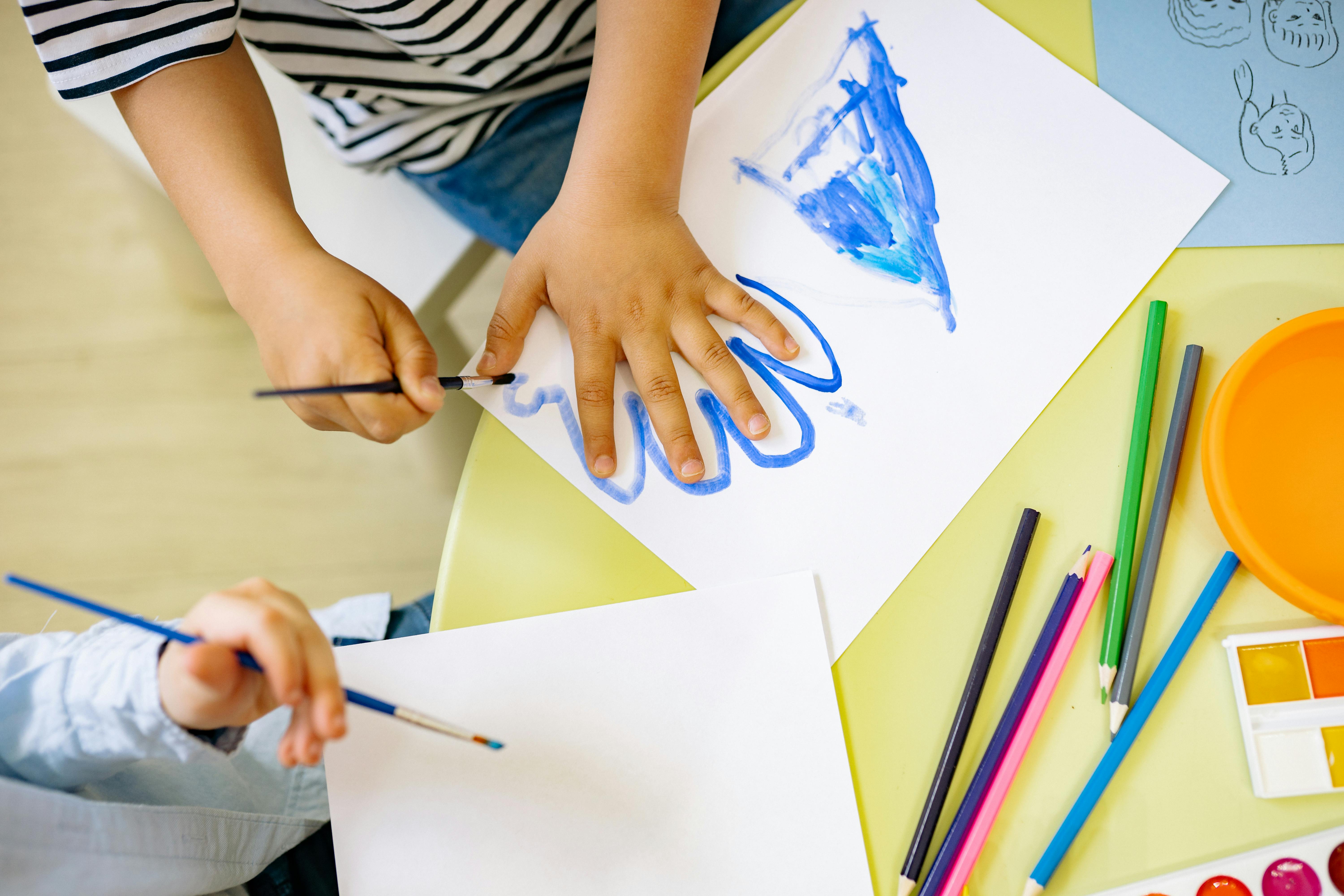
Children don’t just draw pictures or dance to music for fun — they’re actually building powerful thinking skills. Creative expression is one of the most natural and effective ways for children to develop cognitive abilities. Whether it’s through drawing, music, dance, or storytelling, the arts shape how children plan, remember, analyse patterns, and express their ideas. Creative expression supports children’s development across multiple areas, including cognitive, motor, social, and emotional growth, highlighting the importance of art for overall children’s development.
In early childhood, the brain is highly flexible. Creative activities light up multiple brain regions at once, strengthening pathways responsible for problem-solving, focus, emotional regulation, and critical thinking. These activities support brain development by strengthening neural connections, which are crucial for cognitive growth at a young age. The best part? Children learn all of this through play.
Drawing: A Window Into Problem-Solving
Drawing is more than doodling — it’s a process of planning and decision-making. Drawing helps children develop decision-making abilities by choosing colors, shapes, and composition for their artwork.
When children draw, they learn to:
- Organise their ideas
- Break down images into shapes and lines
- Pay attention to fine details
- Think ahead before putting pencil to paper
- Interpret visual information from their surroundings and translate it onto paper.
For example, deciding where to place a house on a page or how to draw a person involves spatial reasoning and logical thinking. These are the same skills children later use in maths, science, and reading. Drawing activities also enhance problem-solving skills by encouraging children to find creative solutions to artistic challenges.
Music: Building Memory, Rhythm, and Pattern Recognition
Music activates systems in the brain linked to memory and pattern understanding. When children sing a song, clap a beat, or play a simple instrument, they practise:
- Identifying rhythmic patterns
- Following sequences
- Strengthening auditory memory
- Developing attention control
- Expanding vocabulary and supporting language development through lyrics and singing.
Research shows that children involved in musical activities often have stronger working memory — a core part of learning new information and solving problems. Singing songs introduces children to new words, helping them build language skills alongside musical abilities.
Dance: Enhancing Coordination and Cognitive Control
Movement plays a large role in cognitive growth. Dance combines physical action with planning and emotional expression.
Through dance, children learn to:
- Follow directions and instructions
- Anticipate the next move
- Coordinate body movements
- Express feelings through motion
Choreography challenges the brain to remember steps and switch between actions — a skill closely tied to mental flexibility and self-control.
Dance also offers a safe space for children to express themselves without fear of judgment, supporting emotional and social development.
Fine Motor Skills and Physical Development Through Art
Creating art is much more than a creative outlet—it’s a powerful tool for building fine motor skills and supporting physical development in young children. When children engage in art activities like drawing, painting, or sculpting, they’re not just making art; they’re developing the motor skills needed for writing, buttoning clothes, and handling everyday tasks with confidence.
In early childhood, art projects such as finger painting, coloring, and working with playdough help children strengthen the small muscles in their hands and fingers. These activities are essential for developing fine motor skills and hand-eye coordination, which are the building blocks for writing, drawing, and other complex tasks. As children move into elementary school, art education continues to nurture creativity and dexterity, encouraging young learners to experiment with new materials and techniques. The interactive nature of artistic activities keeps children engaged in a learning process that is both fun and challenging, promoting mental growth and a wide range of developmental benefits.
Artistic activities like cutting with scissors, gluing pieces together, and drawing intricate shapes require children to coordinate their hands and eyes, building the strength and control needed for everyday life. These experiences encourage children to think outside the box, solve problems, and develop critical thinking skills as they decide how to bring their ideas to life. Making art also boosts a child’s confidence and self-esteem, as they see their creative potential come to life on the page.
Findings suggest that children who regularly participate in art activities—especially those involving hands-on manipulation of materials like clay, paint, or collage—tend to have stronger fine motor skills, better hand-eye coordination, and greater dexterity than those who do not. The artful parent plays a crucial role in nurturing this creative potential by providing opportunities for self-expression and encouraging children to explore new ideas through art.
In educational settings, incorporating art activities into the curriculum helps children develop essential skills such as communication, emotional intelligence, and problem-solving. Teachers can design art projects that not only promote fine motor skills but also foster critical thinking and self-expression. The numerous benefits of art education make it an essential part of a well-rounded education, with positive effects on cognitive development, emotional development, and overall growth.
Research supports the idea that making art can have a positive impact on various aspects of children’s development, from fine motor skills to cognitive and emotional growth. Using colour theory, experimenting with different artistic activities, and working with interactive materials all help children develop the ability to communicate effectively, solve problems, and connect with other children. By making art a regular part of daily life, parents and educators provide children with a powerful tool for developing essential skills and nurturing creativity.
In summary, fine motor skills and physical development through art are vital components of a child’s overall development. By engaging in art activities, children not only build the motor skills and hand-eye coordination needed for everyday tasks, but also enhance their cognitive development, critical thinking, and problem-solving abilities. Parents and educators can help children reach their full potential by nurturing creativity, encouraging self-expression, and making art a joyful part of early childhood development.
Storytelling: Expanding Imagination and Critical Thinking
When children tell stories, they build the foundation for strong language and cognitive skills. Storytelling is also a form of cognitive development art that enhances critical thinking and reasoning.
Storytelling encourages children to:
- Sequence events logically
- Use descriptive language
- Understand cause and effect
- Express emotions in healthy ways
- Solve problems creatively
- Develop communication skills by describing their stories and listening to others.
Whether children are narrating a picture or making up characters, storytelling helps them organise thoughts and communicate with clarity. Sharing and listening to stories also helps children develop empathy by understanding different perspectives and emotions.
Why Artistic Play Strengthens Cognitive Development
Across all creative activities, the arts support four powerful thinking skills: engaging in artistic play also boosts a child’s confidence by providing opportunities for self-expression and accomplishment.
1. Planning and Organisation
Children learn to think ahead — deciding what they want to create, how to start, and how to complete their ideas.
2. Memory Skills
Remembering dance steps, lyrics, visual details, or story sequences strengthens both short- and long-term memory.
3. Pattern Recognition
Patterns appear in music, art, movement, and stories. Recognising these patterns helps children with maths, reading, and logic.
4. Emotional Expression and Regulation
Art provides a safe outlet for feelings. When children express emotions through drawing or movement, they learn to understand and manage them better, supporting overall cognitive resilience.
The Art Advantage in Everyday Life
Parents and educators don’t need expensive tools to introduce art-based learning. Simple, everyday opportunities can boost cognitive development:
- Offer crayons, recycled paper, and simple craft materials.
- Play different types of music and encourage children to move with the rhythm.
- Allow free, unstructured dance time.
- Ask children to retell stories or make up their own adventures.
Creativity is not just fun — it’s essential. When children engage in artistic play, they’re shaping their brains for better thinking, problem-solving, and confidence.
Comments are closed