How AI is Changing Speech and Language Support
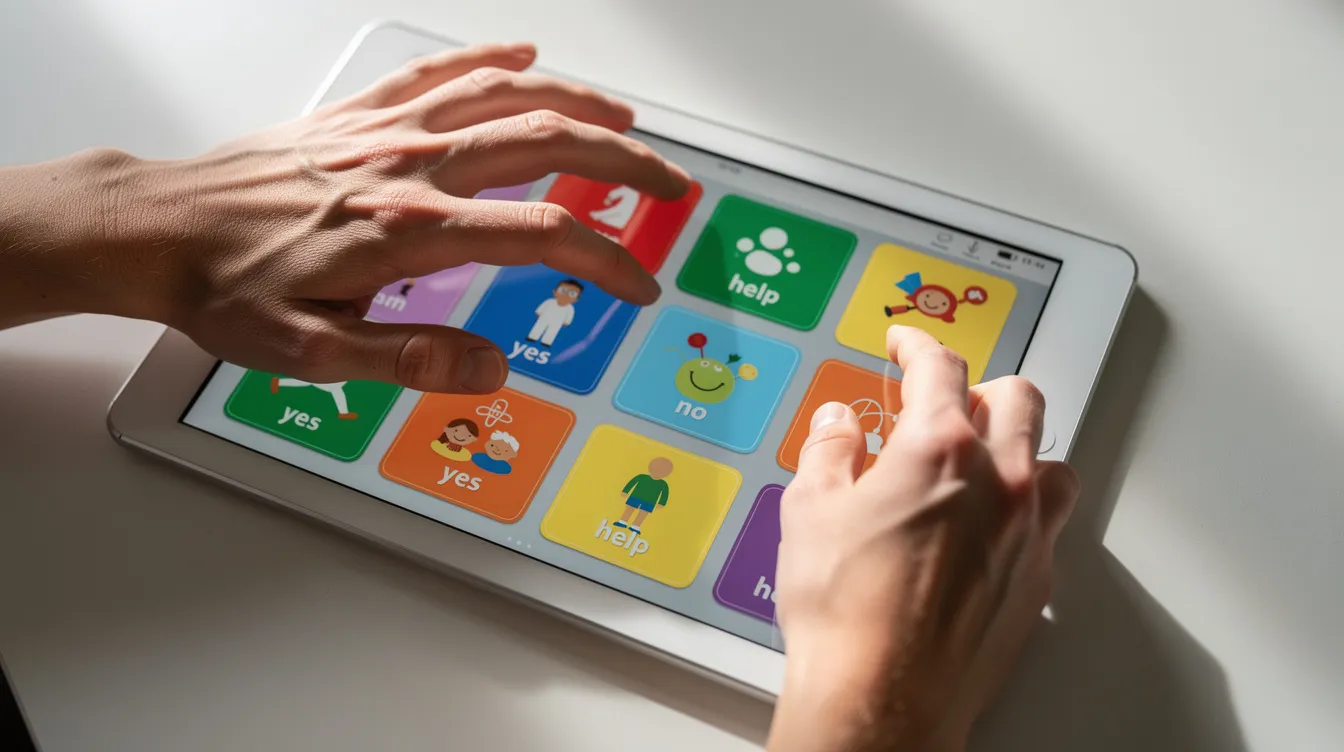
Picture this: a five-year-old practices certain sounds on a tablet app during a car ride, receiving immediate feedback on her pronunciation while her parent drives. Across town, a stroke survivor uses AI-assisted speech reconstruction to make his slurred speech clearer during a video call with family. Meanwhile, his speech therapist reviews progress tracking data remotely, adjusting goals without needing an in-person visit.
This is speech and language support in 2025-2026. Supporting speech and language development with AI now spans early language stimulation in toddlers, school-age articulation work, adult rehabilitation after stroke or brain injury, and daily communication for neurodivergent individuals.
The scale is significant. The global text-to-speech market hit $4.25 billion in 2025, growing at 15.9% annually. Research shows AI-powered roleplay simulations improve learner skills by 25.9%, while personalized tools boost engagement by up to 30%.
This article covers what AI can do, key technologies, practical use cases, how to choose tools responsibly, and where the field is heading.
What Does “AI for Speech and Language Development” Actually Mean?
AI in this context refers to software that analyzes, generates, or responds to speech and language to support communication growth and therapy. It falls into three main domains:
- Assessment: Automated screeners and diagnostics that flag speech disorders or language delays
- Intervention: Therapy apps providing practice, feedback, and adaptive exercises
- Access: Augmentative and alternative communication tools and speech translation systems
Machine learning algorithms train on thousands of speech samples to recognize patterns—articulation errors, dysarthric speech, or emerging vocabulary. This enables apps to provide real time feedback on specific speech issues.
Key terminology you’ll encounter:
- Speech recognition: Converting spoken words to text while detecting phoneme accuracy
- Natural language processing (NLP): Understanding and generating human-like language
- Speech biomarkers: Voice patterns that may indicate neurological conditions
- AAC: Alternative communication systems for non-speaking individuals
While many tools target English, research now covers 1,100+ languages, including tonal languages like Cantonese for dysarthric speech reconstruction in Hong Kong.
Core AI Technologies Powering Speech and Language Support
Several technologies work together to enable AI-powered tools for communication skills development:
Speech Recognition Modern systems detect specific phonemes, fluency disruptions, and prosody patterns with 97% vocal fidelity. This enables automatic scoring of articulation exercises and listening comprehension tasks.
NLP and Language Modeling These systems generate child-friendly prompts, model target sentences, and scaffold conversation for individuals with language delays. They can adapt to wh-questions, turn-taking, and narrative skills based on developmental level.
Adaptive Learning Algorithms Apps adjust difficulty, targets, and repetition based on performance data over days and weeks. This personalization addresses individual patient needs without requiring constant clinician input.
Computer Vision Some tools use device cameras to provide feedback on lip placement or oral motor movements during articulation practice, helping users understand mouth positioning for sounds they struggle with.
Voice Biomarker Analysis Emerging technology analyzes subtle voice changes to flag potential issues like early Parkinson’s or mild cognitive impairment, connecting users to appropriate referrals from healthcare professionals.
Supporting Children’s Speech and Language Development with AI
AI supports children aged roughly 2-12 across articulation, phonology, language, and social communication—working alongside early intervention and school-based services.
Articulation and Phonology Apps Modern apps offer 23+ sound curricula with minimal pair games and real time feedback on phones and tablets. Research shows these tools can boost accuracy by 25-30% in home sessions.
Language Development Support Story-telling bots, vocabulary-building games, and conversational AI encourage turn-taking, wh-questions, and narrative skills. These interactive experiences make language learning engaging and fun for kids.
Support for Neurodivergent Children For autistic and neurodivergent children, AI provides visual schedules, preference-based reinforcement, and low-pressure conversational practice using AI characters. This reduces anxiety while building social skills.
Parent and Caregiver Involvement Parents can guide daily 5-15 minute sessions at home, with dashboards summarizing accuracy, attempts, and new words produced each week. This valuable support extends therapy beyond clinical sessions.
Safety Requirements Age-appropriate tools should have no in-app advertising, robust parental controls, and content tailored to developmental stages from preschool through upper primary.
At-Home Practice and Family Involvement
Families can embed AI practice into everyday life with these practical approaches:
- Weekly practice plans: AI generates focus areas based on prior performance—targeting /r/ clusters or two-word combinations for the coming week
- Daily routines: Use an AI app during car rides, bedtime story retells with AI prompts, or breakfast “word of the day” challenges
- Progress sharing: Apps can send summaries and short video replays to speech therapists, enabling remote goal adjustments
- Screen-time balance: Aim for 10-minute sessions 3-5 times weekly, paired with off-screen conversations and play

This integration helps children improve communication while keeping practice manageable for families.
AI in Adult Speech and Language Rehabilitation
Adult populations benefiting from AI include stroke survivors with aphasia, people with dysarthria or apraxia of speech, those with degenerative conditions like ALS or Parkinson’s, and individuals recovering from brain injury.
Speech Reconstruction Technologies AI voice cloning achieves 97% accuracy in replicating vocal characteristics from seconds of reference speech. Systems convert severely impaired or slurred speech into clearer output in real time, enabling patients with speech difficulties to communicate more effectively.
Chat-Based Language Therapy AI tools support aphasia therapy through repetition drills, sentence building, naming tasks, and conversation practice that adapts to the user’s level. These sessions provide consistent skill development between traditional methods and clinician visits.
Teletherapy Integration Platforms with built-in AI automatically transcribe sessions, highlight error patterns, and log homework completion—reducing administrative burden while improving patient outcomes documentation.
Emotional and Social Impact Adults can participate more fully in phone calls, group discussions, and work activities using AI-enhanced speech support. This addresses factors beyond articulation, including confidence and social participation.
Accessibility Considerations Tools designed for adults with disabilities often include large fonts, simple interfaces, and integration with assistive hardware like switches or eye-gaze systems where fine motor control is limited.
Augmentative and Alternative Communication (AAC) and AI
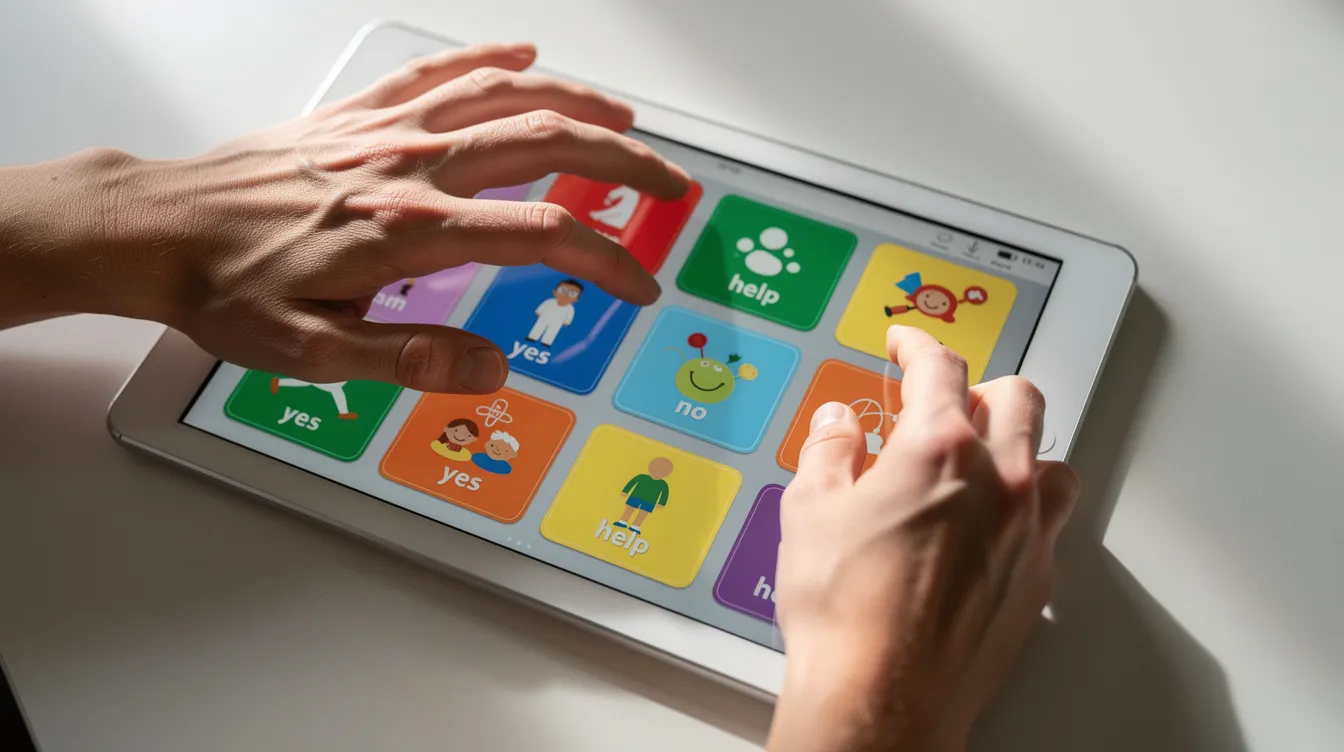
AAC encompasses communication boards, symbol-based apps, and speech-generating devices supporting non-speaking or minimally verbal individuals.
AI upgrades traditional AAC through:
- Predictive text that learns user phrases for faster composition
- Intent prediction guessing what users might want to say next
- Context-aware suggestions based on location or time of day
- Vocalization interpretation mapping unclear sounds to intended messages
These benefits mean faster message composition, richer vocabulary access, and reduced fatigue for users with motor challenges. One case example: non-speaking adults achieved markedly improved independence, with communication speed rising through hybrid synthetic-human pipelines.
How Educators and SLPs Can Integrate AI into Everyday Practice
Schools and clinics face significant workload pressures. AI offers realistic support without overpromising results.
AI-Powered Screeners Teachers or SLP assistants can administer quick assessments to flag children for detailed evaluation, reducing missed cases in busy environments and supporting early intervention.
Classroom Applications
- Small-group articulation practice with tablets
- AI-led listening comprehension games
- Auto-generated differentiated language worksheets based on curriculum topics
Individualized Therapy Materials SLPs can create custom picture decks, functional phrase lists, and story prompts aligned with each learner’s interests in minutes rather than hours.
Documentation Automation AI systems draft SOAP notes, progress reports, and goal updates from session transcripts, saving administrative time while maintaining professional standards.
Collaborative Planning SLPs, teachers, and families should agree on which ai tools to use, how often, and how data will be shared securely across home and school settings.
Ethical, Regulatory, and Privacy Considerations
Practitioners and families must consider important guardrails when adopting AI:
Health Data Obligations Clinical users must ensure HIPAA compliance (or equivalent regional standards). AI tools should be included in formal risk assessments and vendor agreements.
Professional Ethics ASHA principles require practitioners to evaluate evidence base, safety, and biases of AI tools used in assessment and treatment. Tools should support—not replace—clinical judgment.
Consent Requirements Inform families and adult clients when AI analyzes their speech, how recordings are stored, and whether data trains future ai models. Offer deletion options.
Practical Steps
- Choose vendors with transparent security practices
- Limit data collection to necessary information
- Regularly review AI outputs for errors and bias
- Ensure recordings use encryption
Choosing the Right AI Tools for Speech and Language Development
No single tool fits everyone. Suitability depends on age, goals, language, and setting.
Selection Criteria | Factor | What to Look For | |——–|——————| | Clinical validity | Pilot studies, expert involvement | | Usability | Accessible for non-technical caregivers | | Transparency | Clear explanation of AI functions | | Evidence | Benefits demonstrated for target population |
Professional Vetting Check that tools are designed or reviewed by certified SLPs or communication specialists, particularly for intervention-focused apps.
Trial Approach Use tools for 2-4 weeks with defined goals, then evaluate whether engagement and outcomes justify continued use. Track progress using both in-app metrics and real-life observations.
Red Flags to Avoid
- Unclear data policies
- Exaggerated claims about “replacing therapy”
- Lack of offline functionality
- Culturally inappropriate content
Build a small, curated toolkit rather than downloading dozens of apps. Predictability helps students and kids stay engaged.
Looking Ahead: Future Directions for AI in Speech and Language
Rapid advances since 2023 suggest more integrated supports in the late 2020s.
Multilingual and Dialect-Aware Models Meta’s training of TTS for 1,100+ languages and Intron’s 2026 expansion to 57 languages for healthcare signal growing global accessibility beyond English-centric applications.
VR and AR Integration Immersive scenarios for social communication practice, job interviews, or everyday errands offer innovative solutions for real-world skill development.
Biomarker Research Voice analysis may enable earlier detection of conditions like autism, dyslexia, or neurodegenerative diseases—though overreliance on automated screening requires caution.
Embodied AI Social robots providing face-to-face conversational practice represent an emerging frontier, though evidence-based, human-led implementation remains essential.
The future of AI should extend human connection—making it easier for people to understand and be understood—rather than replacing relationships in communication development.
FAQ
Can AI replace a speech-language pathologist or therapist?
AI cannot replace qualified SLPs or therapists. Diagnosis, goal setting, and complex clinical judgment require human expertise and ethical responsibility. AI serves as a force multiplier providing extra practice, data insights, and automation. This allows professionals to focus on relationship-based, higher-level therapeutic work. Use AI tools under professional guidance for significant speech, language, or swallowing concerns.
At what age can children start using AI tools for speech and language?
Many AI-powered language and articulation apps target children around ages 3 and up, when they can follow simple directions and interact with screens. For toddlers under 3, technology should complement—not replace—rich face-to-face interaction. Adults should co-engage with young children during any AI-supported activities. Check age ratings, interface simplicity, and required independence levels before introducing specific apps.
How can I tell if an AI speech app is actually helping?
Set simple, observable goals before starting—number of clear productions of a target sound, new words used, or willingness to initiate conversations. Track changes over 4-6 weeks using in-app metrics and real-life observations at home, school, or work. Consult with an SLP or educator to interpret data and decide whether to continue, modify, or replace the tool.
Is it safe to upload my or my child’s voice recordings to AI systems?
Safety depends on provider data practices including encryption, access controls, and statements about whether recordings train future models. Choose platforms transparent about storage locations, retention periods, and deletion options. Avoid sharing sensitive personal details in recordings and seek tools complying with relevant privacy laws like HIPAA, GDPR, or local equivalents.
What if we don’t have reliable internet access—can we still benefit from AI tools?
Some AI tools offer offline modes where core models store on the device and sync periodically when connection is available. Look for lightweight apps that cache practice modules, requiring data only for updates or backups. This is especially important in rural or low-bandwidth areas. Combine limited online AI use with traditional offline resources—picture cards, books, games—so practice continues when connectivity is poor.
Comments are closed