Secondary School Academic Intervention Through Learning Intervention
Supporting secondary school students coping with academic demands — when results, effort, and potential do not align. These challenges may be associated with learning difficulties such as ADHD, Dyslexia, Autism, or may appear in students without a formal diagnosis.
When Academic Demands Outpace Current Support
As students move from primary school to secondary school, and later into upper secondary, academic demands increase significantly. Students manage more subjects, greater independence, and higher expectations, whilst parents often reassess how best to support their child after PSLE or earlier secondary results.
Some families approach us in Secondary 1 or 2, hoping to avoid repeating earlier struggles. Others seek support when their child is coping only through excessive effort, limited by time, or unable to progress within subject-based banding despite hard work.

At this stage, students often have stronger opinions about learning support. Some resist labels or traditional tuition. Others disengage when they feel misunderstood, pressured, or constantly corrected. For learning support to be effective, students must feel respected, empowered, and involved.
These challenges may be associated with learning difficulties such as ADHD, Dyslexia, Autism, or related learning difficulties, or may appear in students without a formal diagnosis who struggle with the pace, complexity, and independence required in secondary school.
At Cognitive, Secondary School Academic Intervention focuses on helping students cope with academic demands without losing confidence or motivation, by strengthening how they learn, apply strategies, and manage expectations in school and examinations.
Why Tuition May Not Work for Some Secondary School Students
Secondary school tuition often focuses on covering syllabus content, completing practice questions, and preparing students for tests and examinations. Whilst this approach works for some students, others continue to struggle despite attending tuition regularly.
Academic Demands Change
At secondary level, academic demands change significantly. Students are required to cope with more subjects, greater depth of content, and higher expectations for independent learning, often whilst managing longer school hours and heavier workloads. As a result, tuition effectiveness becomes increasingly dependent on how well a student can manage learning demands, not simply on the amount of practice received.
Underlying Difficulties
For some students, tuition may not address the underlying difficulties that affect learning and performance, such as:
- Difficulty understanding abstract or multi-step concepts
- Weak retention and recall, leading to “studying hard but forgetting”
- Inability to apply knowledge to unfamiliar or integrated questions
- Challenges organising responses under time pressure
- Attention and learning stamina difficulties across multiple subjects
Warning Signs Parents Notice
As students become more independent in secondary school, parents are less involved in day-to-day learning and revision. Instead, parents often notice changes in attitude and behaviour towards learning, such as:
Loss of Interest
Gradual loss of interest in certain subjects
Reduced Motivation
Reduced motivation or resistance towards studying
School Avoidance
Avoidance of school or frequent complaints about school
Emotional Reactions
Strong dislike or emotional reactions towards specific subjects
In many cases, these signs reflect ongoing academic frustration or difficulty coping with learning demands, rather than a lack of effort or ability. When this happens, increasing tuition hours alone may add pressure without resolving the core learning difficulties that affect engagement, consistency, and performance.
How Secondary School Academic Learning Intervention Is Different
Secondary School Academic Intervention focuses on how students learn, apply strategies, and cope with academic demands, rather than simply increasing practice or drilling content.

At secondary level, students are required to manage more subjects, greater content depth, and higher expectations for independent thinking. When learning difficulties or gaps in learning skills are present, students may continue to struggle even when they are motivated and putting in effort.
Key Learning Processes We Strengthen
Understanding & Connection
How concepts are understood and connected across topics
Retention & Recall
How information is retained and recalled under assessment conditions
Application
How knowledge is applied to unfamiliar or integrated questions
Organisation
How responses are organised clearly and efficiently
Cognitive Load
How students manage time, pressure, and cognitive load during tests and examinations
Subjects such as English, Mathematics, and Combined Sciences (Physics, Chemistry, Biology) provide the context for learning intervention. Strategies are developed and practised using real secondary-level academic tasks so students learn how to cope with school and exam demands more independently.
This approach is particularly relevant for secondary school students who need to cope with higher academic demands while maintaining independence.
Our Approach to Practice (To Avoid Drilling)
At secondary school level, students are generally able to articulate their learning difficulties more clearly, such as identifying concepts they do not understand or areas they struggle to remember. This allows learning intervention to be more targeted and adaptive.
Sessions are planned with sufficient practice opportunities, but the focus is guided by the student’s understanding and feedback rather than completing a fixed number of questions. When a student demonstrates mastery of a concept or strategy, support moves on to the next learning objective to maintain engagement and avoid unnecessary repetition.
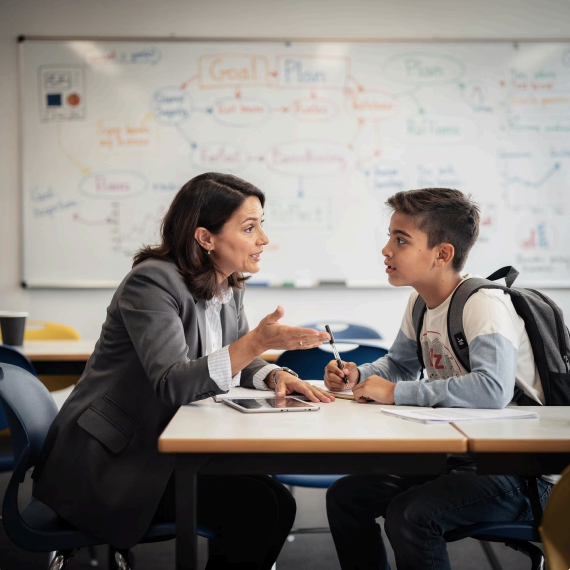
Experienced Coaches Make the Difference
Because intervention at this level relies on real-time feedback and adjustment, our coaches working with secondary school students are typically highly experienced and able to adapt strategies creatively to meet individual learning needs. This approach differs from tuition, where lessons are often paced around completing planned materials rather than responding dynamically to how a student is learning.
Where appropriate, additional practice materials may be shared for independent practice, allowing students to reinforce learning without becoming overly reliant on repetitive drills.
Supporting Students Through Academic Pressure — Beyond Examinations Alone
As students progress through secondary school, academic pressure often increases significantly. Whilst N-Level and O-Level examinations are major milestones, stress and pressure frequently begin much earlier.
The Critical Secondary 2 to Secondary 3 Transition

One critical transition occurs when students move from Secondary 2 to Secondary 3, where subject choices become more specialised and subject combinations are determined. Decisions such as taking Combined Science, Pure Science, or specific subject combinations can have longer-term implications for post-secondary pathways, including eligibility for certain Polytechnic courses or ITE routes.
For many students and families, this period brings heightened expectations, uncertainty, and concern about making subject choices that may limit or affect future options. Even students who are not aiming for highly academic pathways may experience pressure as subject demands increase and expectations shift.
At the same time, subjects become more complex, learning becomes more abstract, and students are expected to perform consistently under tighter time constraints and assessment pressure. Even students who have managed reasonably well in lower secondary may begin to struggle as academic demands intensify.
For many students, difficulties at this stage are not limited to content knowledge. Even when understanding is present, students may struggle to retrieve information accurately, apply strategies flexibly, or remain composed during assessments. Over time, repeated academic stress can lead to anxiety, disengagement, or loss of confidence.
At Cognitive, learning intervention recognises that academic progress must be balanced with a student’s ability to cope effectively with increasing demands. Our role is not simply to prepare students for examinations, but to help them navigate key academic transitions strategically and sustainably.
Intervention at This Stage Focuses On:
Subject Complexity
Cope with increased subject complexity and specialisation
Assessment Approach
Approach assessments and examinations calmly and systematically
Confident Starts
Start questions confidently instead of freezing or avoiding them
Error Reduction
Reduce avoidable errors through clearer thinking and structured approaches
Load Management
Manage time, expectations, and cognitive load more effectively
Where timelines or academic decisions are critical, support prioritises key learning strategies and approaches that help students maximise performance without unnecessary overload. This may involve building on strengths, clarifying core concepts, and helping students make informed, realistic decisions about their learning pathways.
By addressing both academic demands and transitional pressures, learning intervention aims to support progress without sacrificing motivation, confidence, or wellbeing.
Working in Partnership with Students and Parents
As students progress into secondary school, expectations around independence increase significantly. Students manage more subjects, longer school days, and greater academic responsibility, whilst parents are typically less involved in day-to-day learning and revision. Schools also engage parents less frequently at this stage, as students are expected to take greater ownership of their learning.
At Cognitive, our support model reflects this shift.
Direct Student Engagement
Our primary engagement is directly with the student. Coaches work with secondary school students as academic mentors, supporting them much like a coach supports an athlete — by understanding their strengths, identifying areas of difficulty, and helping them perform more consistently under academic and assessment demands.
Students are encouraged to articulate their own learning challenges, such as concepts they find difficult to understand, areas they struggle to remember, or situations where they lose confidence during tests. This allows learning intervention to be more targeted and helps students develop awareness and ownership of their learning process.
Structured Parent Partnership
Parent involvement remains important, but the focus changes. Rather than daily supervision or close monitoring of homework, parents are kept informed through structured progress updates and reviews, as well as observable outcomes in school performance and engagement.

Individualised Education Plan (IEP) Reviews
To support clarity and alignment, we conduct Individualised Education Plan (IEP) reviews, typically on a half-yearly basis. These reviews involve both parents and students and provide an opportunity to:
Review learning progress and ongoing challenges
Align expectations between student, parents, and centre
Clarify learning strategies and next steps
Encourage students to take responsibility for their academic journey
By involving students directly in these conversations, we help them develop the confidence, self-management skills, and decision-making abilities required for secondary school and future academic transitions.
In some cases, students may also share school-related challenges such as peer difficulties or stress that affect their learning. Whilst Cognitive is not a counselling or therapy provider, our role is to offer a supportive and trusted learning environment where such issues do not interfere with academic progress
A Flexible and Sustainable Support Model
Support for secondary school students must be both effective and sustainable. As students manage more subjects, longer school hours, and external commitments, the level and frequency of support needs to be carefully calibrated to avoid unnecessary overload.
At Cognitive, learning intervention is tailored to each student’s learning needs and circumstances, rather than delivered through fixed packages or standardised schedules. The appropriate level of support may vary depending on:
- Subject demands and academic complexity
- Examination timelines and academic transitions
- Learning difficulties and readiness
- The student’s ability to apply strategies independently
- The level of support available at home
Typical Support Frequency
For many secondary school students, attending once per week per subject can be sufficient when learning strategies are applied consistently outside sessions. This is particularly the case when students are engaged, able to reflect on their learning, and take ownership of applying strategies in school.
Higher frequency support may be recommended when learning difficulties are more significant, when students struggle to cope independently, or when academic timelines are tight. Such decisions are discussed collaboratively with students and parents, taking into account both learning needs and practical considerations.

The goal of this approach is not to maximise attendance, but to help students develop the skills and confidence to manage academic demands more independently over time. As students become more capable and consistent, support levels may be adjusted accordingly.
Who This Support Is Suitable For
Secondary School Academic Intervention is suitable for students who are finding it difficult to cope with increasing academic demands, even when they are putting in effort or attending tuition.
This Support May Be Appropriate for Students Who:

It may also be suitable for students with learning difficulties such as ADHD, Dyslexia, Autism, or related learning difficulties, as well as students without a formal diagnosis who nonetheless struggle with the pace, independence, or expectations of secondary school learning.
Key Academic Transitions
Support may be helpful for students navigating key academic transitions, such as:
- Moving from lower secondary to upper secondary
- Adjusting to subject specialisation or subject combinations
- Aiming to improve consistency or progress within subject-based banding
Suitability is guided by a student’s learning needs, readiness, and capacity to engage, rather than academic level or examination results alone.
How Secondary School Intervention Fits Within Our Learning Intervention Pathway
Secondary School Academic Intervention builds on learning foundations developed earlier and supports students as academic demands increase in depth, complexity, and independence.
Depending on a student’s learning history and needs, secondary school intervention may follow or be complemented by earlier forms of learning support, such as:
Early Intervention
Foundational learning readiness is developed
Communication & Language
Underlying language or communication challenges are addressed
Literacy & Written Expression
Reading, writing, and written organisation skills are strengthened
Primary School Academic
Learning strategies are developed within primary-level academic demands
As students progress into secondary school, learning intervention shifts focus towards helping them cope with:
- Increased subject load and complexity
- Greater expectations for independent learning
- Subject specialisation and academic transitions
- Sustained performance under assessment and examination conditions
For students approaching major academic milestones, learning intervention principles align with Upper Primary, PSLE & GCE Readiness, emphasising sustained learning, organisation, exam strategies, and consistent performance under assessment conditions.
This pathway-based approach allows learning support to evolve with the student, ensuring continuity and alignment as academic demands change over time.
Progress & Outcomes
Progress in Secondary School Academic Intervention is individualised and focused on helping students cope more effectively with academic demands over time.
Rather than measuring progress solely through short-term grade changes, learning intervention looks at functional improvements that support sustained academic performance and independence.
Observable Outcomes
Parents and students may observe outcomes such as:
Understanding & Application
Stronger understanding and application of academic concepts
Retention & Recall
Improved retention and recall during tests and examinations
Consistency
Greater consistency in academic performance across subjects
Organisation
Clearer organisation and structure in written responses
Accuracy
Reduced avoidable errors and improved exam strategies
Confidence
Increased confidence and willingness to engage with challenging subjects
Independence
Greater independence in managing study routines and academic responsibilities
For many students, these changes translate into more stable results, reduced academic stress, and improved confidence in coping with secondary school expectations

Progress is reviewed against Individualised Education Plan (IEP) goals and adjusted as the student develops. Where appropriate, progress discussions involve both parents and students to ensure shared understanding and alignment of expectations.
Whilst outcomes vary depending on individual learning needs, engagement, and timelines, the focus remains on building sustainable learning skills that support both current academic demands and future transitions.
Moving Forward with Clarity
Secondary school can be a challenging period for both students and families. As academic demands increase and expectations shift, it is not uncommon for capable students to struggle with confidence, consistency, or motivation — especially when effort does not seem to translate into results.
With appropriate learning strategies and support, many students are able to cope more effectively with academic demands, make better decisions under pressure, and approach learning with greater confidence and independence.
At Cognitive, our role is to support students through customised, psychology-informed academic learning intervention, helping them strengthen how they learn and cope with school and examination demands in a way that is sustainable and respectful of their individual needs
Cognitive Development Learning Centre is a Singapore-based learning intervention centre established in 2009, supporting students with learning difficulties and learning challenges across different stages of schooling.
If you are unsure whether learning intervention is suitable for your child at this stage, a consultation can help clarify learning needs, expectations, and possible next steps.