Supporting Children with Language & Communication Difficulties
When language challenges affect learning, confidence, and relationships, early understanding makes all the difference.
When Communication Affects Everyday School Life
Some children speak fluently at home. They can share stories, ask questions, and talk about their interests for hours. Yet in school, something feels different.
Parents may notice that their child struggles to follow longer instructions, finds it hard to explain answers clearly, or avoids class participation. Teachers may say the child understands the topic but cannot express it well. Socially, misunderstandings happen more often than expected.
Language difficulties are not always about delayed speech. They often appear in how a child processes, understands and uses language in real-life learning situations.
Common Signs
These signs may appear subtle at first, but they often become more noticeable as academic and social demands increase. Parents may begin to observe patterns such as:
- Struggles with longer instructions
- Difficulty explaining answers
- Avoids class participation
- Frequent social misunderstandings
Language Is the Foundation of Learning
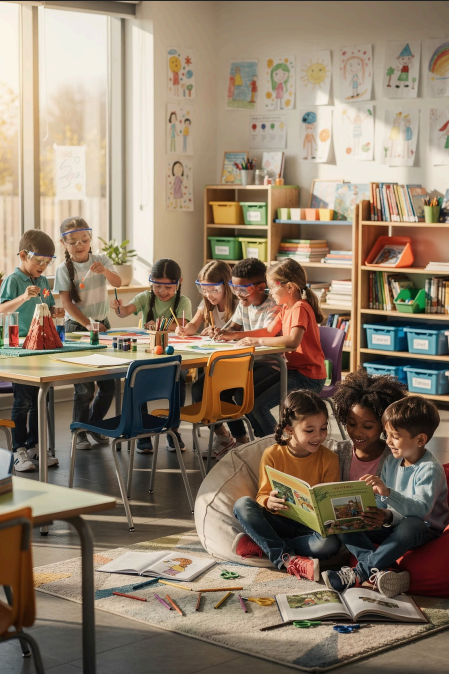
In school, almost everything depends on language. Reading comprehension, essay writing, word problems in Mathematics, Science explanations, and even exam instructions rely heavily on how well a child understands and organises language.
A child may know the content but struggle to organise thoughts clearly, interpret inferencebased questions, or respond precisely under exam conditions. Over time, this gap between knowledge and expression can affect both grades and confidence.
Reading
Comprehension and interpretation skills
Writing
Organizing thoughts into clear essays
Mathematics
Understanding word problems
Science
Explaining concepts and processes
Social Communication — The Part Many Parents Don’t Expect
Sometimes the challenge is not about talking, but about using language socially.
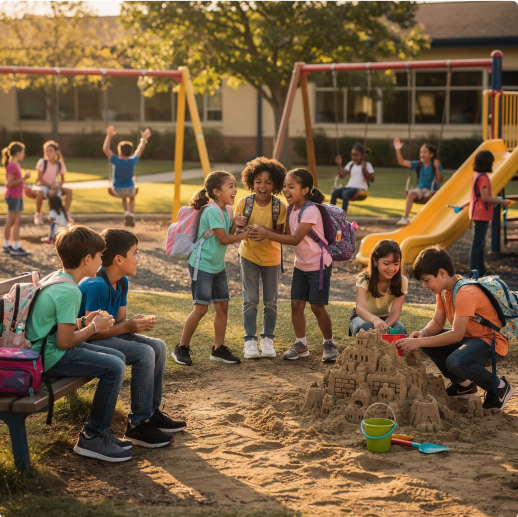
A child may interrupt without realising, misread tone, take comments too literally, or struggle to interpret what others are implying. Teachers may observe social misunderstandings. Classmates may perceive the child as insensitive or difficult.
For some children, these social communication challenges are part of broader school coping difficulties that affect their ability to participate in mainstream classroom environments.
These situations can lead to frustration, isolation, or emotional outbursts. Often, the child is not being defiant. They may simply be struggling to interpret social language cues.
When social communication improves, academic participation and peer relationships often improve alongside it.
Therapy, Tuition, or Learning Support?
Parents frequently ask which type of help is most appropriate. Each serves a different purpose. The key is identifying where the breakdown is happening.

Speech Therapy
Focuses on clinical language or articulation issues

Tuition
Focuses on practising academic content and subject mastery
Educational Language Support (Learning Intervention)
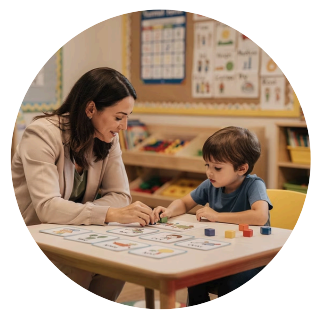
Strengthens how language is used in learning — comprehension, writing, vocabulary, and social skills
As Children Grow, Language Demands Increase
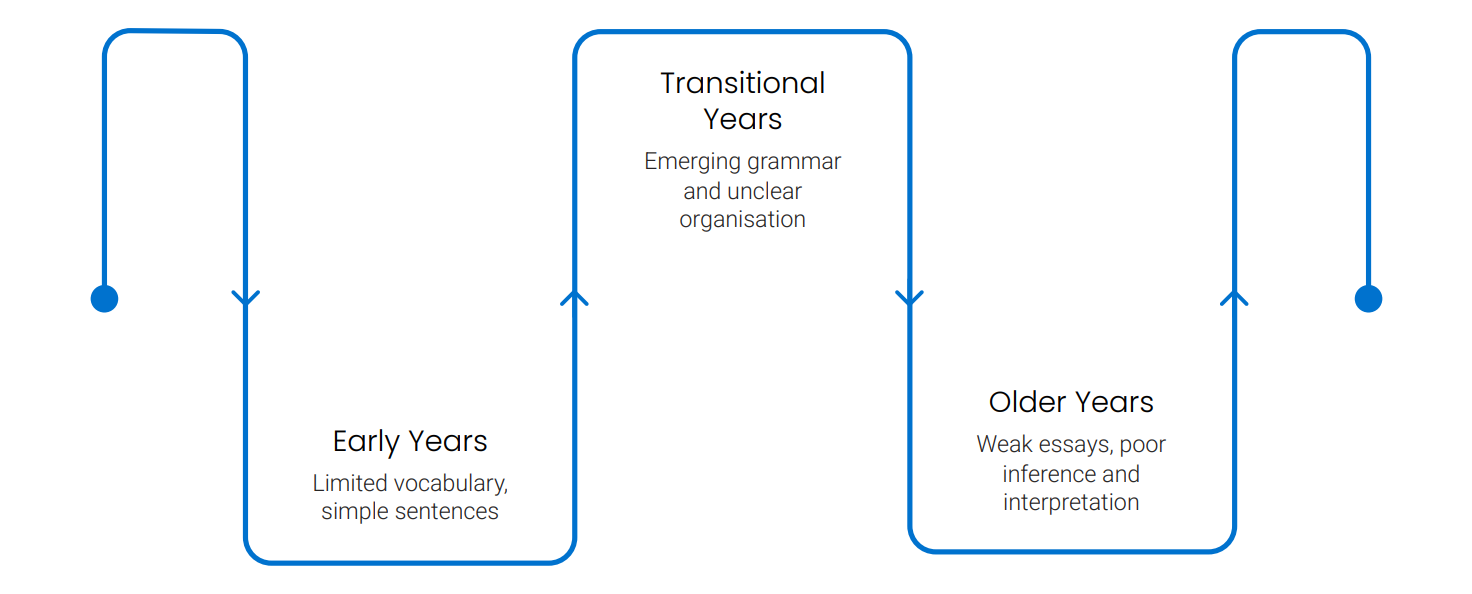
In younger children, language difficulties may appear as limited vocabulary or difficulty forming sentences. In older children, the same underlying challenges may appear as weak essay structure, poor inference skills, difficulty interpreting exam questions, or recurring social misunderstandings.
As academic demands increase, language gaps become more visible. Acting earlier allows skills to develop before academic pressure becomes overwhelming.
What Educational Language Support Looks Like
Language-based learning intervention is educational in nature rather than clinical. It focuses on helping children function better in school.
Comprehension Strategies
Structured approaches to understanding complex texts and instructions
Vocabulary Development
Building subject-specific language within academic context
Writing Organisation
Guided support in structuring essays and written responses
Inference Training
Learning to read between the lines and interpret meaning
Social Communication Coaching
Practical skills like pausing before responding, clarifying misunderstandings, and interpreting tone
For some children, support is delivered one-to-one. For others, small group literacy sessions are appropriate. The goal is not just clearer speech, but clearer thinking, clearer expression and stronger participation in learning.
When Parents May Wish to Seek Guidance

You may consider seeking guidance if you notice these patterns:
These patterns may appear subtle initially, but when they persist across subjects or social situations, they may indicate that language is affecting learning more broadly.
Some children may also be experiencing autism and school coping difficulties that affect how they manage classroom demands beyond language alone.
These patterns suggest that language may be affecting both academic learning and social development.
The Impact of Strengthened Communication Skills
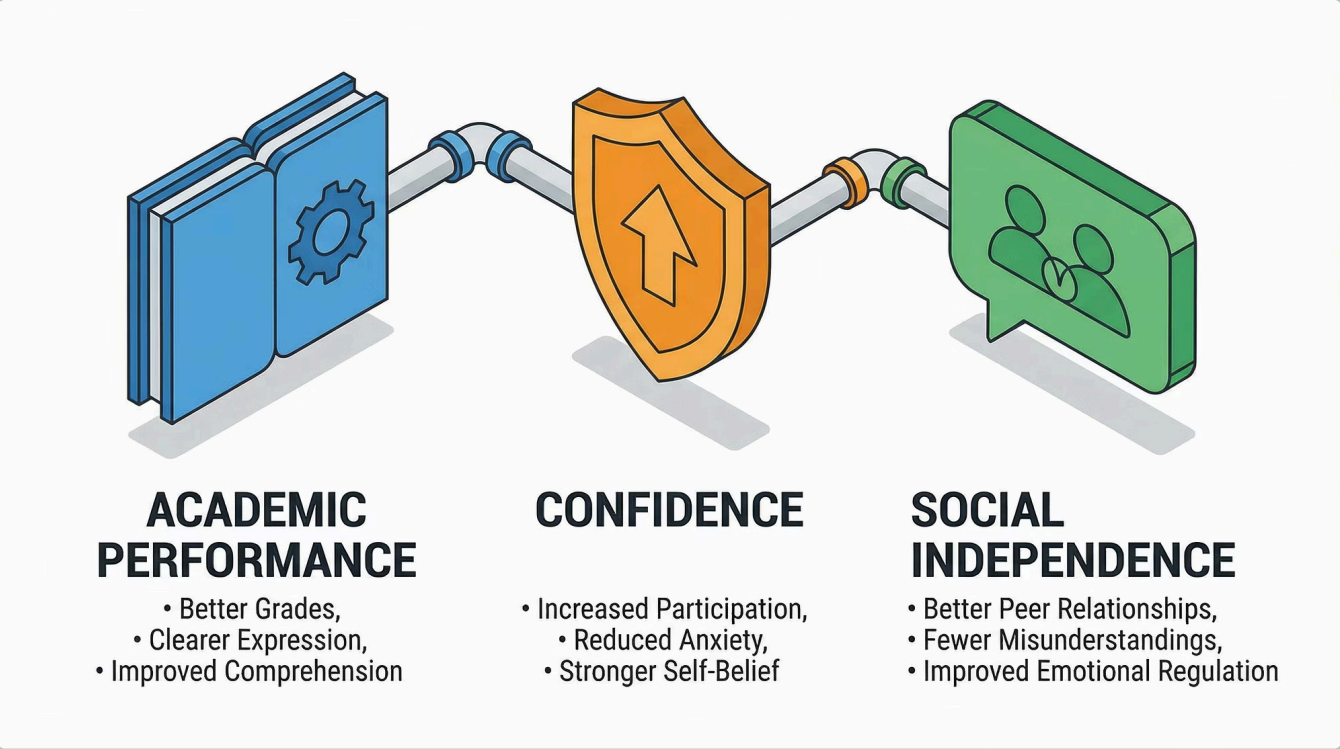
Language connects thinking, learning, and relationships. As communication skills strengthen, children often show improvement not only academically but also in confidence and social independence. When a child feels understood and can express thoughts clearly, confidence begins to grow alongside competence.
A Thought for Parents
Seeking clarity early does not mean labelling your child. It means understanding how they learn and how best to support them moving forward.
When we address communication challenges with understanding and appropriate support, we open doors to academic success, social connection, and lifelong confidence.
Every child deserves to be understood — and to understand the world around them clearly.
You may also find our guide on early signs your child may need learning support useful, and the guide on learning difficulties vs laziness for understanding root causes.
Ready to Learn More?
Discover how educational language support can help your child thrive in school and beyond.