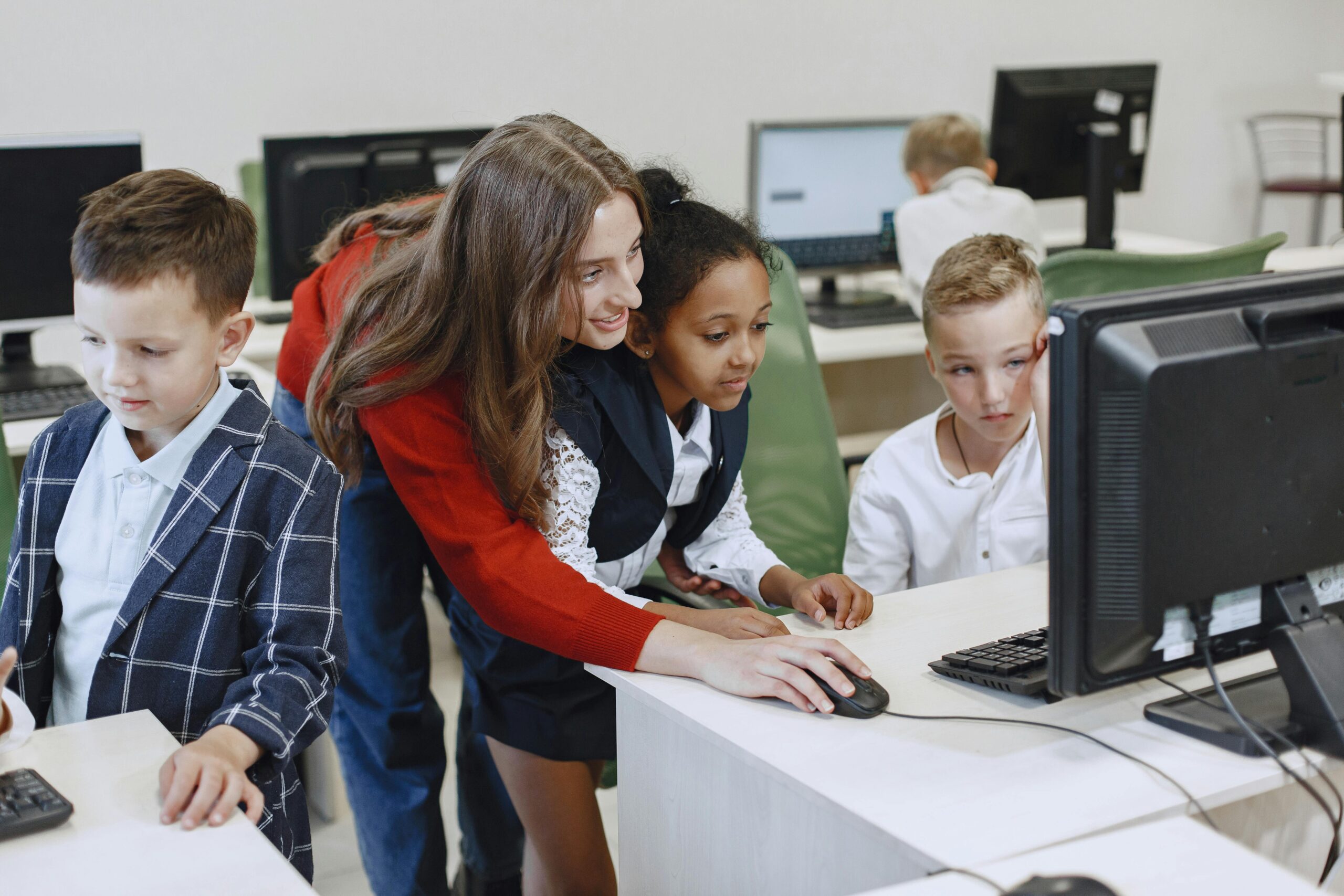
As artificial intelligence (AI) becomes increasingly embedded in educational environments, educators and parents are facing a pivotal question: How do we harness the power of AI to enhance learning while preserving the irreplaceable role of human support? Far from being a theoretical dilemma, this balance has real consequences for children’s cognitive development, social skills, and educational outcomes.
AI technology is transforming education by automating time-consuming administrative tasks such as grading, attendance tracking, and scheduling. This automation is allowing teachers to focus more on direct student interaction and mentorship, rather than routine responsibilities.
Across classrooms and homes worldwide, AI tools—ranging from adaptive learning platforms to intelligent tutoring systems—offer personalised guidance, instant feedback, and engaging experiences. But the human touch from teachers, mentors, and caregivers remains essential for nurturing creativity, emotional intelligence, and deep understanding. The goal is not to choose between AI and humans, but to integrate both in ways that bolster children’s learning holistically.
The Landscape: AI’s Growing Role in Learning
AI’s presence in classrooms is now more than just experimental. Research shows that educational robots and AI‑assisted platforms can enhance learning outcomes. A meta‑analysis of studies on educational robots found a moderate but statistically significant positive effect on students’ learning outcomes, underlining that technology—when applied with pedagogical intent—can support knowledge acquisition and engagement.
Similarly, systematic reviews of AI in K‑12 education highlight its role in supporting adaptive instruction, personalised practice, and student motivation. Key features of AI-powered learning platforms include interactive simulations, multimedia, and gamified content, making learning more immersive for students. These platforms also align with the curriculum to ensure content delivery matches educational standards. AI education can build foundational concepts, enhance problem‑solving skills, and foster positive attitudes toward technology. AI driven analytics help teachers identify learning gaps and personalize instruction in real-time by recognizing patterns and trends in student data.
In structured pilot programs, AI curricula have not only improved students’ technical understanding of AI itself but also boosted creativity and interest in STEM subjects, showing that experiences with AI can shape cognitive and motivational dimensions of learning.
Where AI Shines: Personalisation and Practice
One of AI’s most notable strengths lies in personalised learning. AI can analyse a child’s performance in real‑time and tailor exercises to their skill level. This allows students to learn at their own pace, creating personalised learning experiences for each individual student. For example, intelligent reading tutors have demonstrated success in providing immediate corrective feedback while scaffolding reading practice, helping children improve fluency and confidence.
Adaptive platforms can reinforce foundational skills such as math, reading, or language, offering practice precisely where a child needs it. These platforms analyze student progress over time and adapt learning tasks and learning materials to address individual needs. The Adaptive Learning System (ALS) is a prime example, using machine learning to deliver personalised learning pathways tailored to each student’s unique needs. This scalability reduces teacher workload on repetitive tasks and enables more differentiated instruction in classrooms with diverse learning needs. AI can also support learners with special needs by adapting pace or modality, potentially reducing barriers to engagement. AI-powered tutoring systems have shown significant improvements in student engagement and understanding of complex topics.
However, effectiveness correlates strongly with intentional instructional design. AI that is only loosely integrated into pedagogy risks becoming a “digital crutch” rather than a learning partner.
Collaborative Learning Environments in the Age of AI
Collaborative learning has always been a cornerstone of effective education, enabling students to share ideas, solve problems together, and learn from diverse perspectives. In the age of artificial intelligence, these environments are evolving to become even more dynamic and engaging. By integrating AI into collaborative learning, educators can leverage powerful tools that facilitate communication, streamline organization, and provide timely feedback.
AI-powered discussion boards, for example, encourage students to participate in meaningful interactions by analyzing contributions and highlighting key themes or misconceptions. AI-driven analytics offer educators real-time insights into group progress, allowing them to identify which students may need additional support and which collaborative strategies are most effective. These technologies not only enhance student engagement but also help teachers manage the often time-consuming administrative tasks associated with group work, such as tracking participation and assessing contributions.
By reducing the administrative burden, AI allows teachers to focus on fostering more meaningful interactions and supporting students as they work together. This approach ensures that collaborative learning remains at the heart of the educational experience, while artificial intelligence acts as a supportive partner—enhancing, rather than replacing, the vital human connections that drive student success.
Limits of AI: Critical Thinking, Social Development, and Nuance
Despite its capabilities, AI cannot fully replicate key aspects of human interaction that are crucial for child development. There are concerns that integrating AI too heavily could reduce human interaction in the classroom, highlighting the importance of balancing technology with personal engagement. Maintaining direct student interaction is essential to support meaningful learning and development. Independent research suggests that when AI is used without pedagogical scaffolding, it may encourage surface‑level responses rather than deep reasoning. For example, comparative analyses show human tutors naturally employ question‑driven dialogue that stimulates critical thinking—something AI still struggles to emulate consistently.
Real‑world student feedback also reveals nuanced views. Many young learners report that AI can be helpful for understanding specific tasks but worry that it may oversimplify learning, reducing opportunities for independent problem‑solving or creative thinking. Some students have expressed concerns that AI makes tasks “too easy,” potentially diminishing in‑depth learning if not paired with guided reflection. Involving students in decision-making processes, such as setting learning goals, can further enhance their engagement and autonomy.
Moreover, the development of social and communication skills, emotional regulation, and moral reasoning rely heavily on human interaction. These domains are foundational to lifelong learning and cannot be wholly delegated to algorithms.
AI Tools for Education: What’s Available and What Matters
The landscape of AI tools in education is rapidly expanding, offering a wide array of solutions designed to support the learning process. From AI-powered learning platforms that adapt to each student’s needs, to assessment tools that automate grading and provide instant feedback, these technologies are transforming how students learn and how teachers teach.
What truly matters, however, is how these AI tools are integrated into the classroom. The most effective AI-powered tools are those that enhance direct student interaction, allowing teachers to focus on providing personalized feedback and support. By automating administrative tasks such as data analysis and routine grading, AI frees up valuable time for educators to engage with students in more meaningful ways.
When selecting AI tools, it’s essential to consider factors like user-friendliness, data privacy, and the risk of over-reliance on technology. Tools should be intuitive for both teachers and students, safeguard sensitive student data, and complement—rather than replace—human interaction. By focusing on these priorities, educators can ensure that AI tools enrich the learning experience, support student progress, and foster a classroom environment where technology and human touch work hand in hand.
Teachers: Essential Mediators of AI Impact
Teachers are the linchpins in balancing AI and human support. Research across multiple countries shows that teachers’ trust in and understanding of AI‑EdTech significantly influences how effectively these tools are integrated in classrooms. Educators with higher AI literacy perceive more benefits and fewer concerns, which supports more meaningful implementation. Automating administrative tasks such as grading, attendance tracking, and scheduling allows teachers to focus more on personalized instruction and student engagement.
At the same time, studies indicate that many primary school teachers feel they lack sufficient skills and training to implement AI effectively. Without targeted professional development, teachers may underutilise these tools or fail to mitigate potential drawbacks, such as ethical issues or student disengagement. AI-powered systems can help teachers streamline their workflows, supporting students more effectively and enhancing student engagement.
Research also highlights strategies where AI augments rather than replaces human tutoring. Hybrid human–AI tutoring models have shown promise in improving learning outcomes—especially among lower‑achieving students—by combining teacher insight with AI’s adaptability. AI can automate the initial feedback phase, freeing up teachers’ time for essential teaching and learning tasks.
Parental Involvement and Awareness
Parental involvement remains a cornerstone of a successful learning process, especially as artificial intelligence becomes more integrated into education. With the rise of AI tools and AI-powered platforms, parents have new opportunities—and responsibilities—to support their child’s learning journey. These technologies can offer personalized learning experiences, provide instant feedback, and deliver data-driven insights that help students learn more effectively. However, for these benefits to be fully realized, parents need to be aware of how artificial intelligence is being used in the classroom and understand both its advantages and potential challenges.
By staying informed about the AI-powered tools their children use, parents can foster more meaningful interactions at home and encourage a deeper understanding of the material. Engaged parents can also help bridge the gap between students, teachers, and technology by monitoring their child’s progress and sharing valuable feedback with educators. This collaborative approach ensures that AI is used effectively to support learning, rather than simply automating tasks. Ultimately, when parents are active participants in their child’s education, they help create an environment where students benefit from both the efficiency of AI and the human touch that makes learning truly impactful.
Equity and Access in AI Education
Ensuring equity and access is essential when integrating AI-powered tools into education. While artificial intelligence has the potential to cater to diverse learning styles and provide personalized learning experiences, many schools face significant challenges in making these benefits available to all students. Limited resources, infrastructure gaps, and a lack of technical expertise can hinder the adoption of AI-powered tools, leaving some students at a disadvantage.
To address these challenges, educators and policymakers must prioritize strategies that promote equitable access to AI in education. This includes investing in infrastructure, offering professional development for teachers, and developing AI-powered tools that are user-friendly and accessible to students from all backgrounds. By focusing on inclusive development and implementation, schools can ensure that the benefits of integrating AI—such as tailored instruction and enhanced engagement—are available to every learner. Ultimately, prioritizing equity and access helps create a more just educational environment, where all students have the opportunity to thrive with the support of both technology and dedicated educators.
Ethical and Practical Challenges
Despite its promise, AI in education raises concerns that must be addressed:
- Privacy and data governance: Many parents express unease about sharing children’s learning data with AI systems. Communication and transparency are key to building trust. The complexity of AI technology can make it difficult to understand how decisions are made, highlighting the need for transparency over how AI collects and uses data to build trust.
- Responsible use and academic integrity: Overreliance on AI without guidance can lead to misuse, reducing opportunities for authentic learning. Educators play a vital role in teaching responsible use.
- Equity and access: Unequal access to devices or connectivity risks widening educational disparities if AI tools simply replace traditional support structures.
Education leaders must therefore couple AI adoption with clear policies, ethical frameworks, and robust support systems.
Key Features of Effective AI-Powered Learning Platforms
For AI-powered learning platforms to truly make a difference in education, they must be designed with features that support both personalized learning and collaborative growth. Key features include the ability to deliver personalized learning experiences tailored to individual learning styles, provide instant feedback to guide student progress, and utilize AI-driven analytics to help educators make data-informed decisions.
A user-friendly interface is crucial, ensuring that both students and teachers can easily navigate the platform and access its full range of educational resources. Effective platforms also support collaborative learning by incorporating discussion boards, virtual classrooms, and peer review tools, enabling students to work together and share ideas regardless of location. Offering content in multiple languages further ensures that these platforms cater to diverse student populations.
Beyond academic content, the best AI-powered platforms equip students with essential skills such as problem-solving, decision-making, and critical thinking. By fostering deeper understanding and engagement, these platforms prepare students for the challenges of a technology-driven future. Ultimately, the goal is to create an educational environment where AI supports the development of knowledge, skills, and confidence—empowering every student to thrive.
Monitoring and Evaluation of AI Effectiveness
Ongoing monitoring and evaluation are critical to ensuring that AI-powered tools truly enhance the learning experience. Educators and administrators must regularly collect and analyze student data to assess how these tools impact student progress, learning outcomes, and overall engagement, with a particular focus on monitoring and analyzing each student’s progress through dashboards and AI analytics. Over 85% of students and many teachers engage with AI tools in education as of 2025–2026.
Effective evaluation not only helps refine teaching practices and the use of AI-powered tools, but also addresses important concerns such as data privacy, bias, and the risk of over-reliance on technology. By maintaining a focus on human interaction and collaborative learning, educators can ensure that AI supports, rather than replaces, the essential connections that drive student success. Monitoring and evaluation also play a key role in preparing students for the future, as they help educators adapt personalized learning experiences to meet evolving needs. Ultimately, a thoughtful approach to evaluating AI in education ensures that technology is used responsibly and effectively, supporting both student growth and meaningful educational outcomes.
Practical Framework for Balancing AI and Human Support
To realise the best of both worlds, schools, teachers, and caregivers can adopt a hybrid framework that includes:
- AI for personalised practice and assessment — freeing teachers to focus on conceptual discussions, mentoring, and socio‑emotional development. AI can also leverage discussion boards to analyze student responses, identify themes and misconceptions, and assess learning progress through student interactions. The effectiveness of these tools depends on a user friendly interface, which ensures ease of use and accessibility for both teachers and students.
- Teacher‑mediated reflection — ensuring AI outputs are discussed, critiqued, and connected to deeper learning goals.
- Professional development in AI literacy — empowering educators to choose, interpret, and adapt AI tools responsibly.
- Parental engagement and ethical oversight — maintaining transparency and shared understanding of AI’s role in learning.
- Assessment of both cognitive and non‑cognitive outcomes — capturing skills like creativity, collaboration, and resilience that AI alone cannot measure.
AI-powered learning platforms also provide access to quality education in remote or underserved areas, helping to bridge the educational divide. Additionally, AI tools can highlight trends and offer insights to help teachers plan future lessons more effectively.
Learning Smart, Together
AI is reshaping the educational landscape, offering unprecedented levels of personalisation and scalability in learning. As a powerful tool, AI can equip students with the skills needed to succeed in a technology-driven world. AI and modern curricula work together to prepare students for future challenges by fostering both digital literacy and character development. Singapore’s EdTech Masterplan 2030 envisions technology-transformed learning to prepare students for a technology-driven world. Additionally, Singapore’s investment in AI research and development has facilitated the creation of cutting-edge educational technologies that equip students with the skills needed to thrive in a future driven by AI and technology. It is crucial for current and future generations to develop in-demand skills, including utilizing AI, to keep Singapore’s workforce competitive. But the heart of education remains fundamentally human. Deep understanding, emotional intelligence, trust, and creativity flourish best where technology complements—not replaces—the role of empathetic adults in children’s lives.
By strategically balancing AI’s analytical power with human support’s emotional and pedagogical strengths, we can create learning environments where every child is empowered to think critically, learn confidently, and grow holistically.
Comments are closed